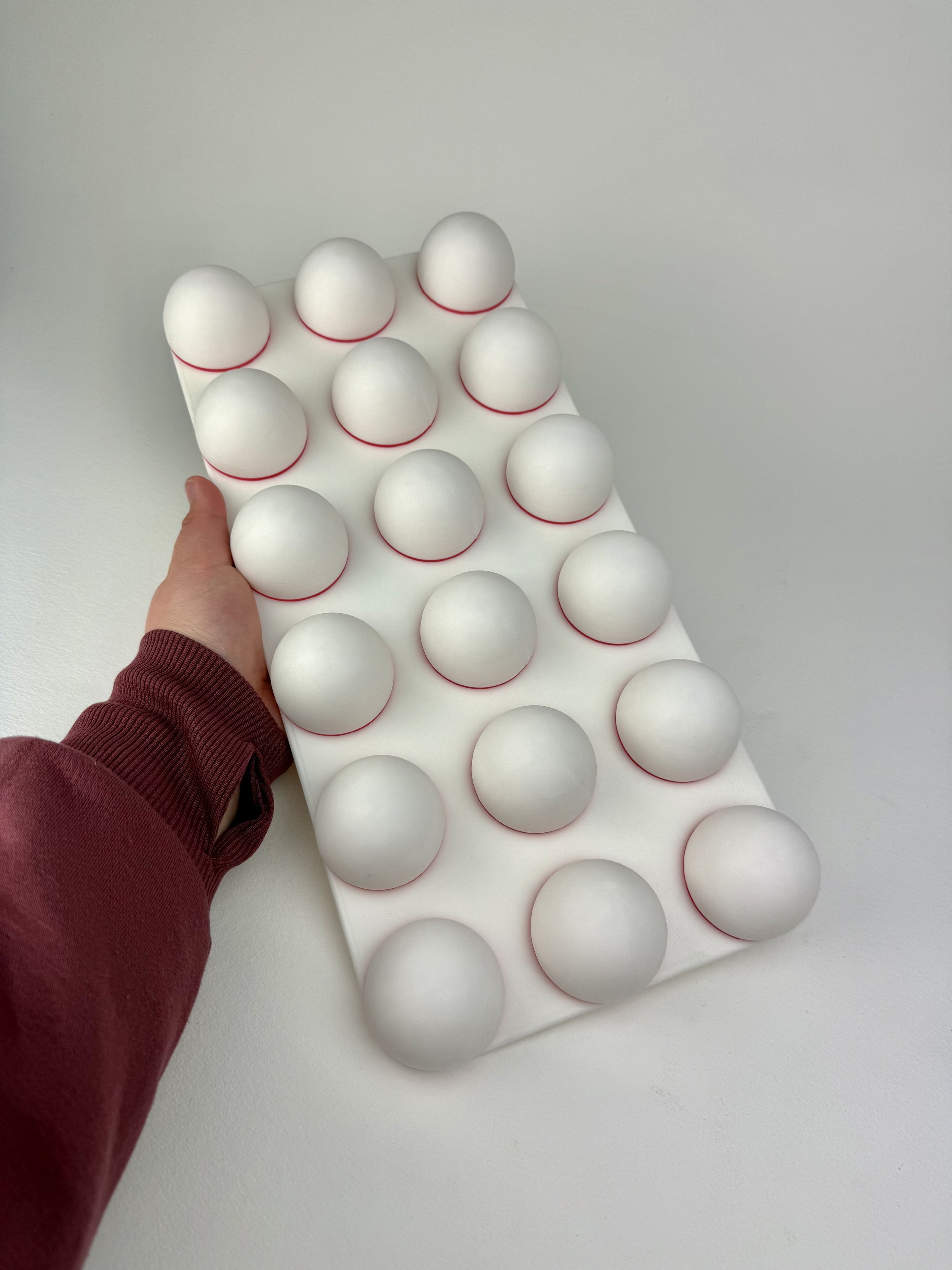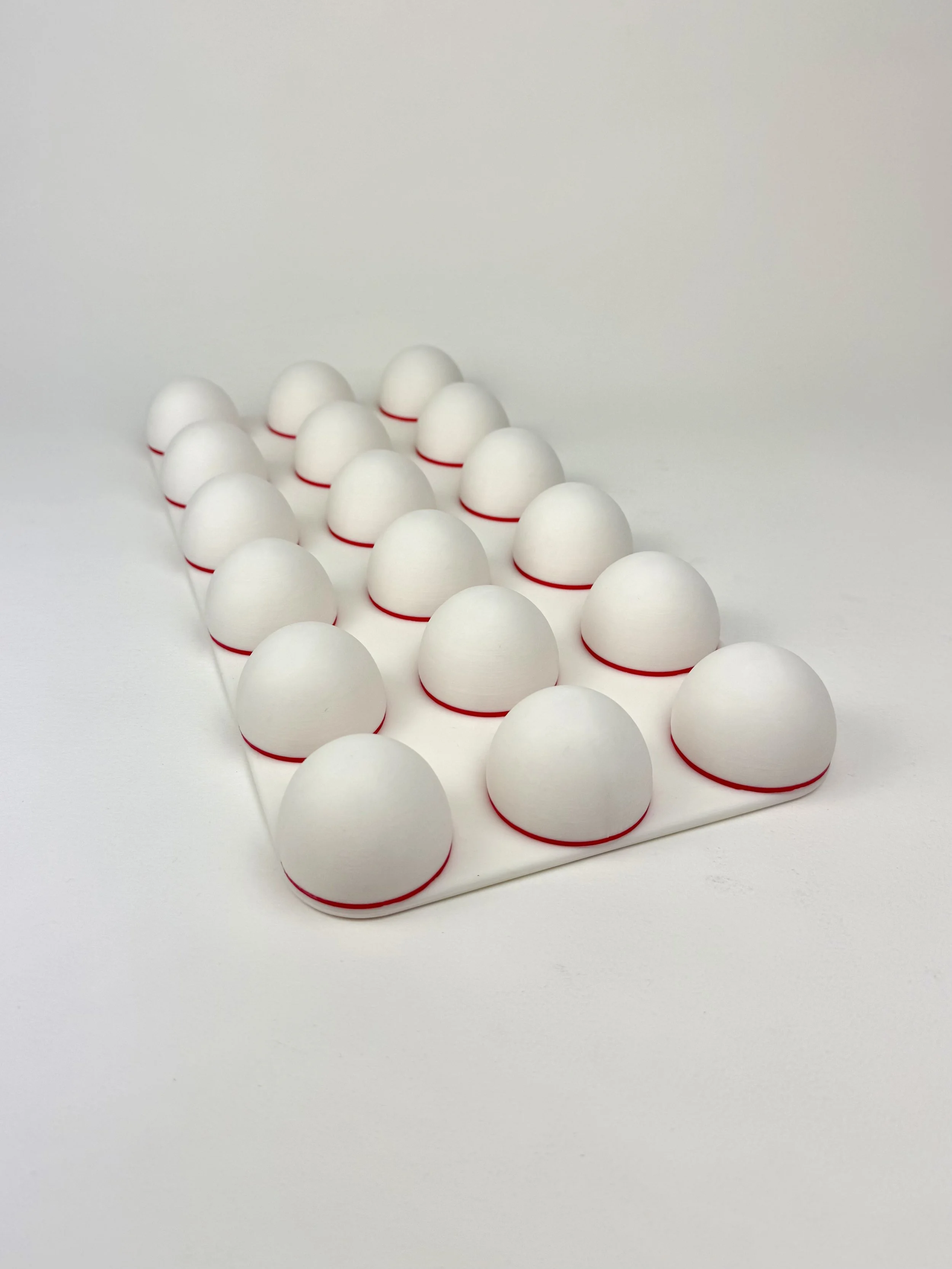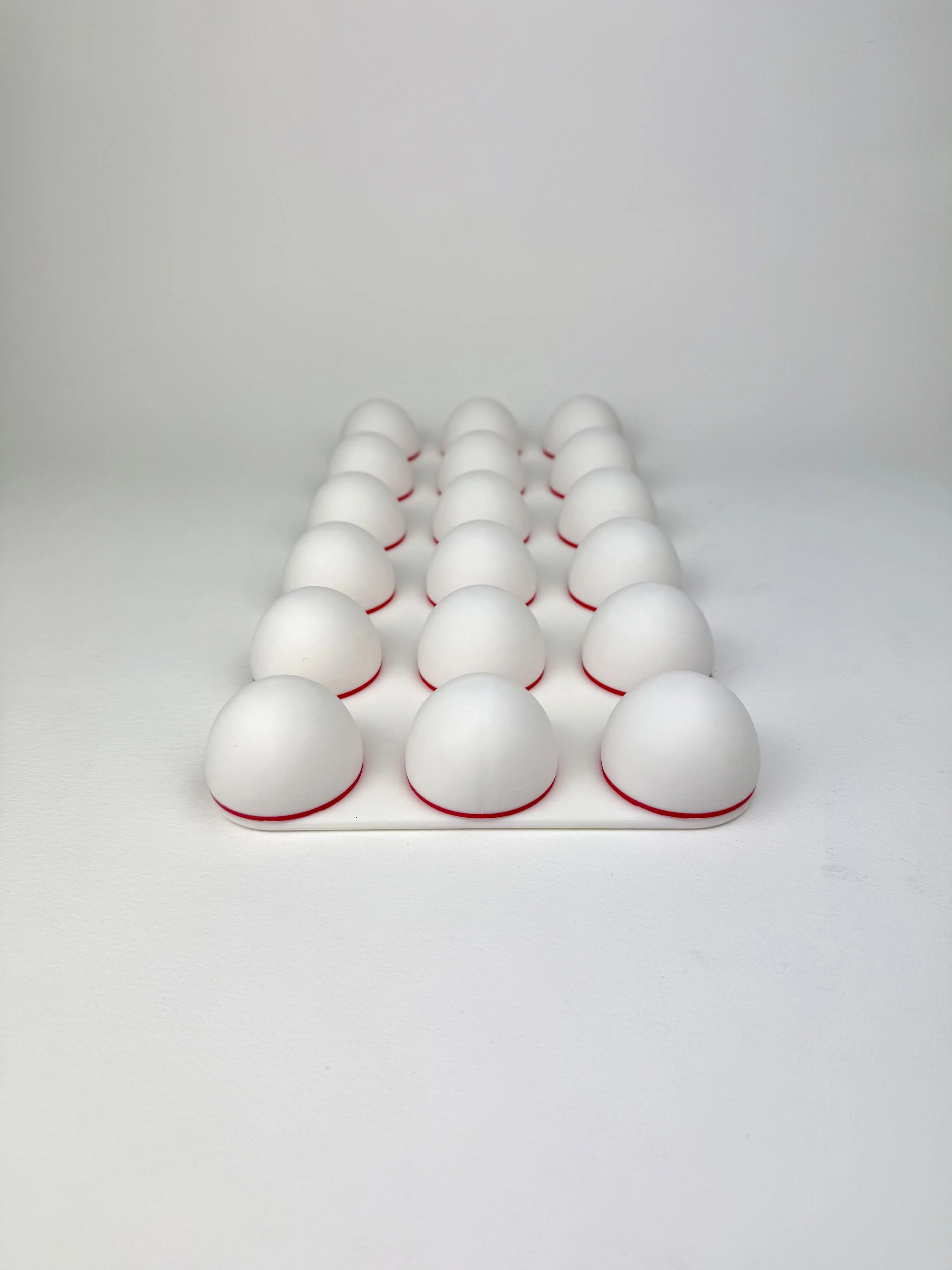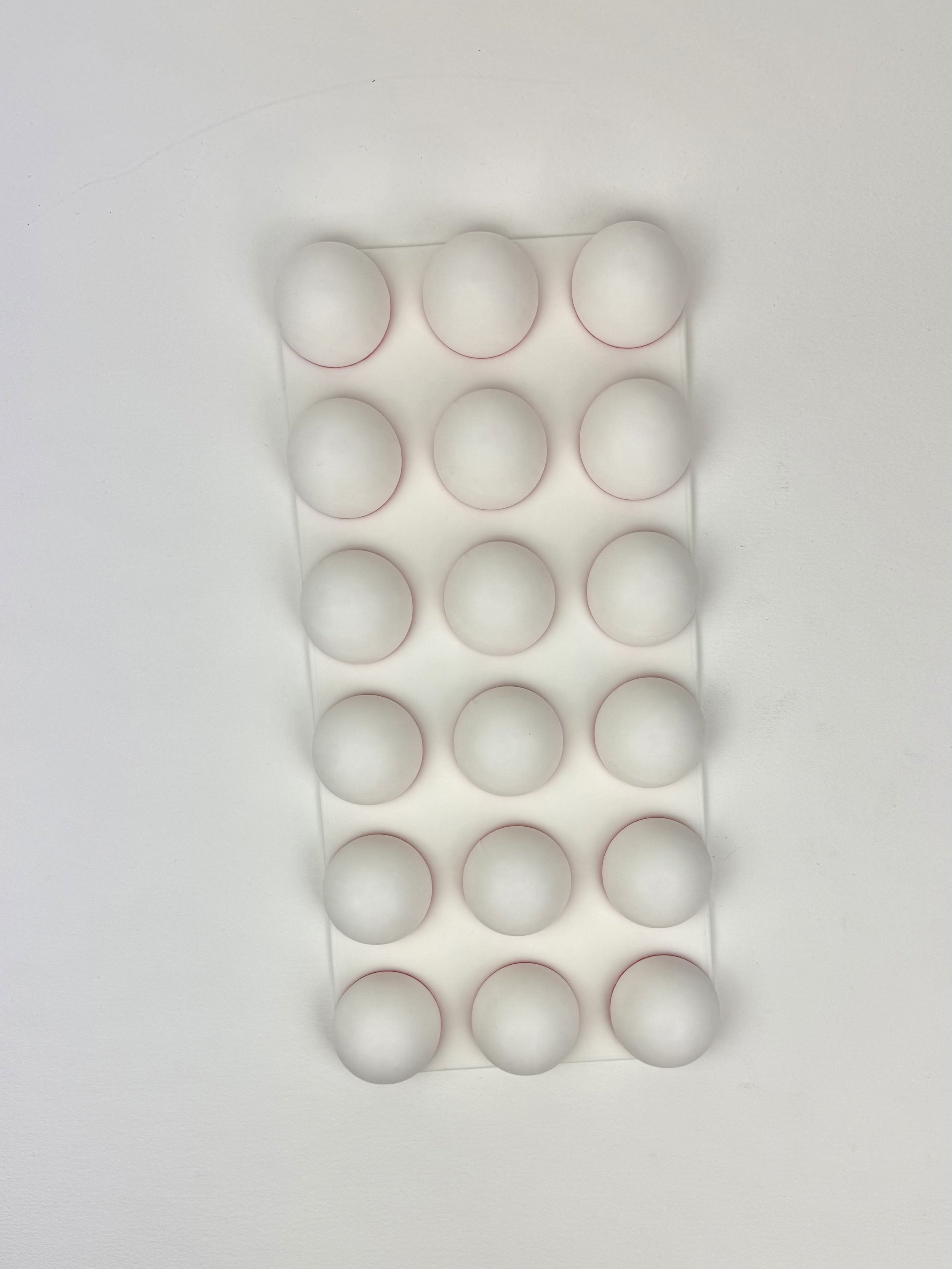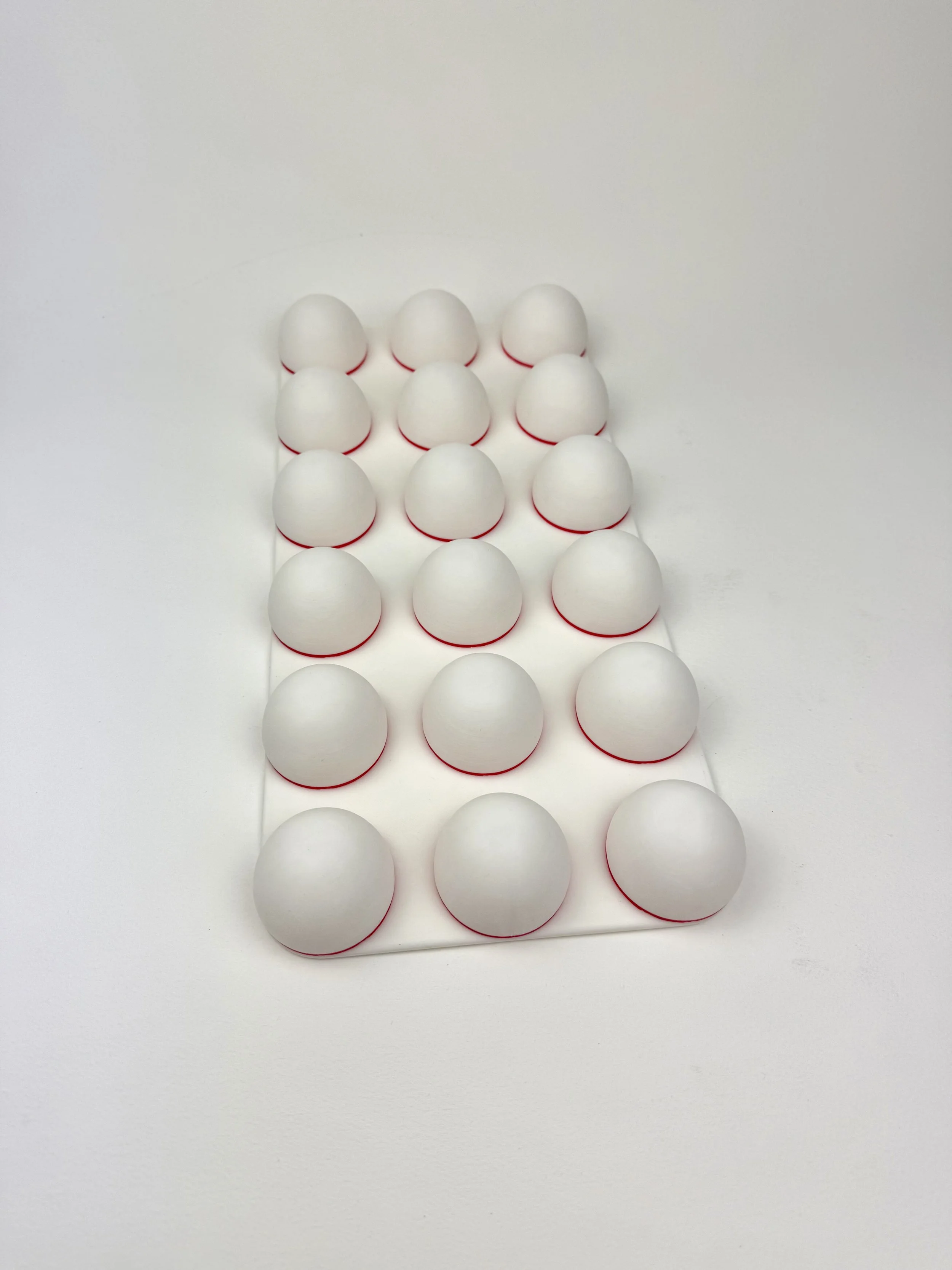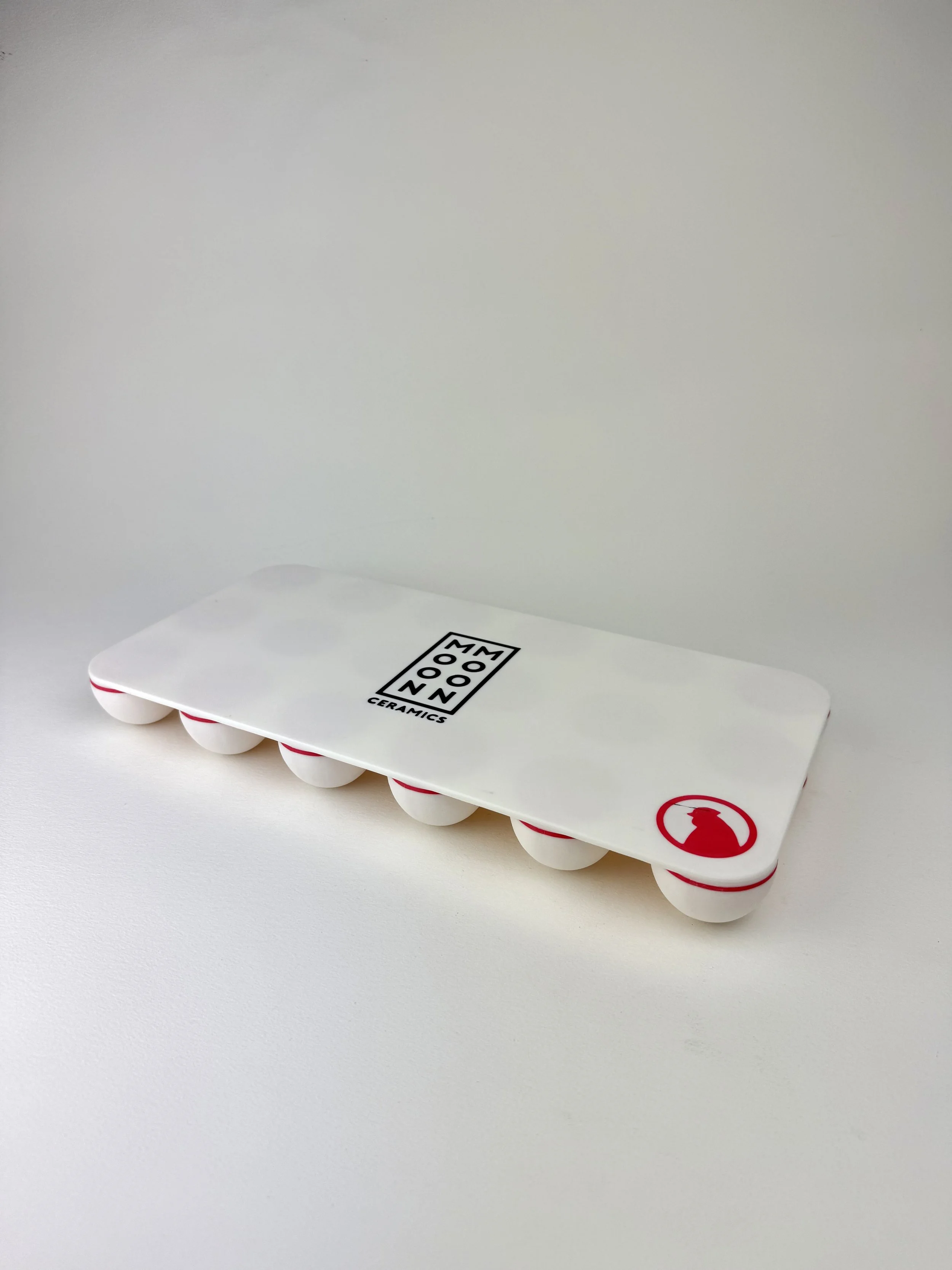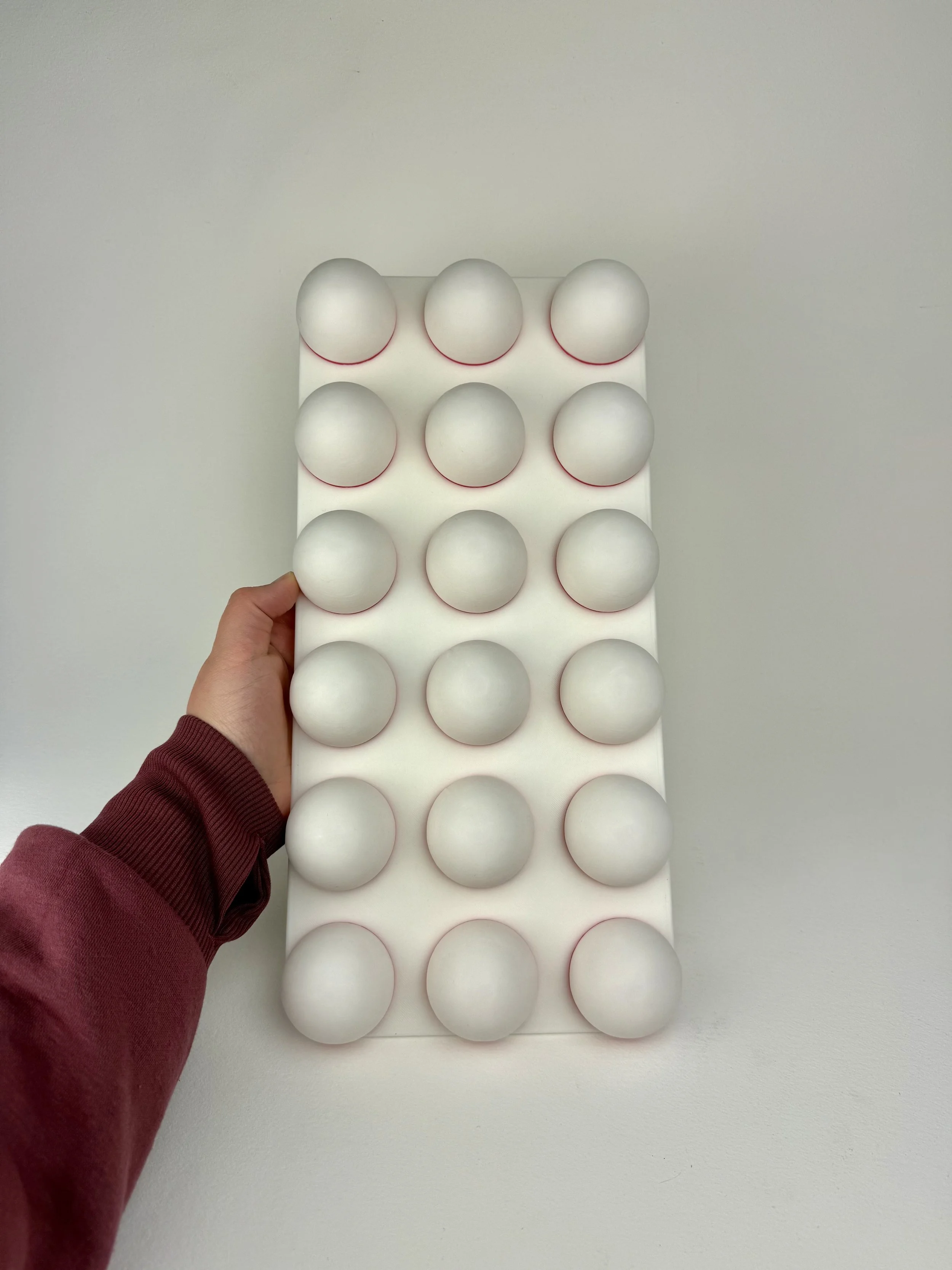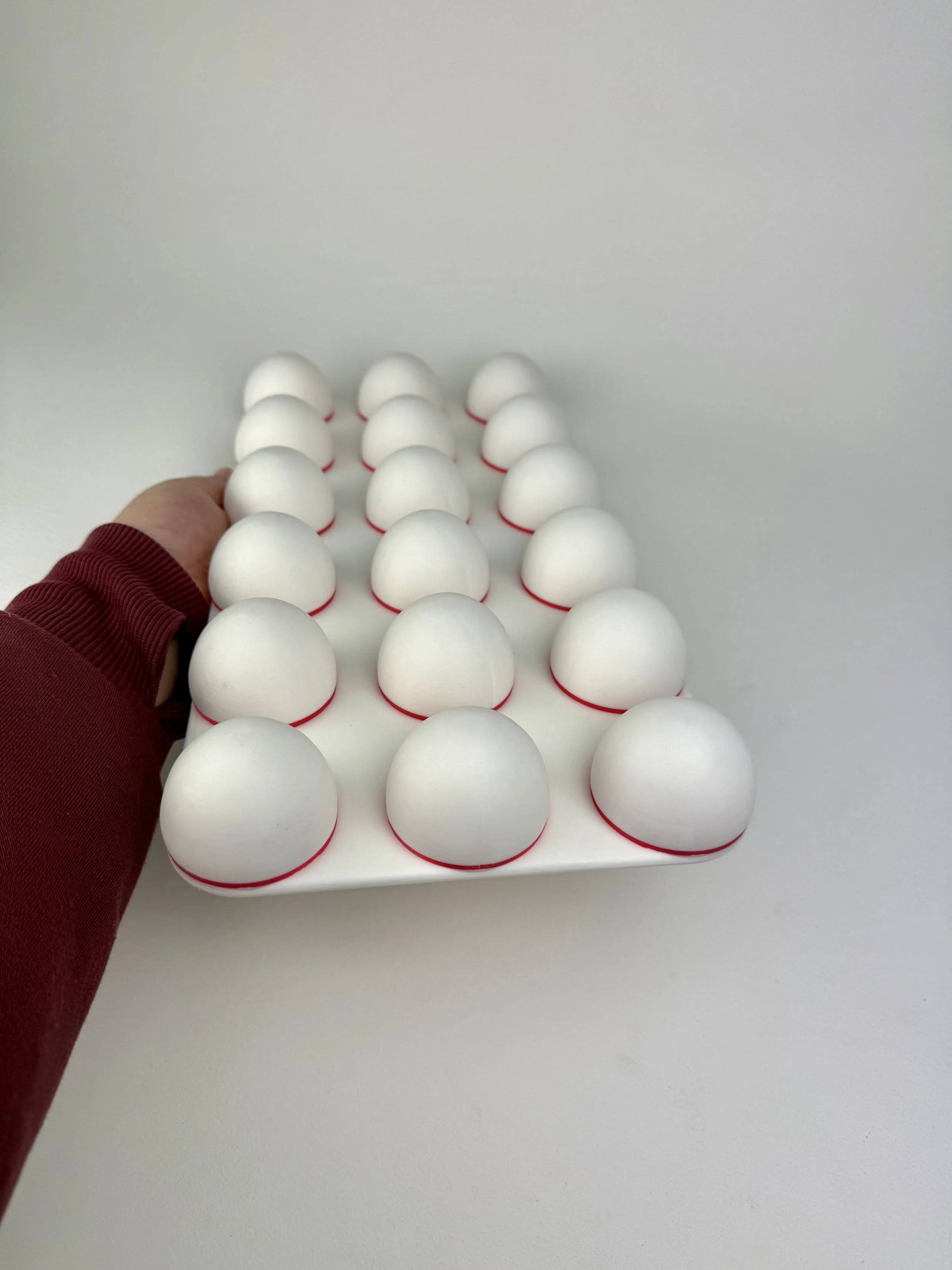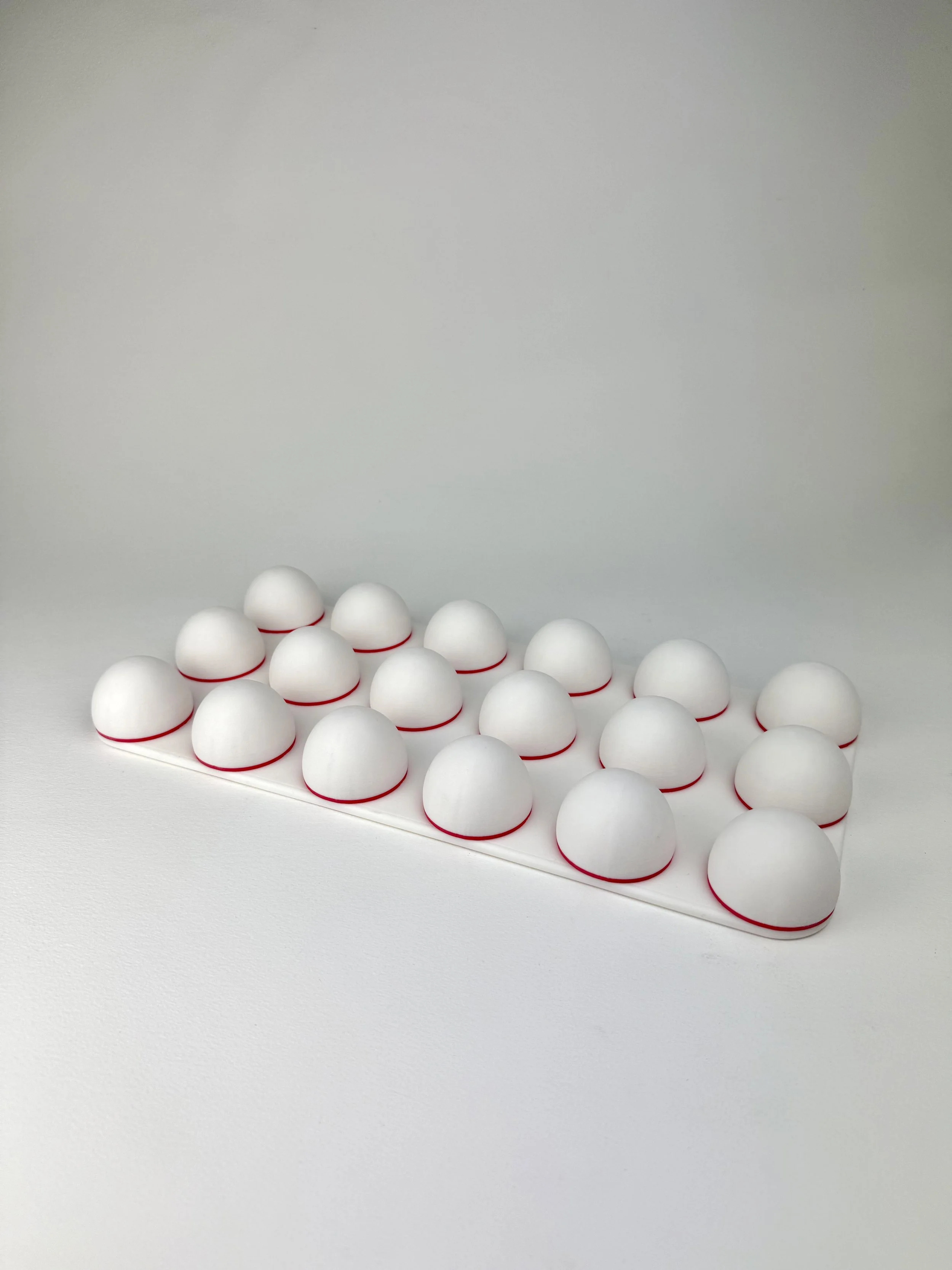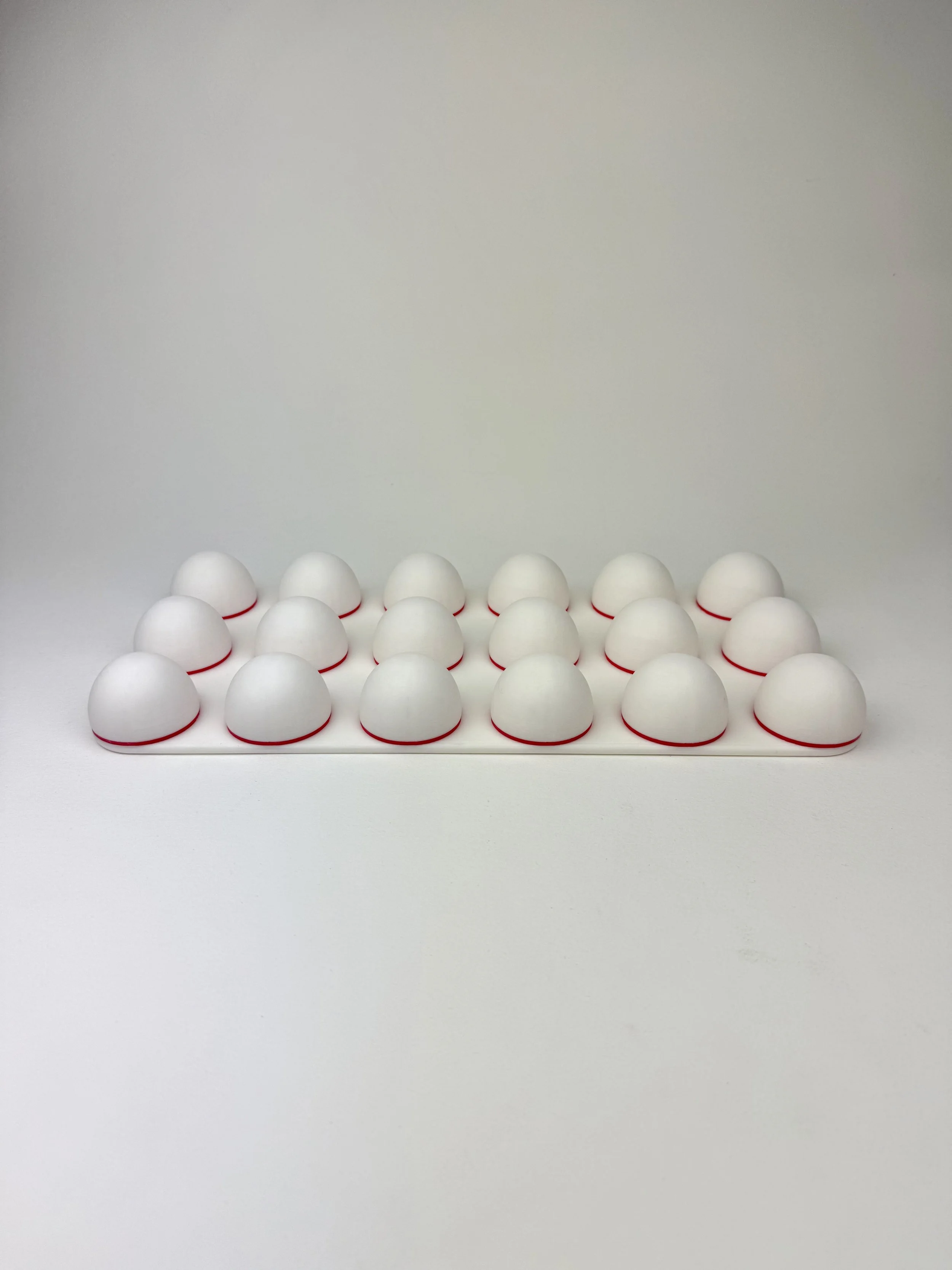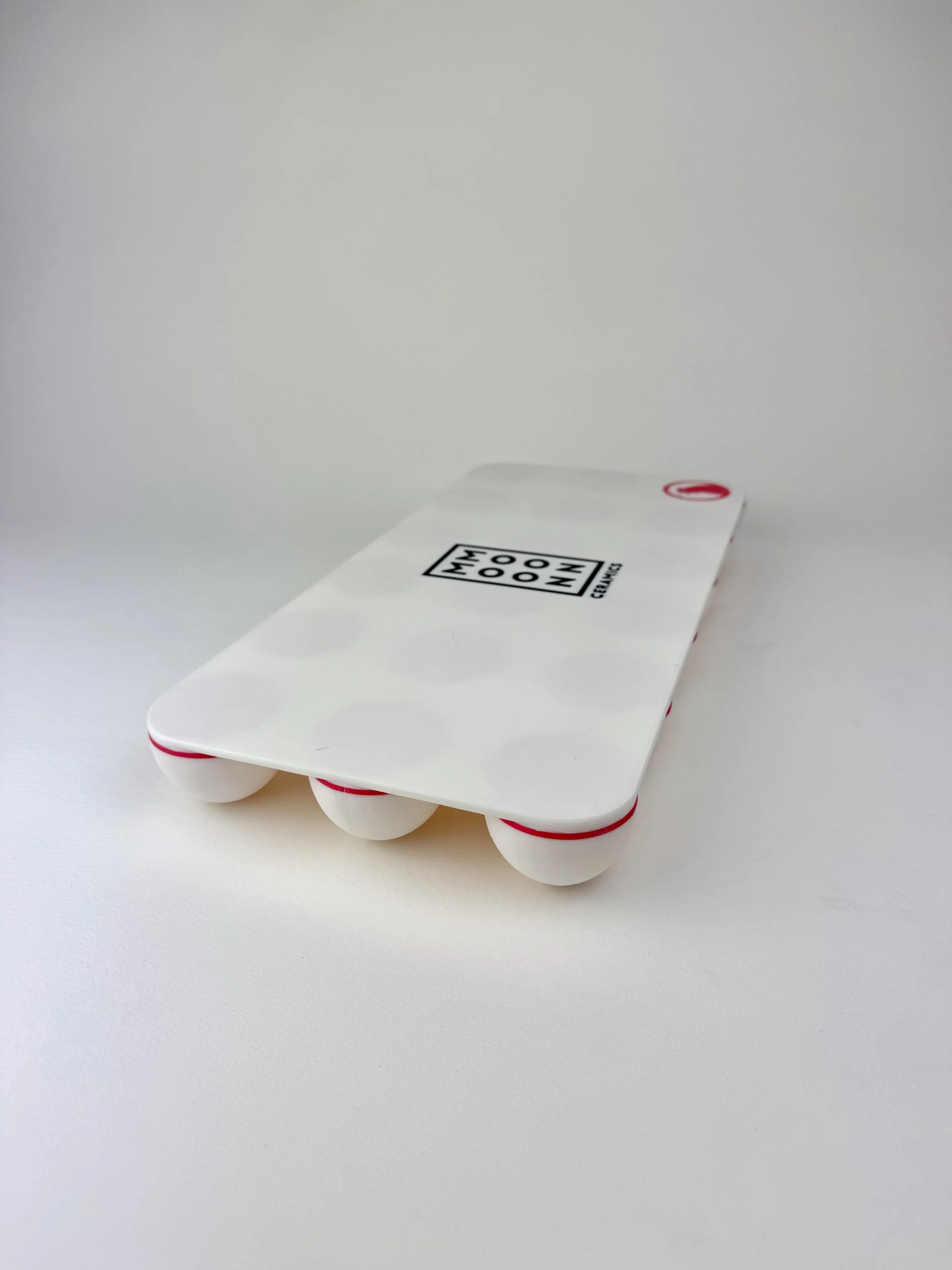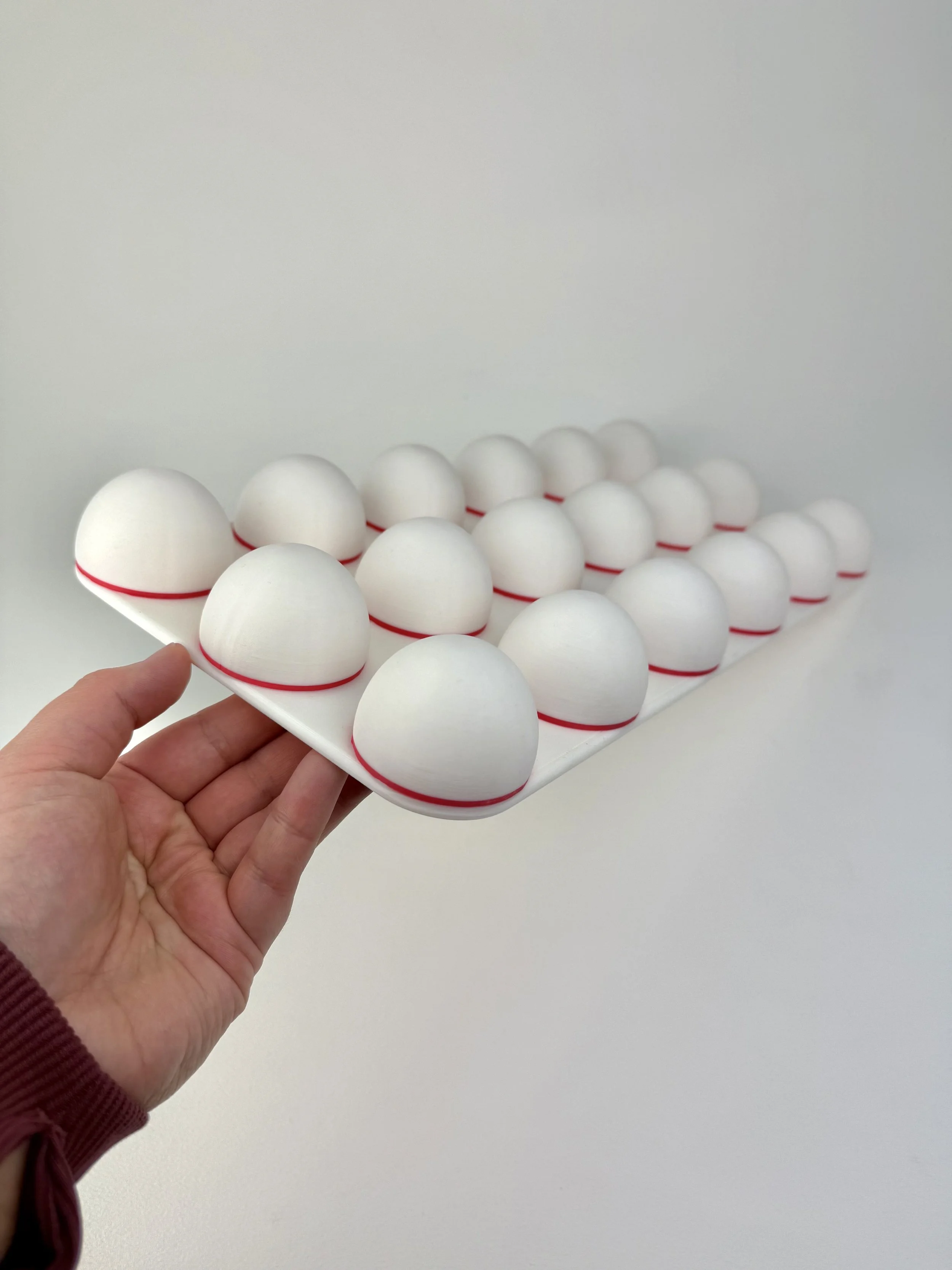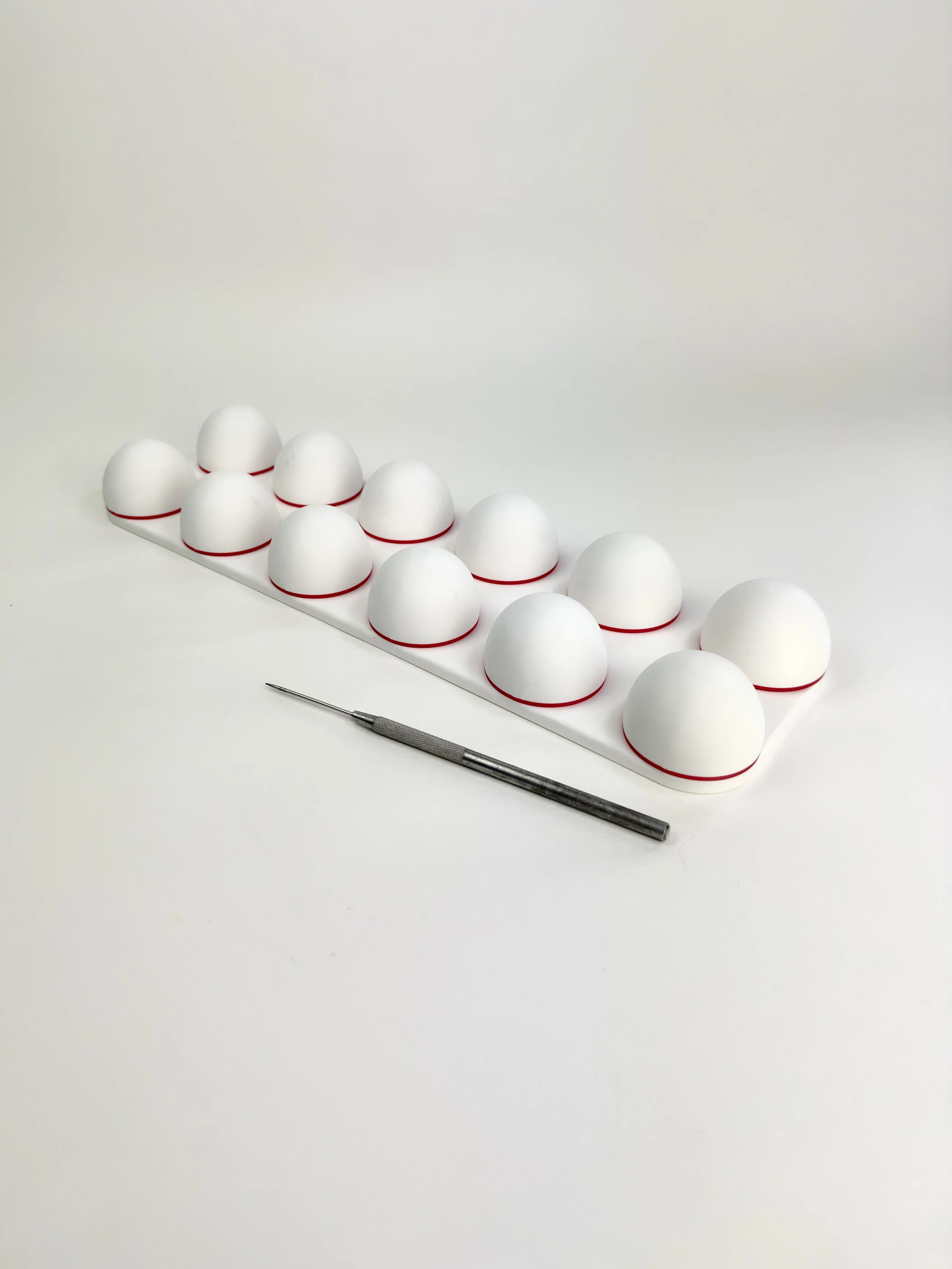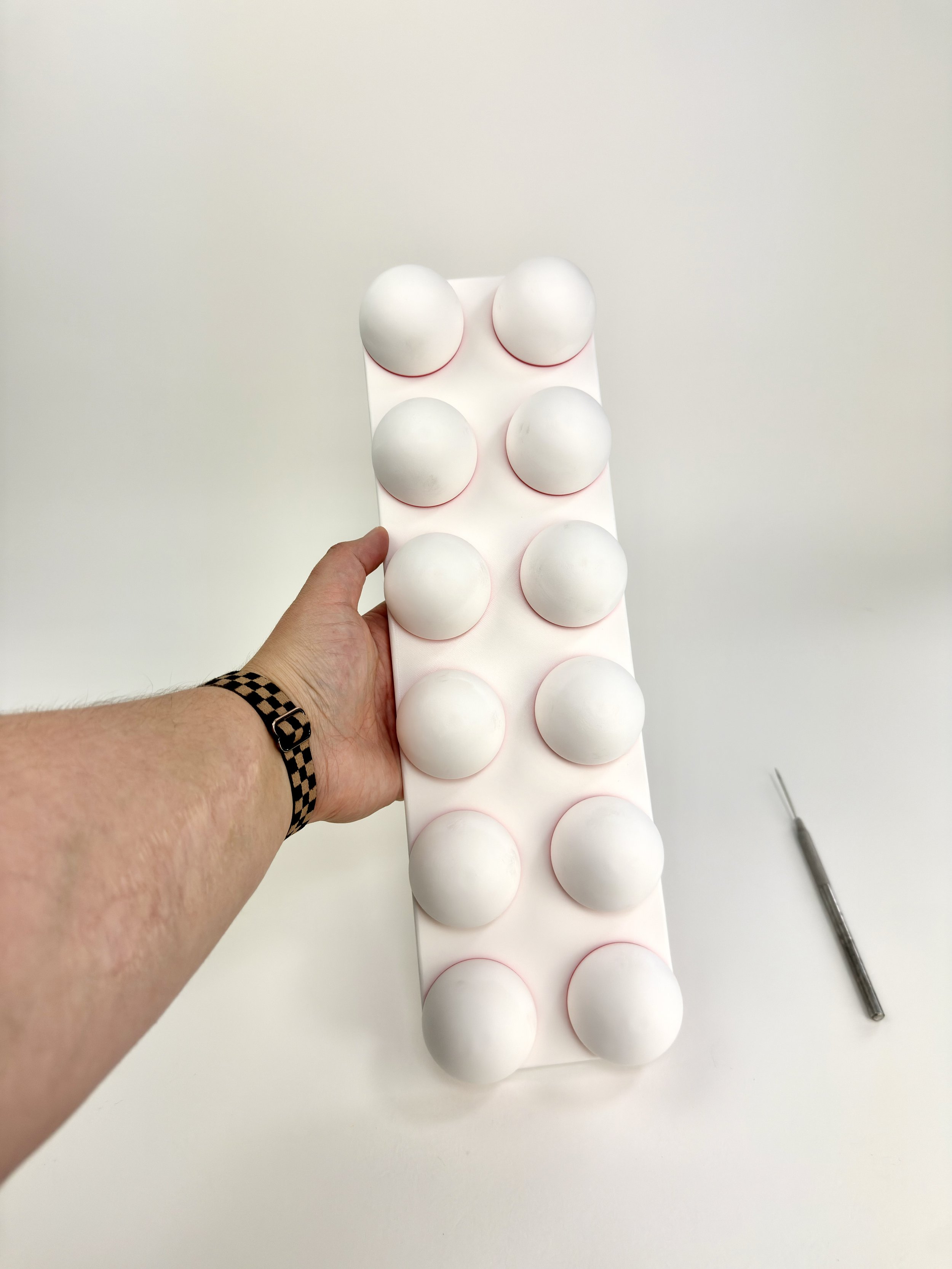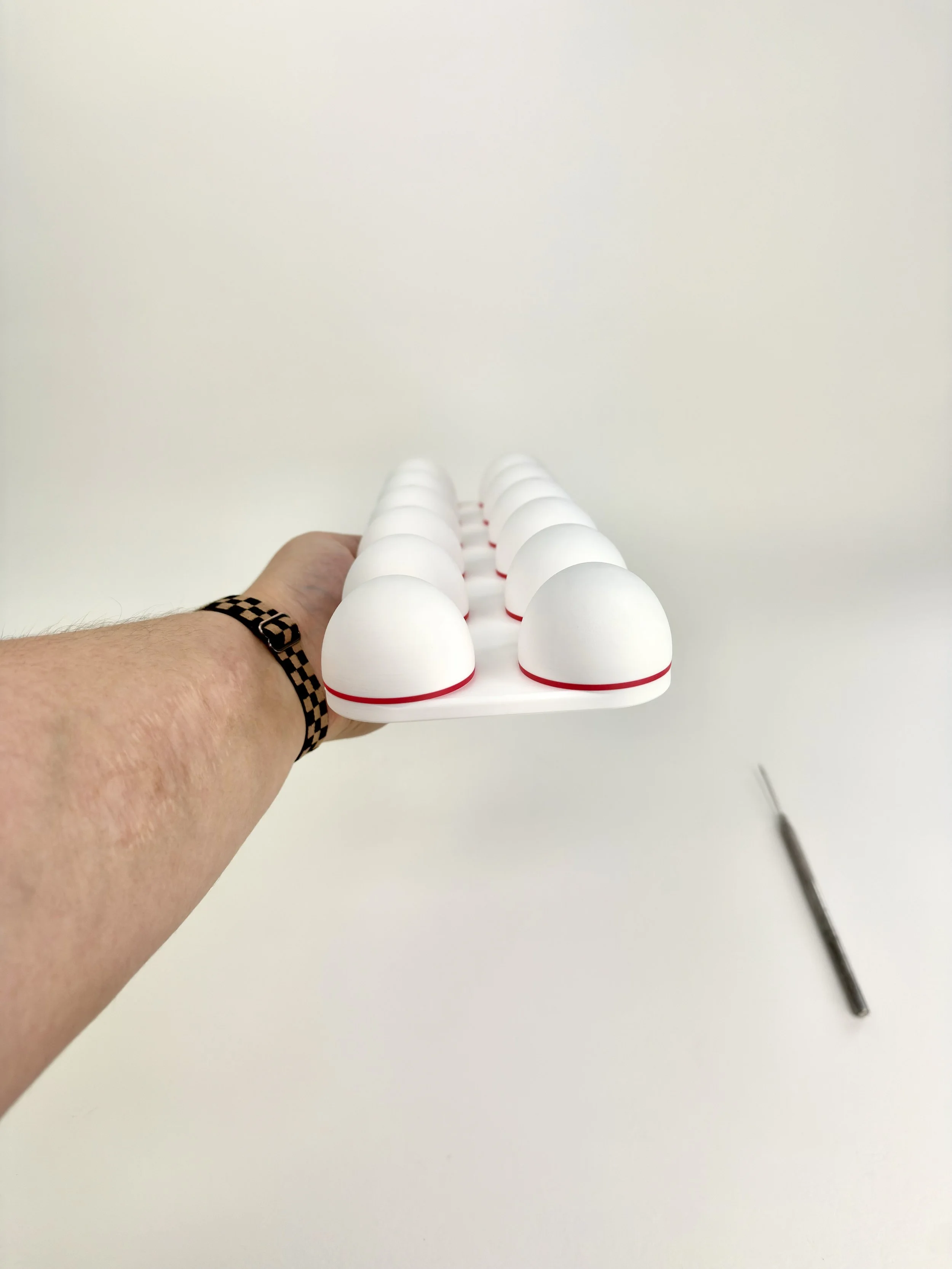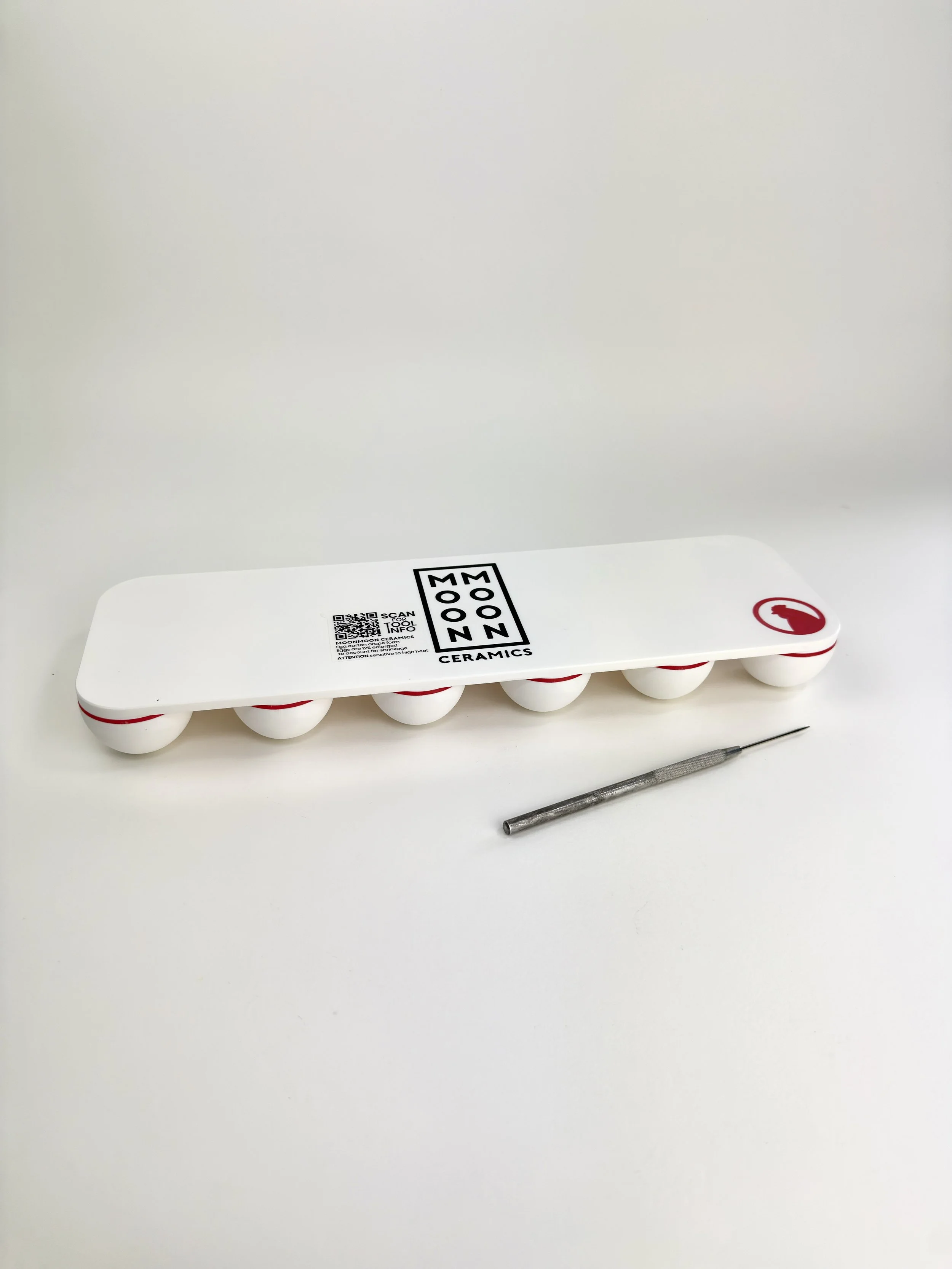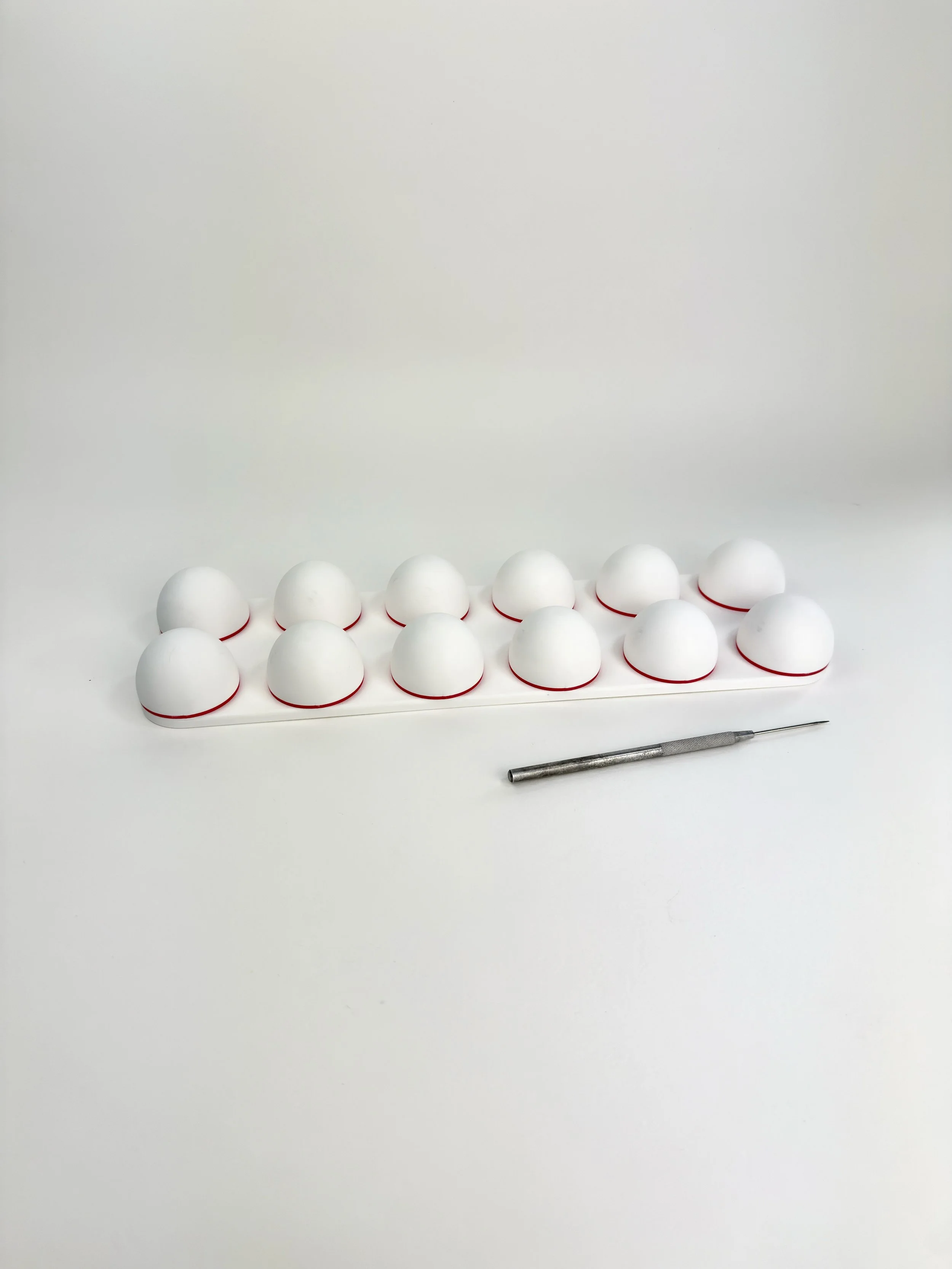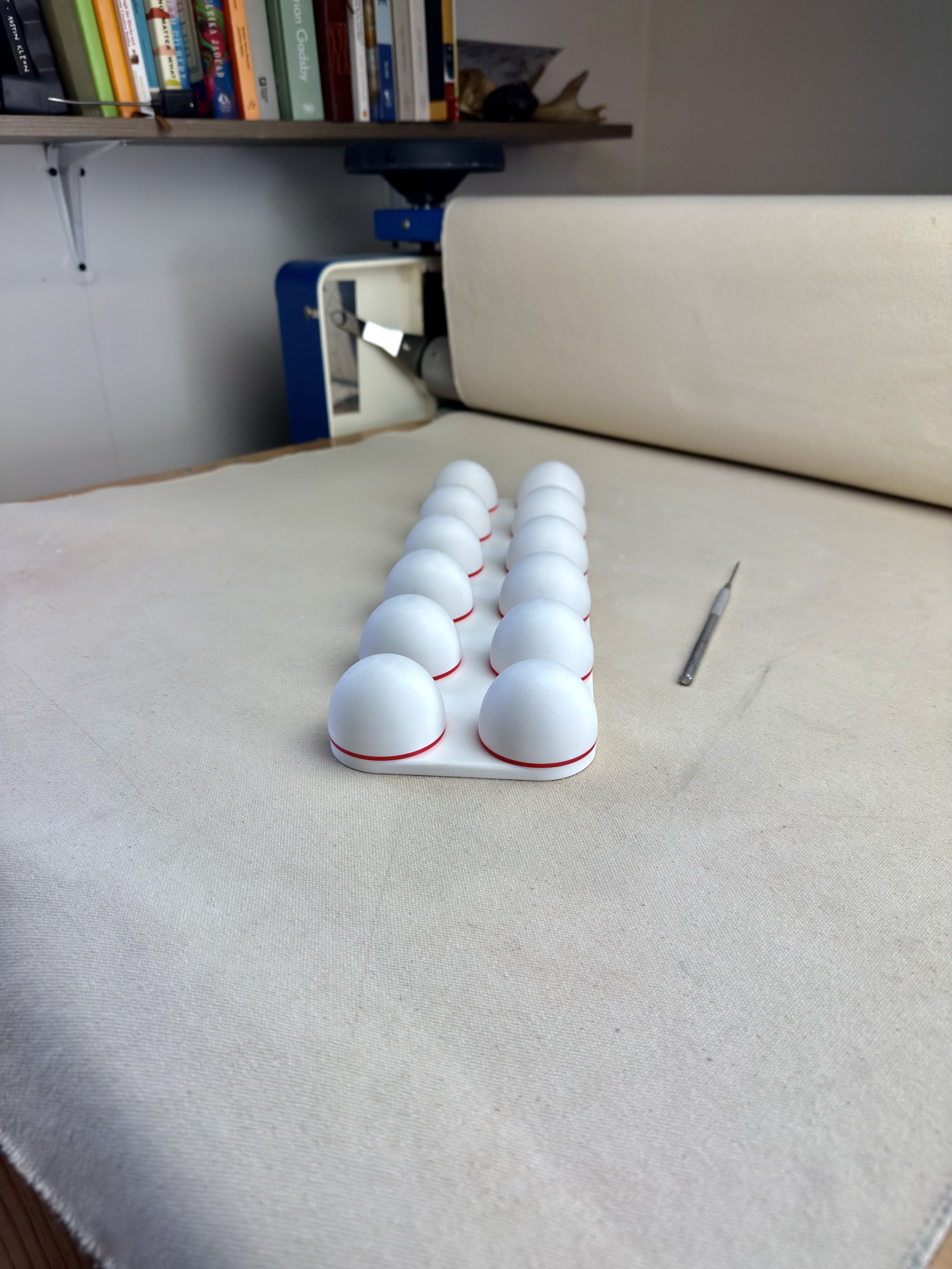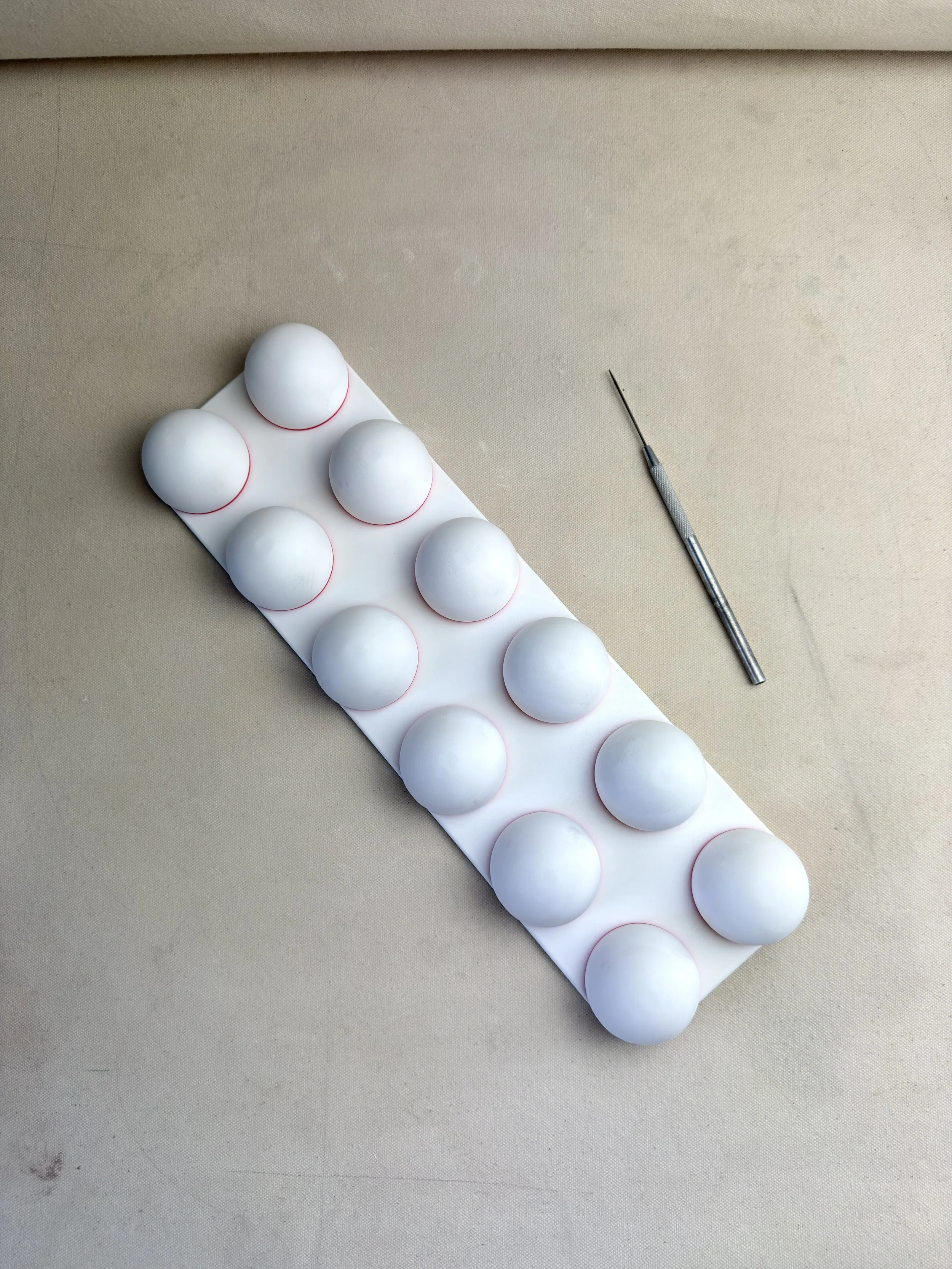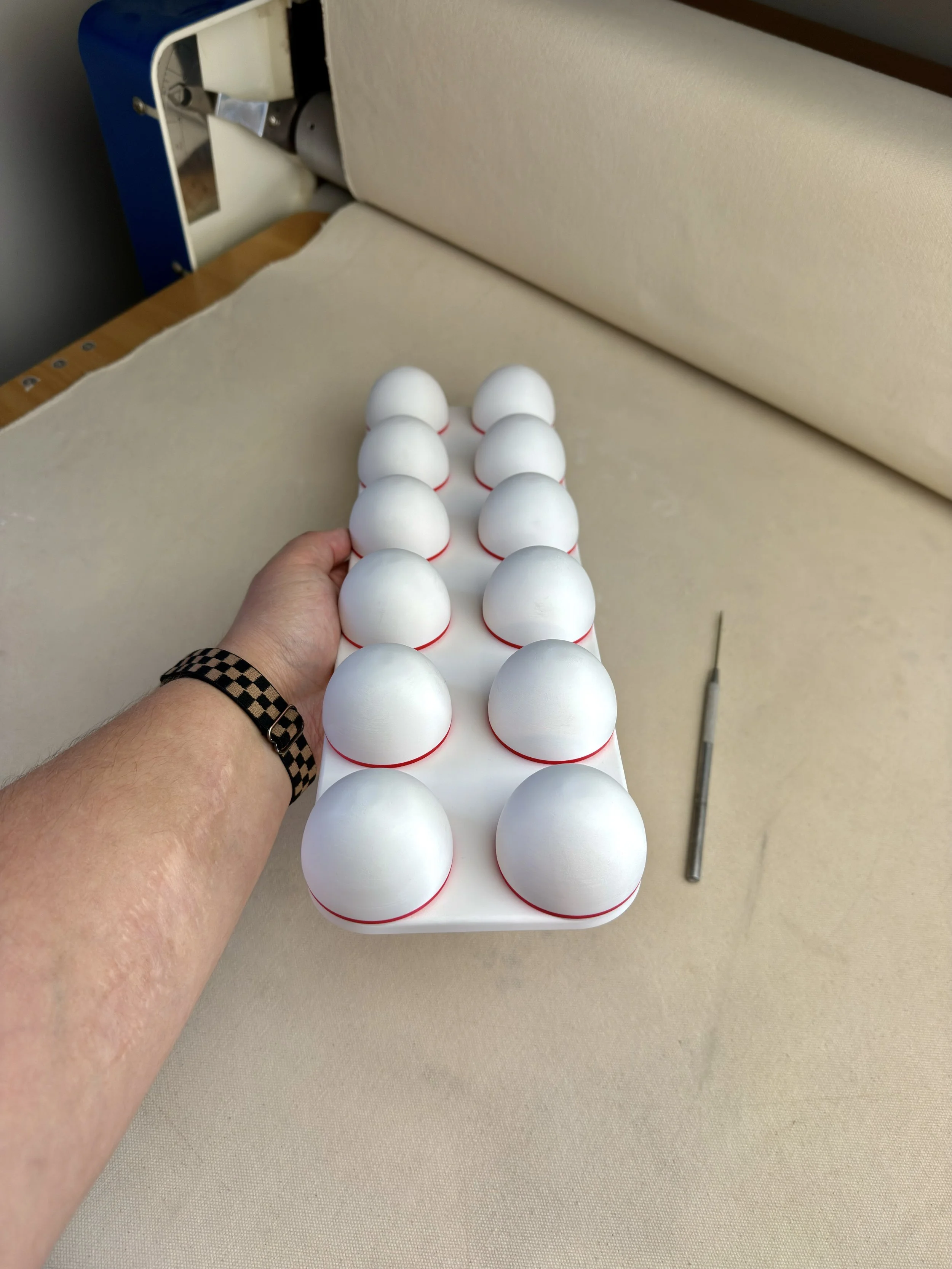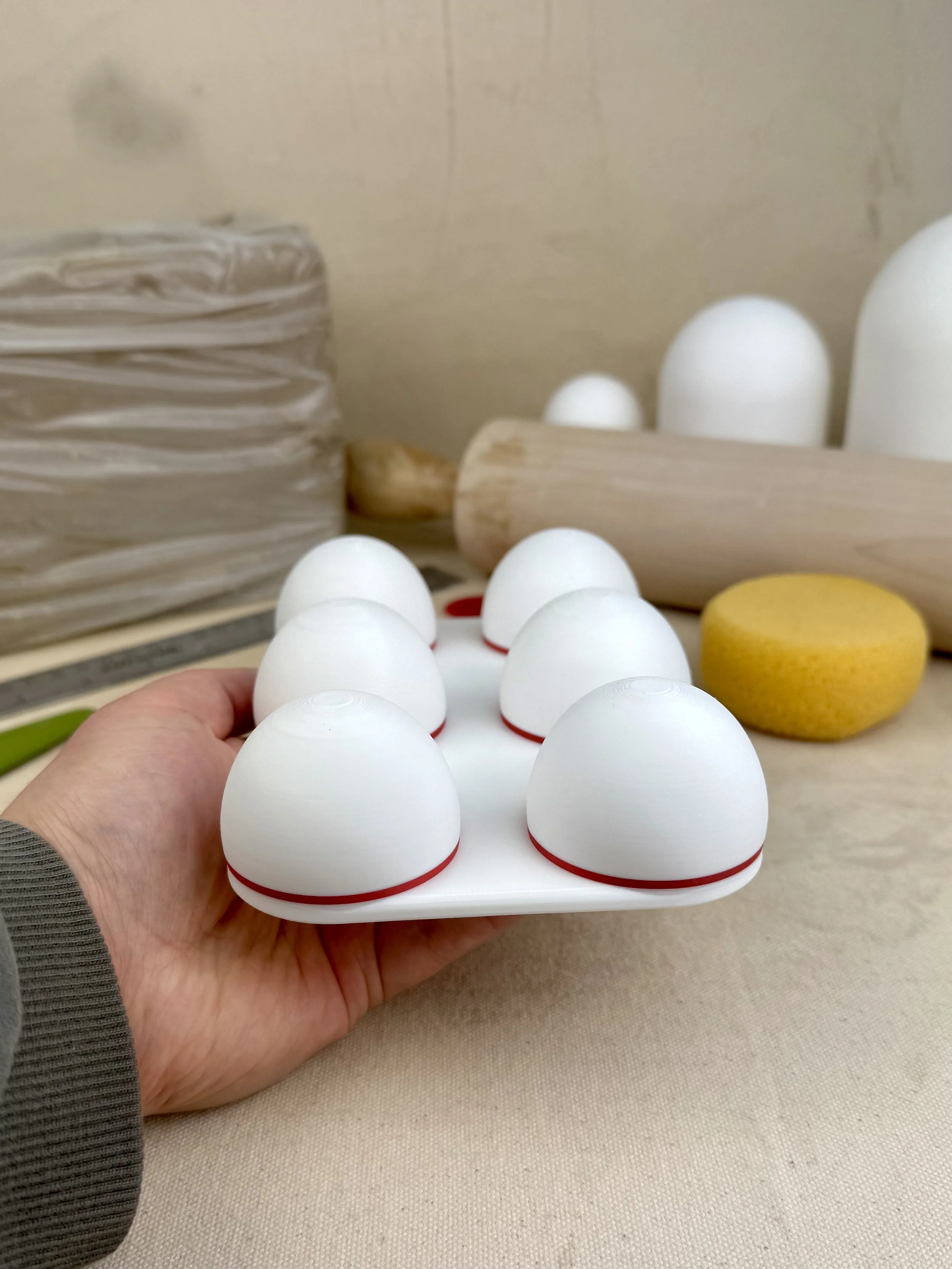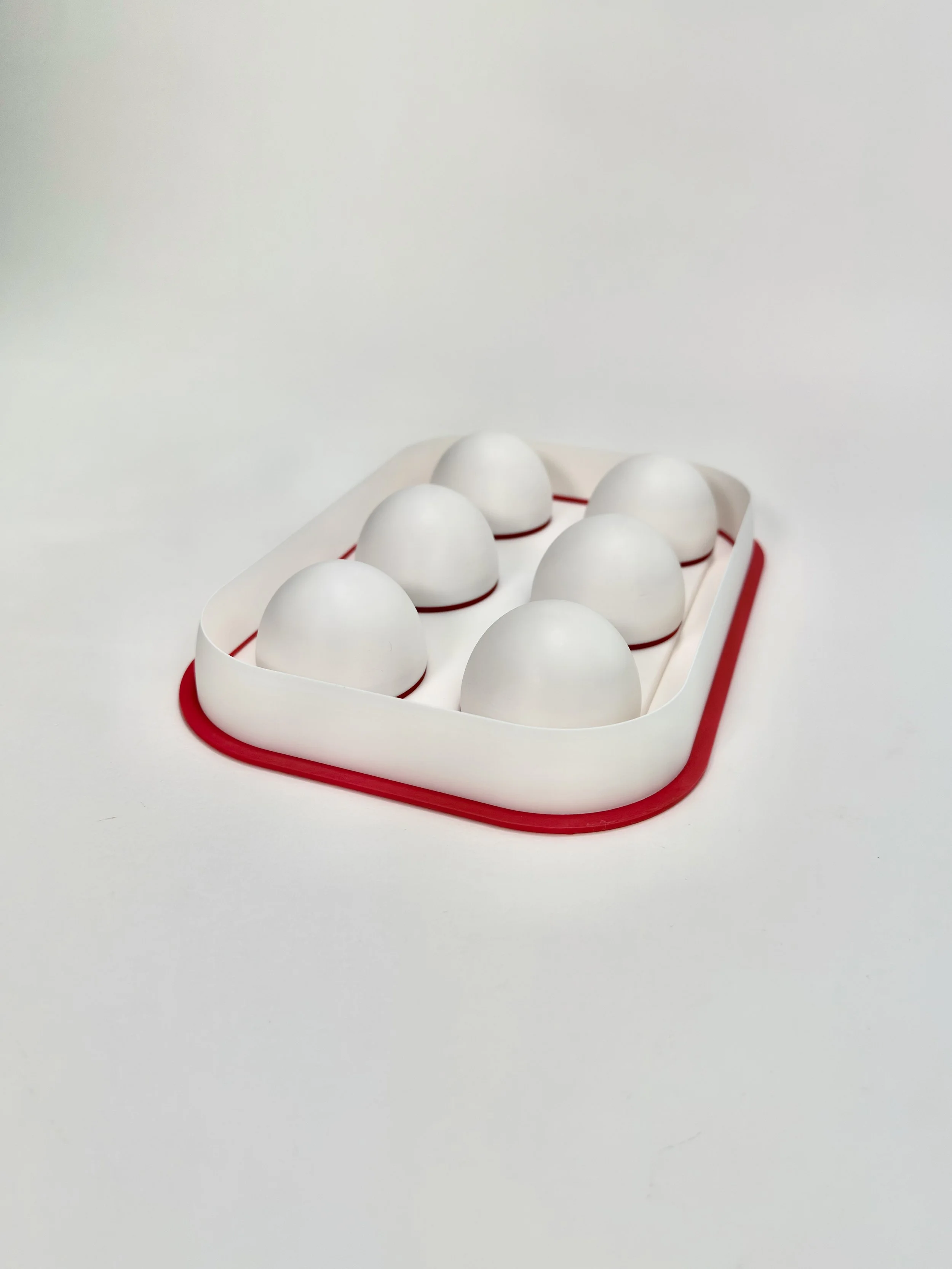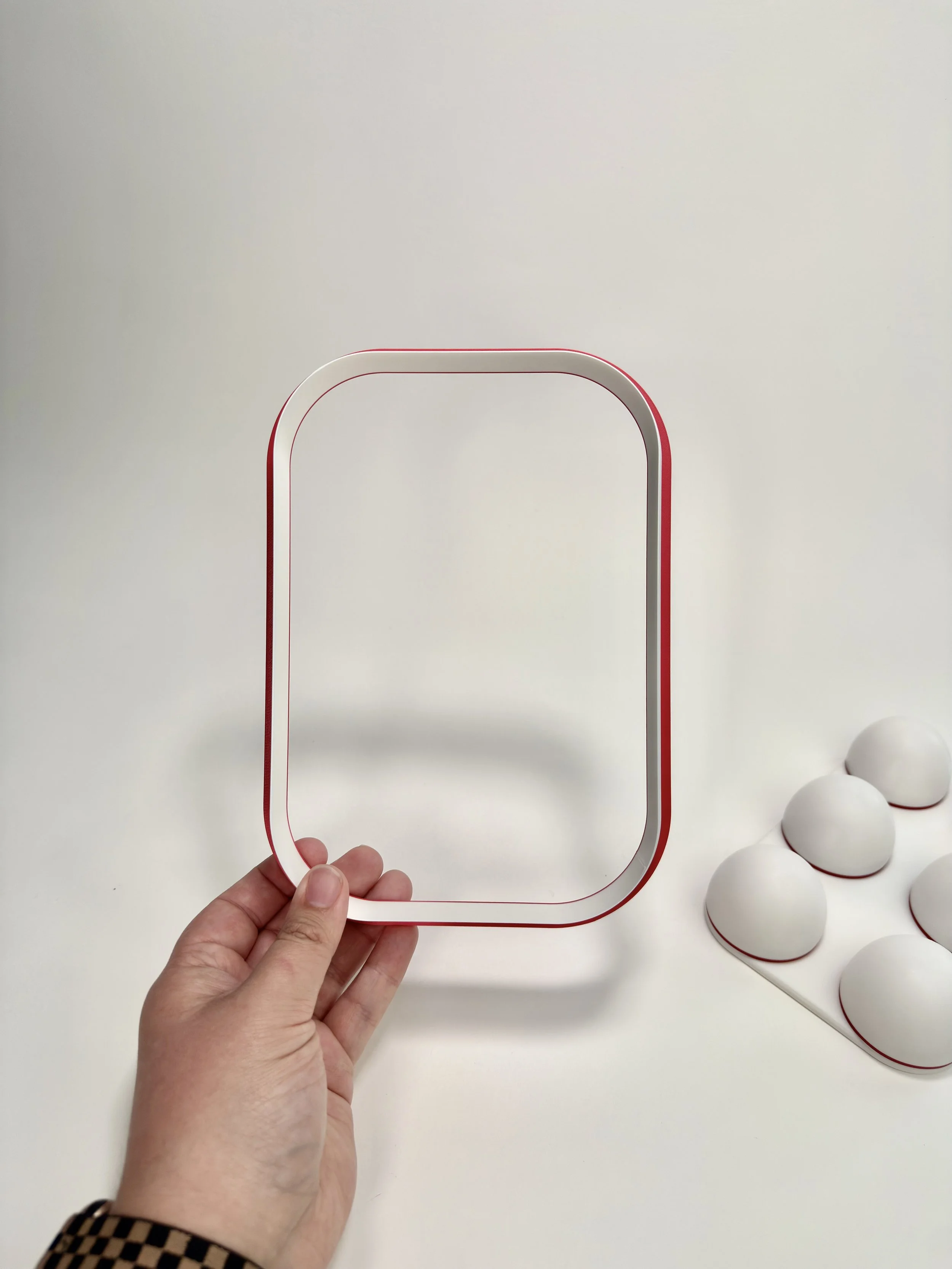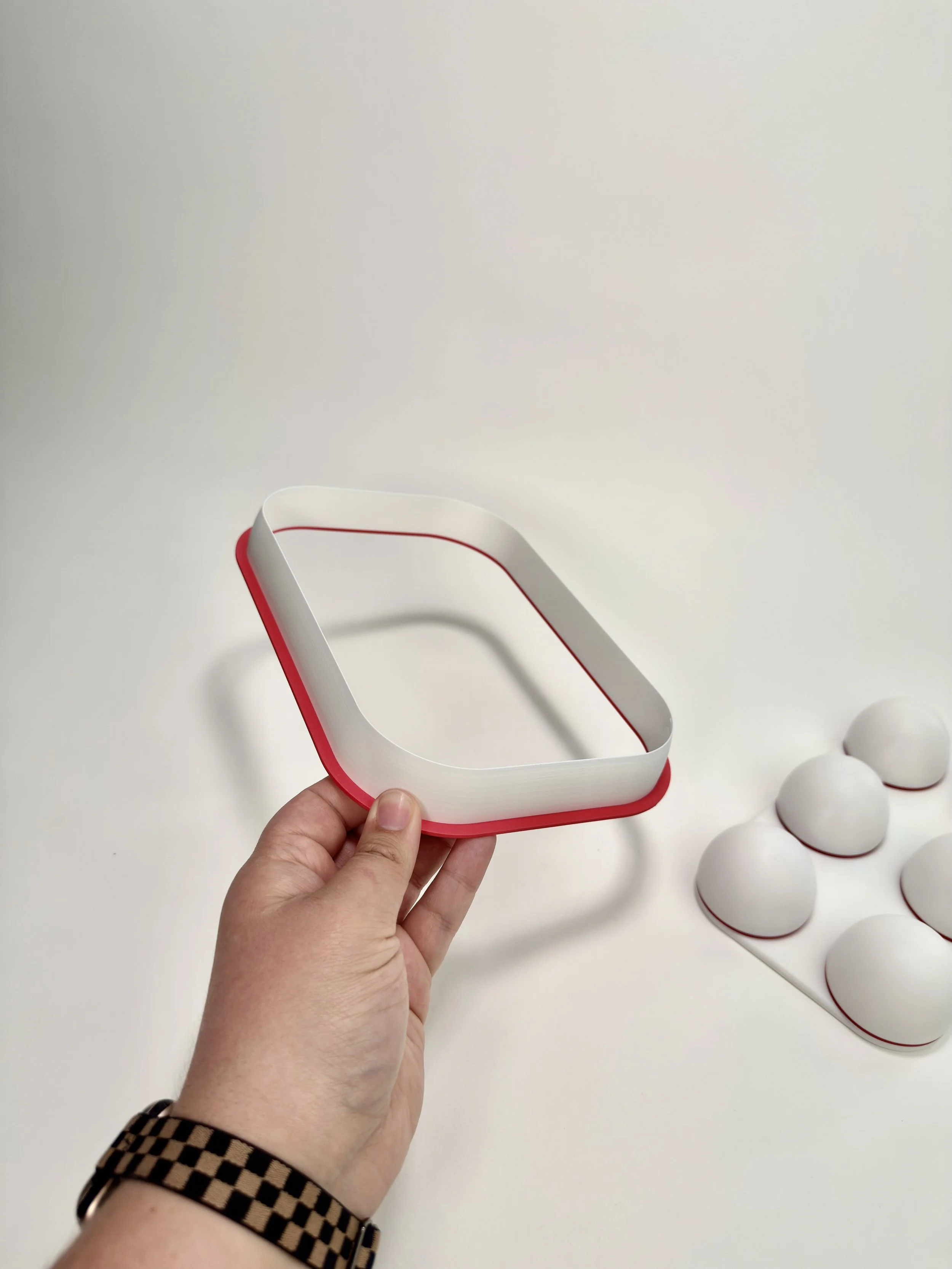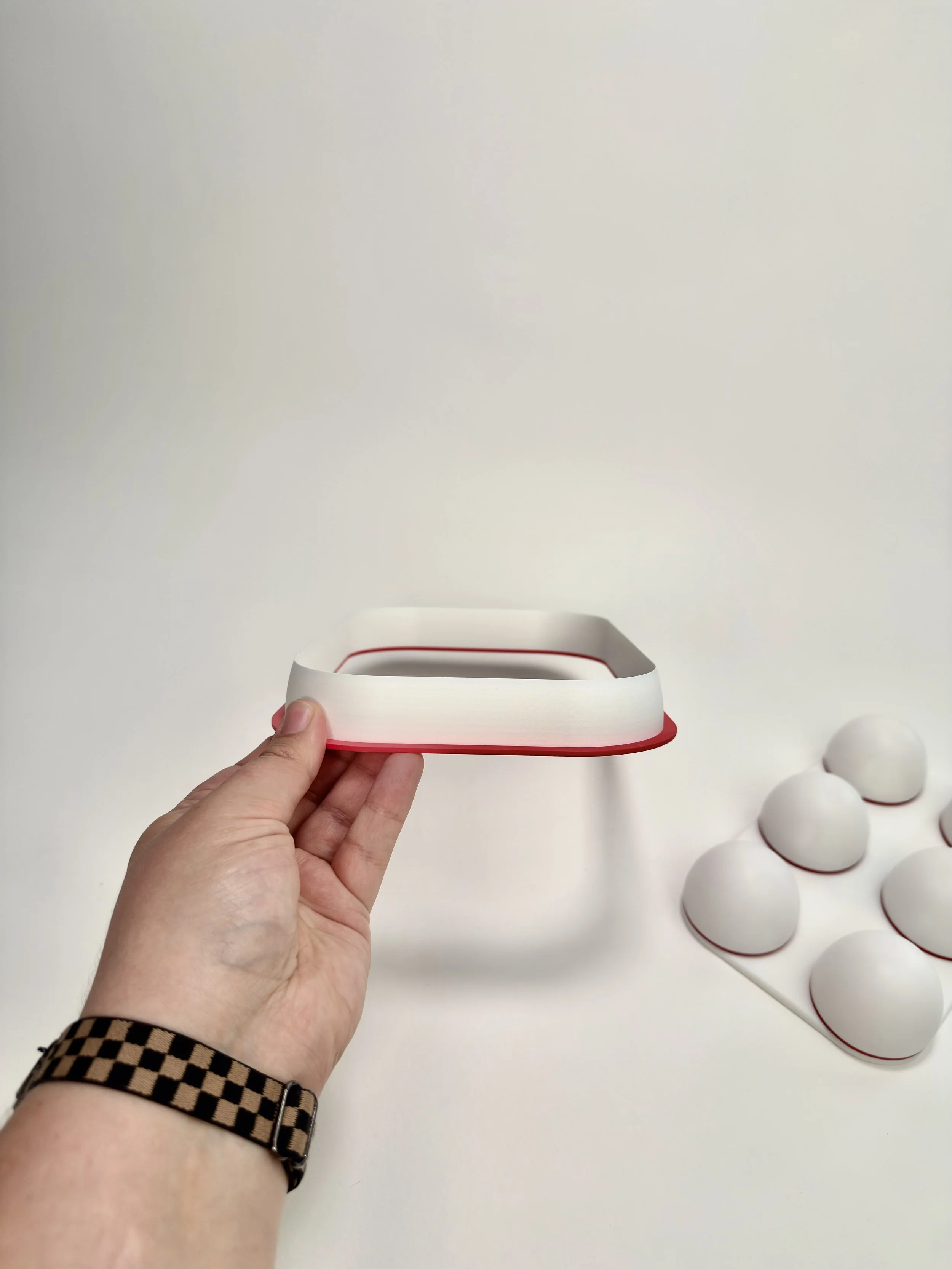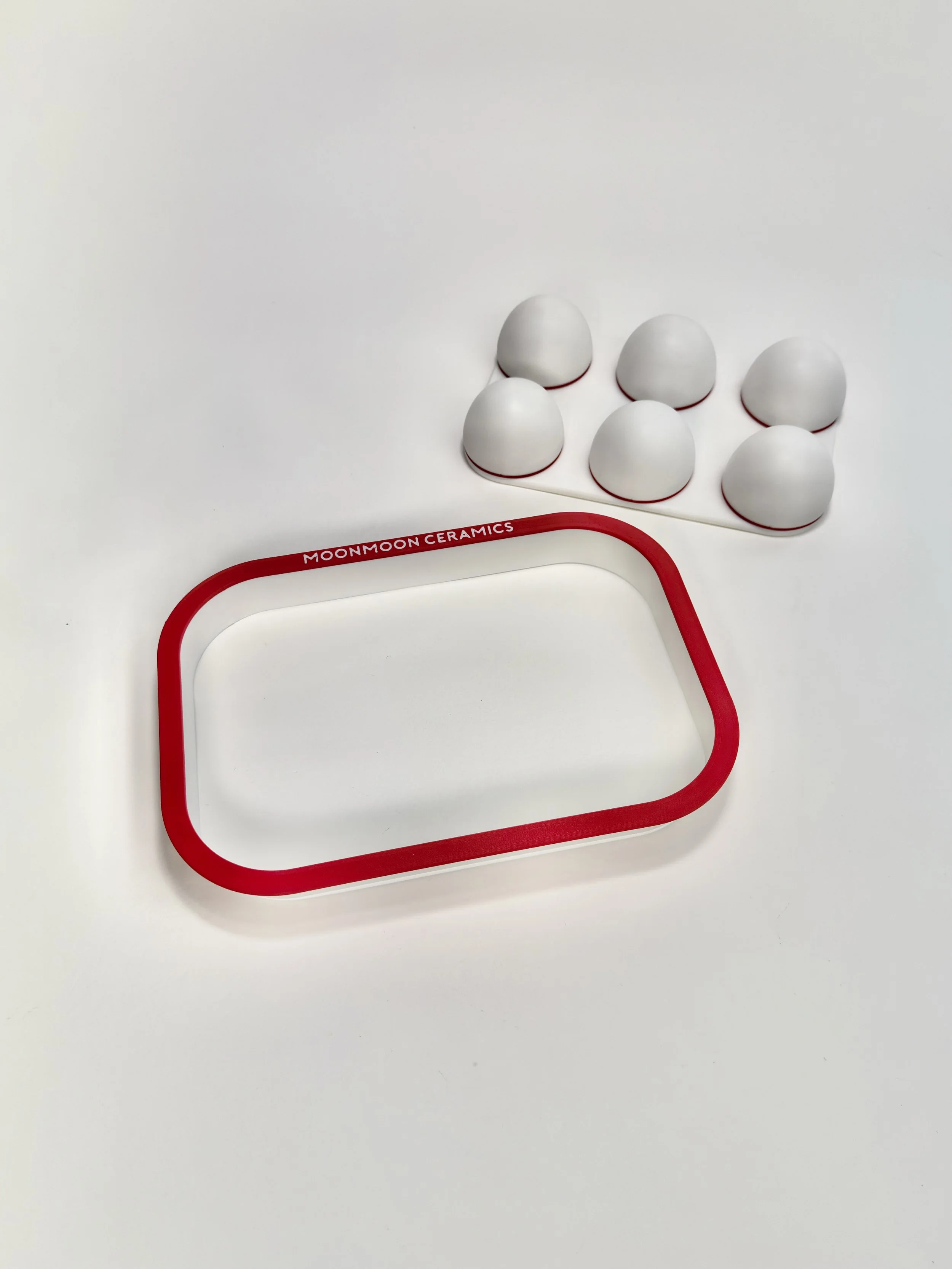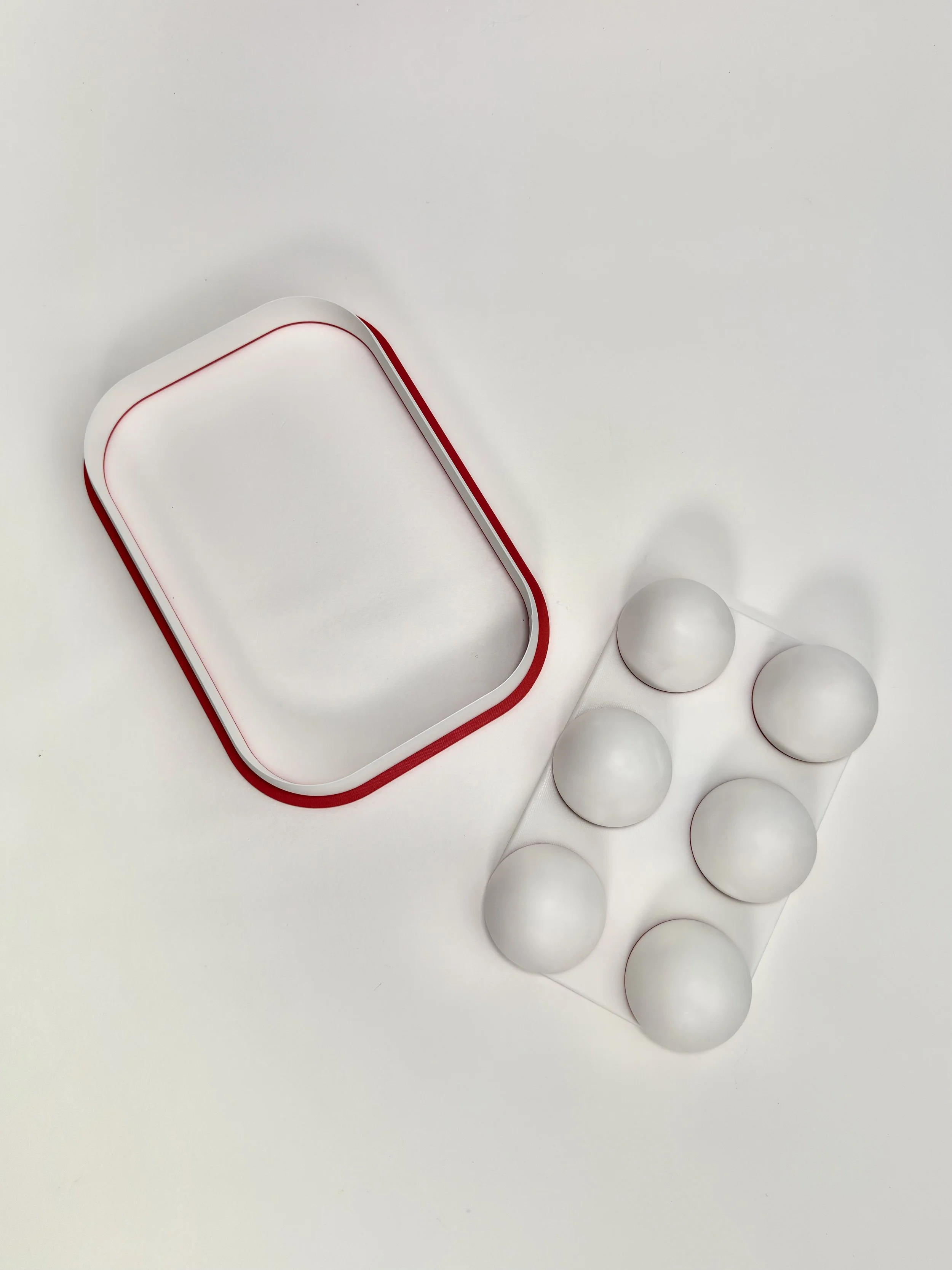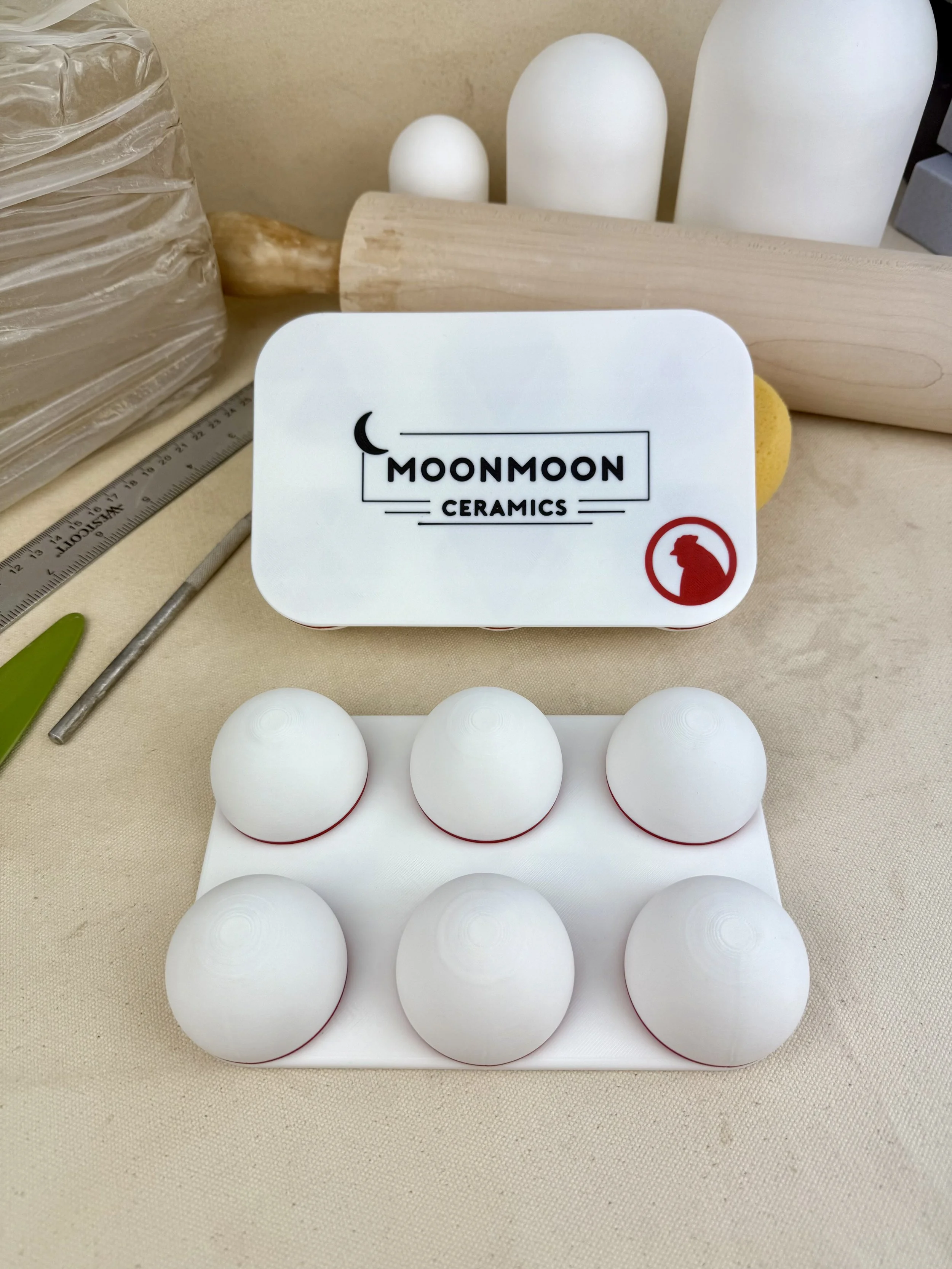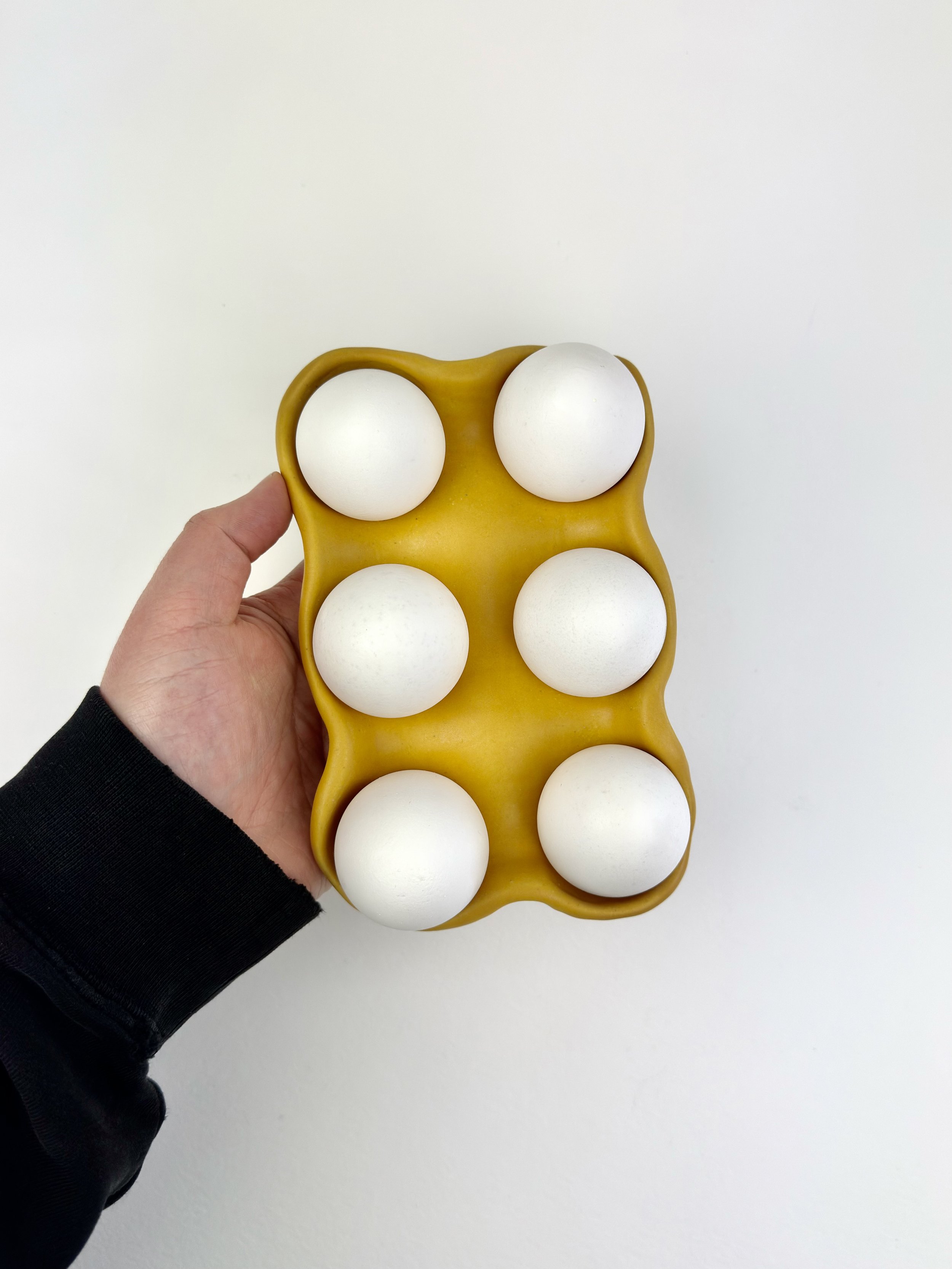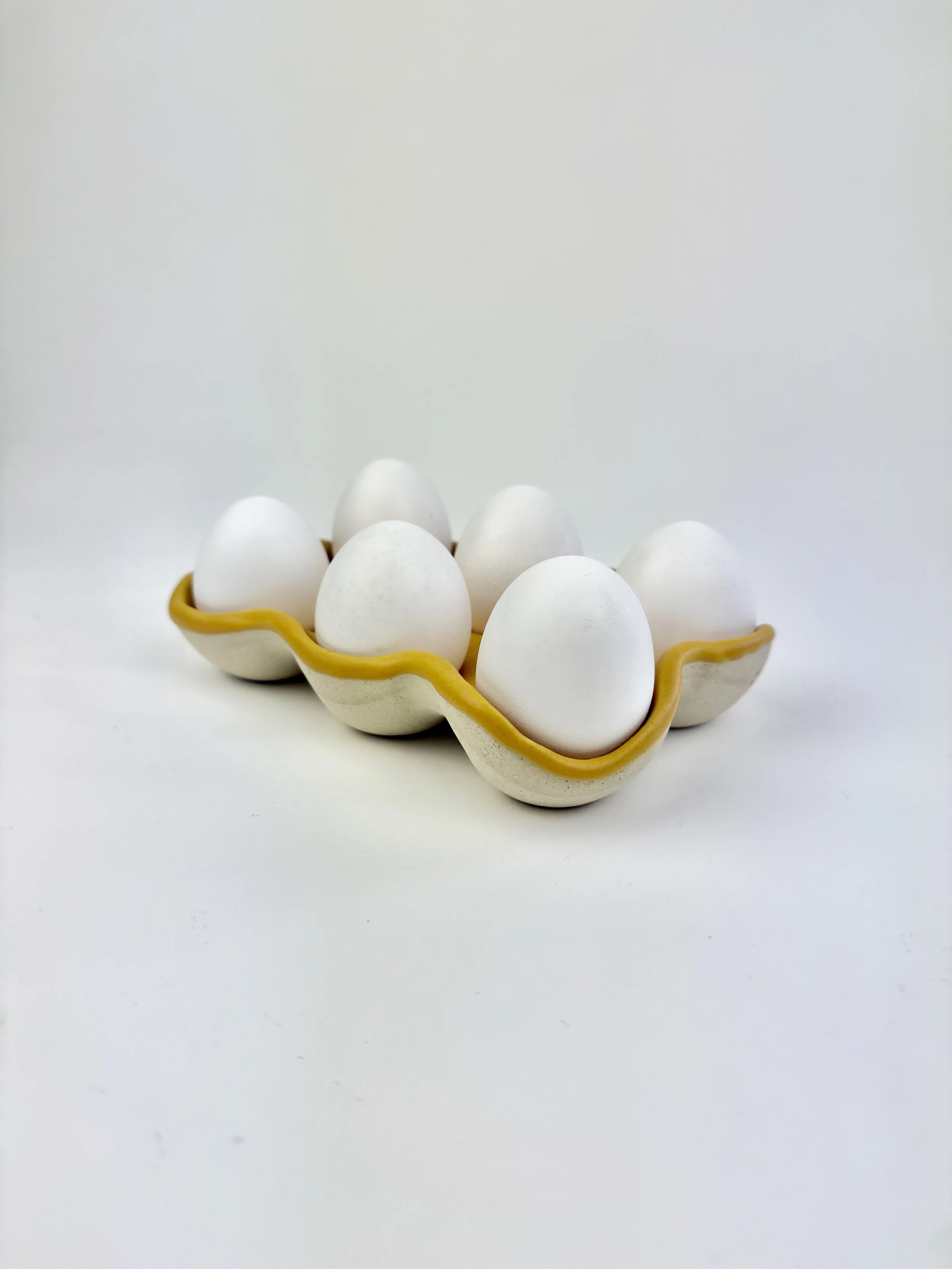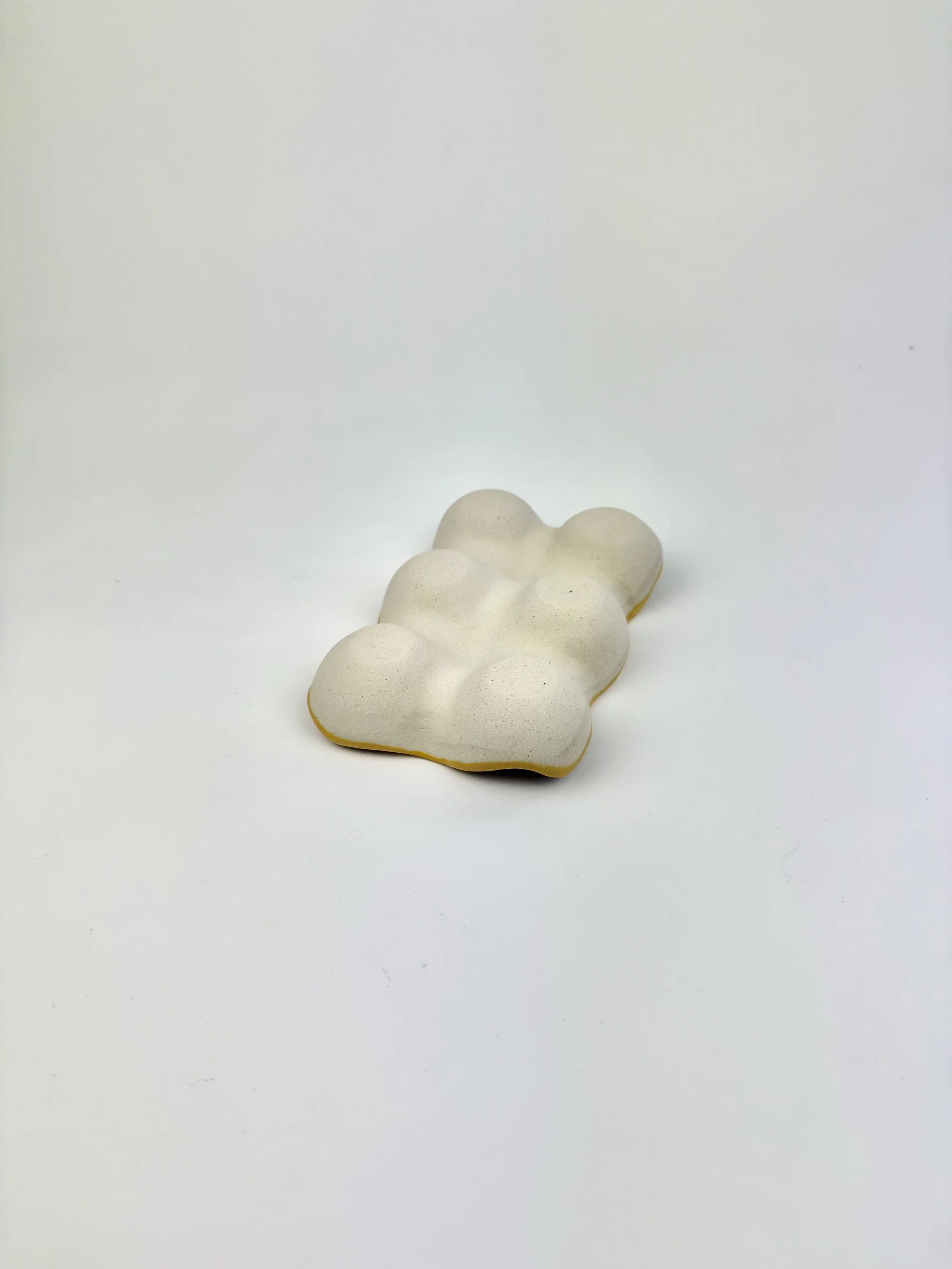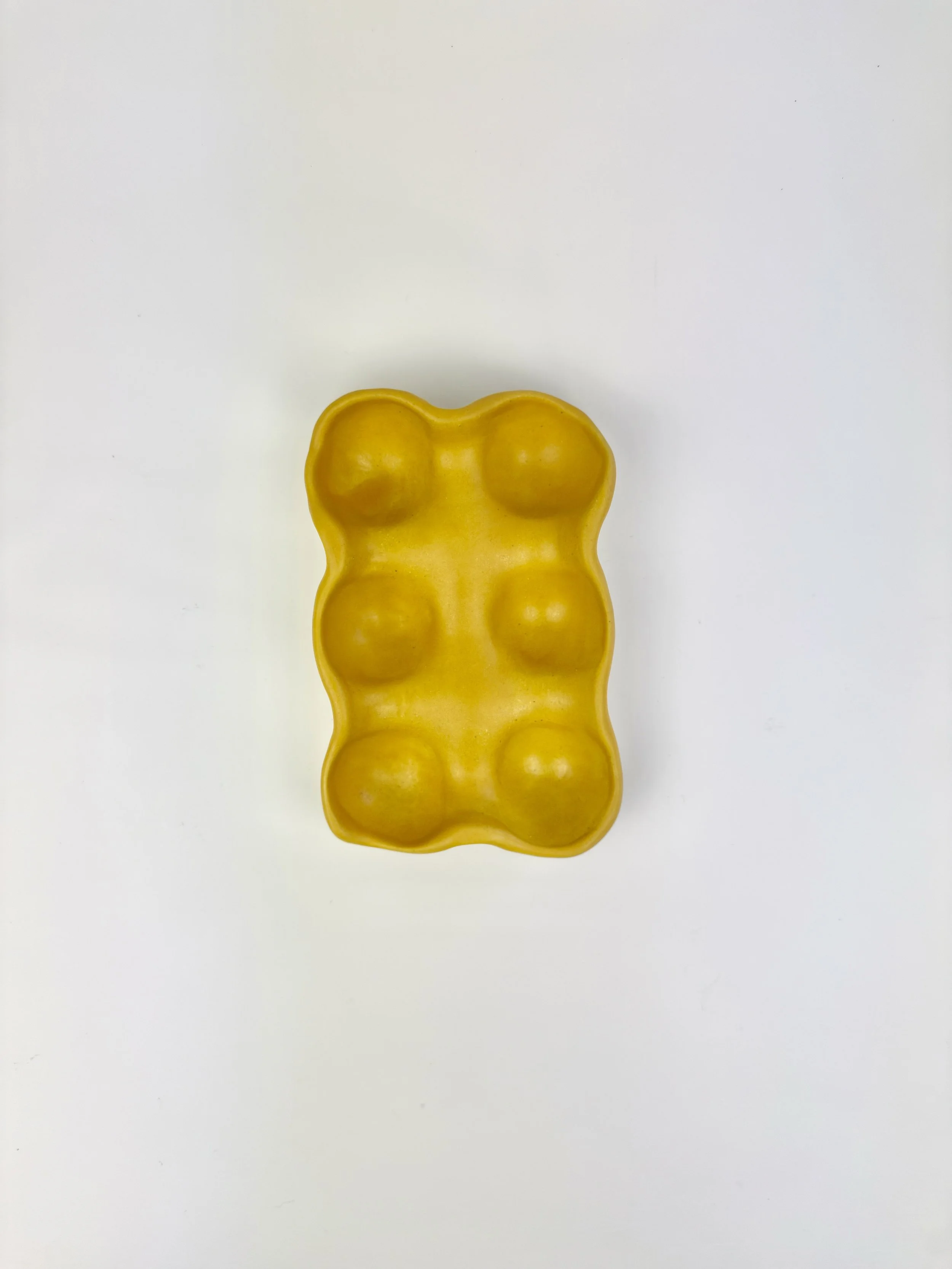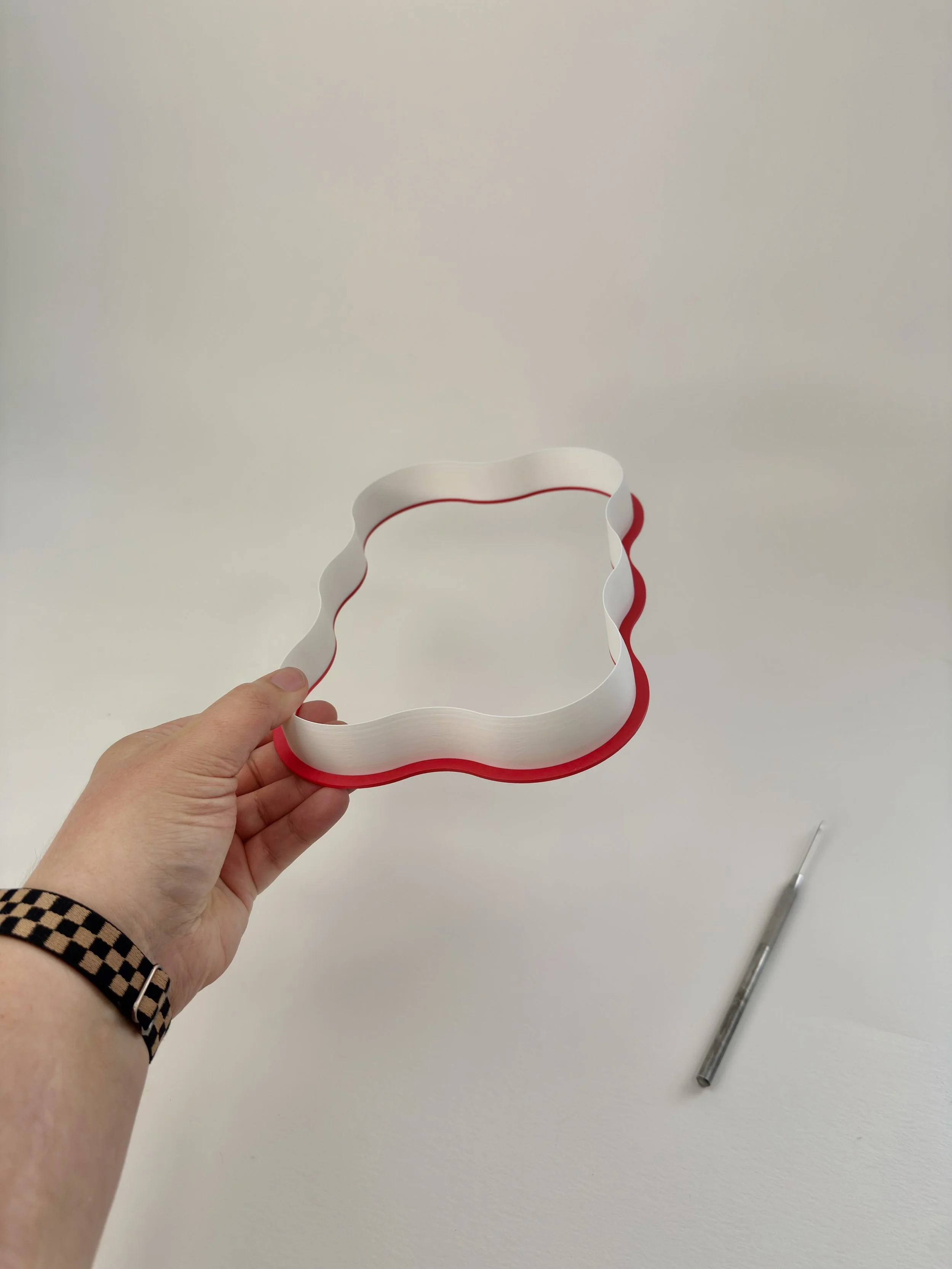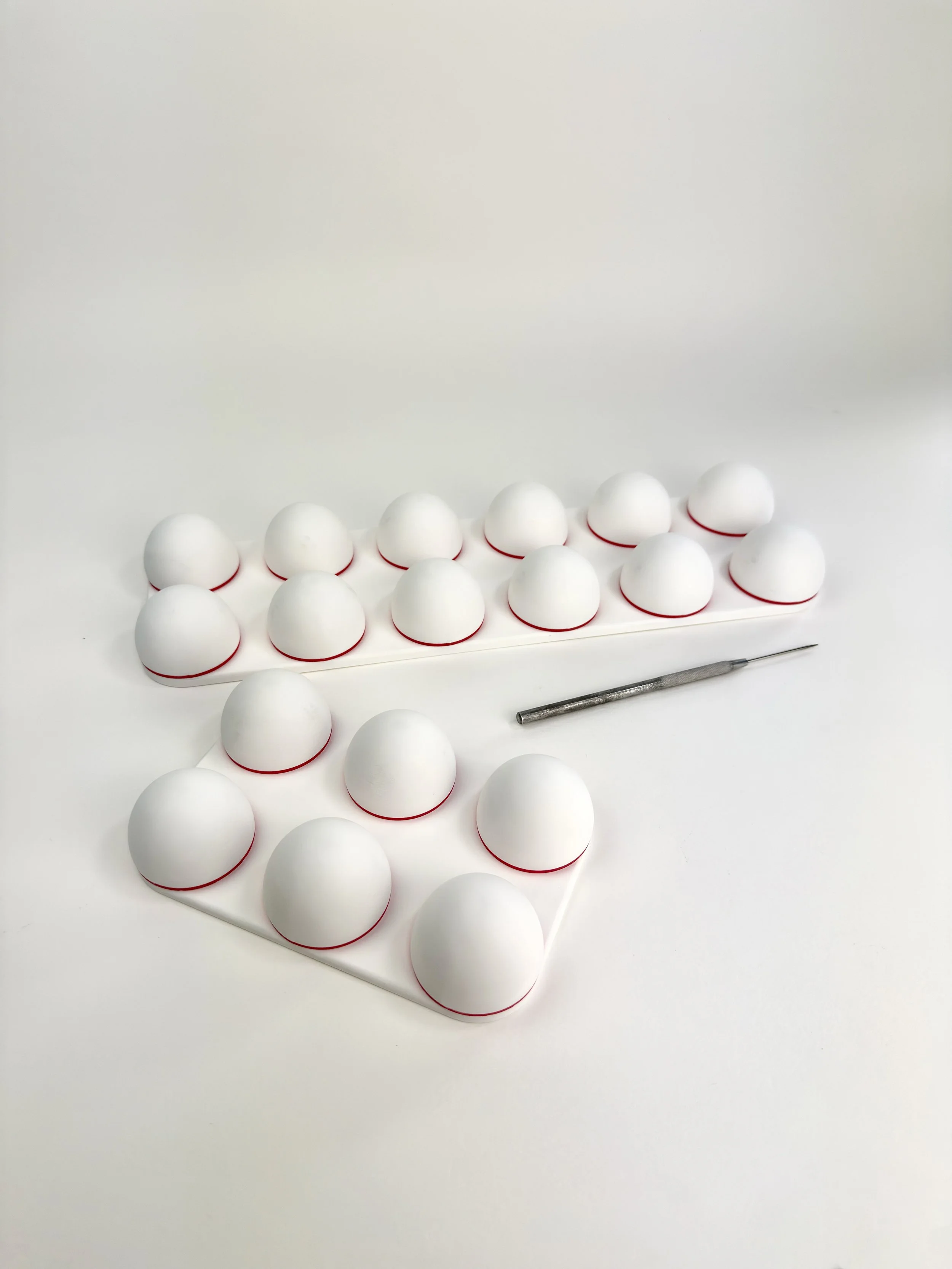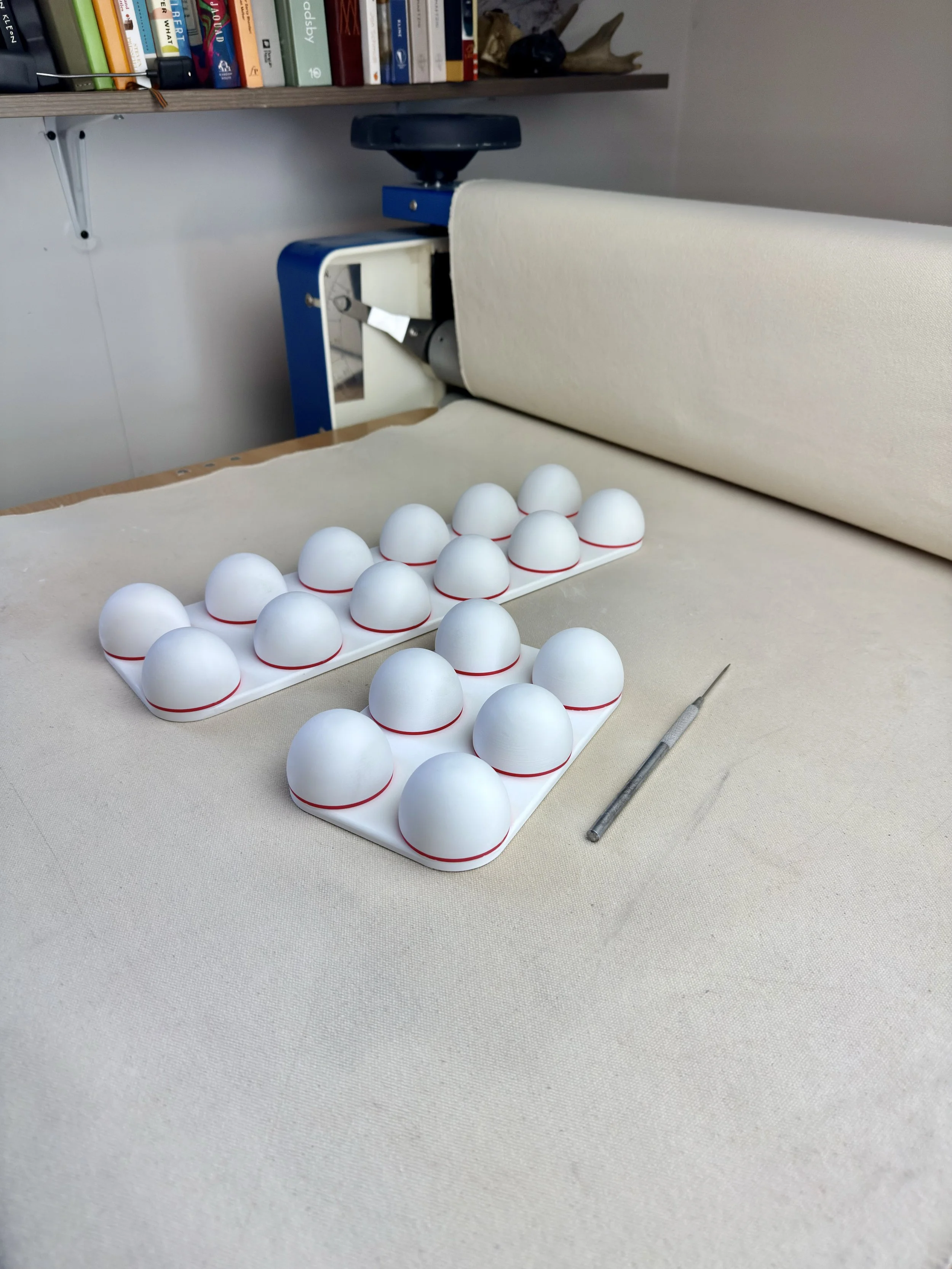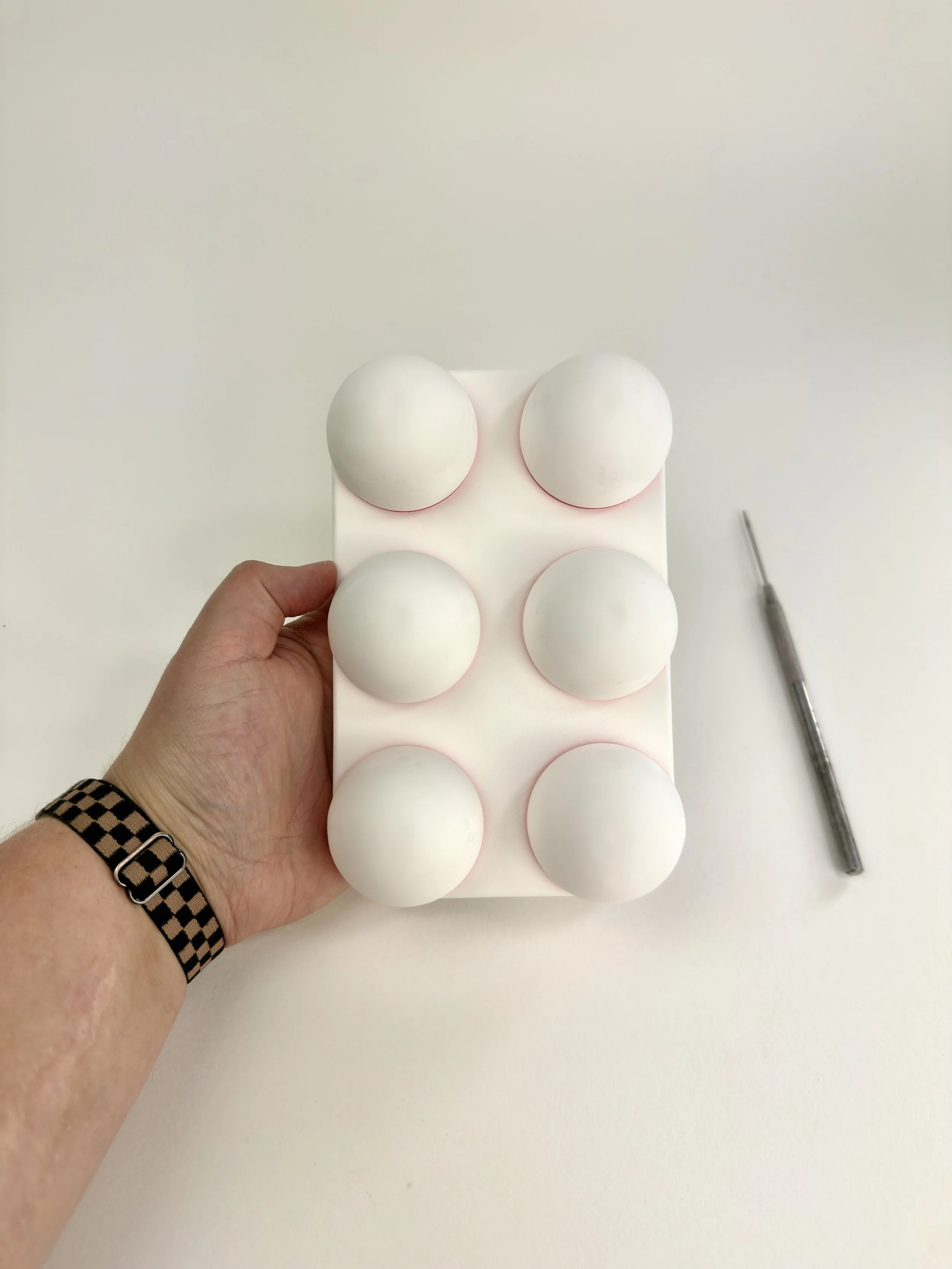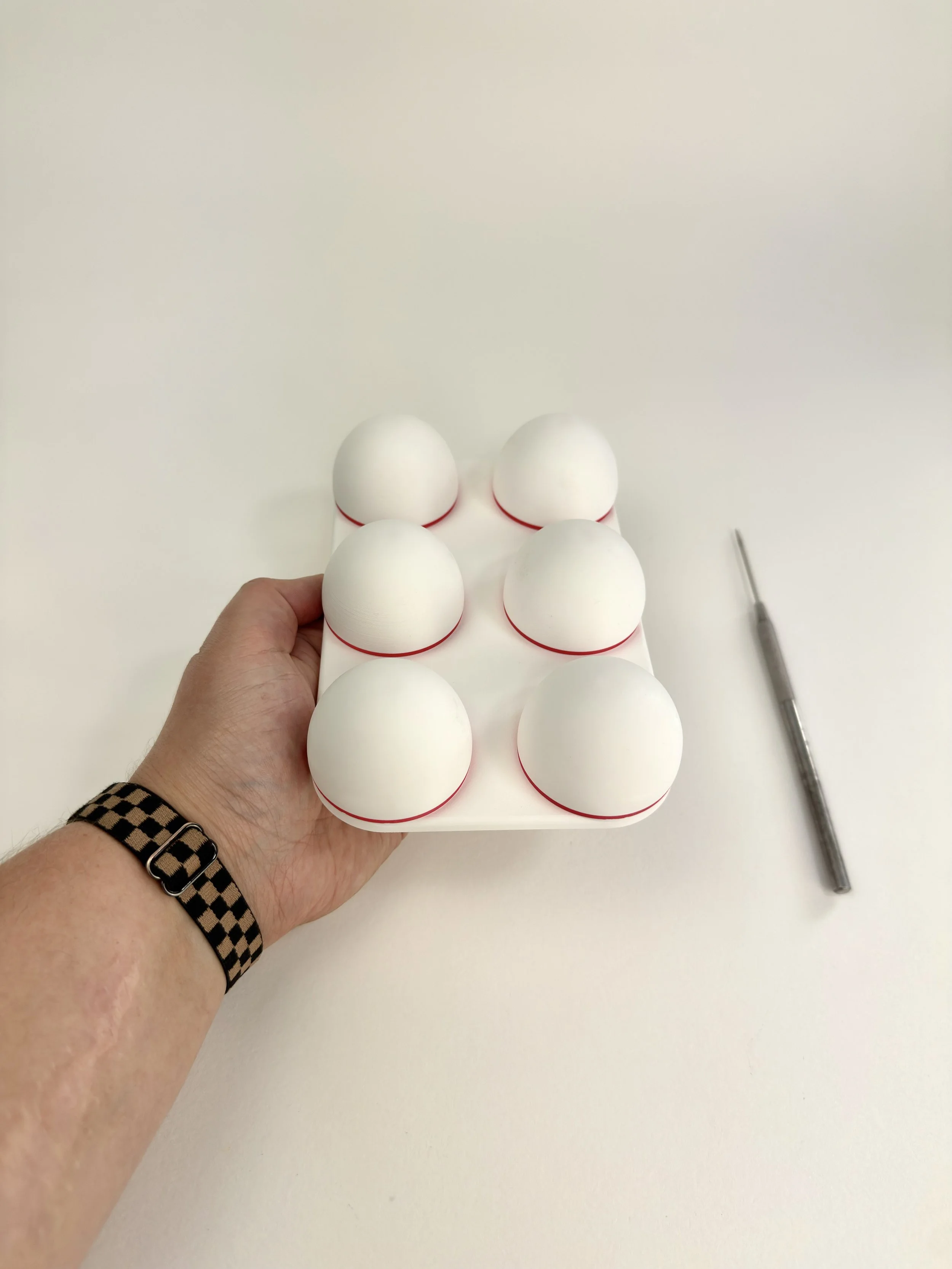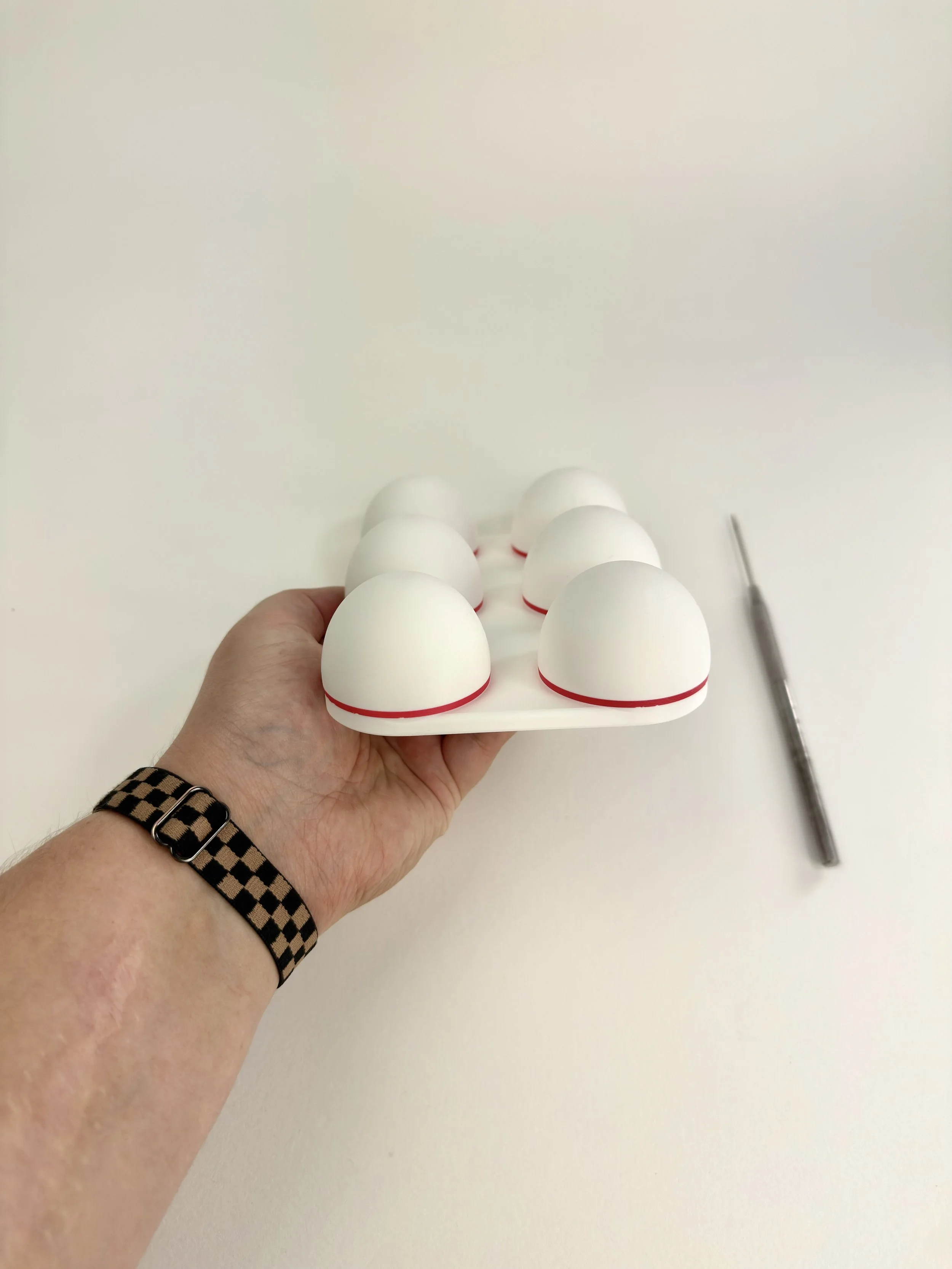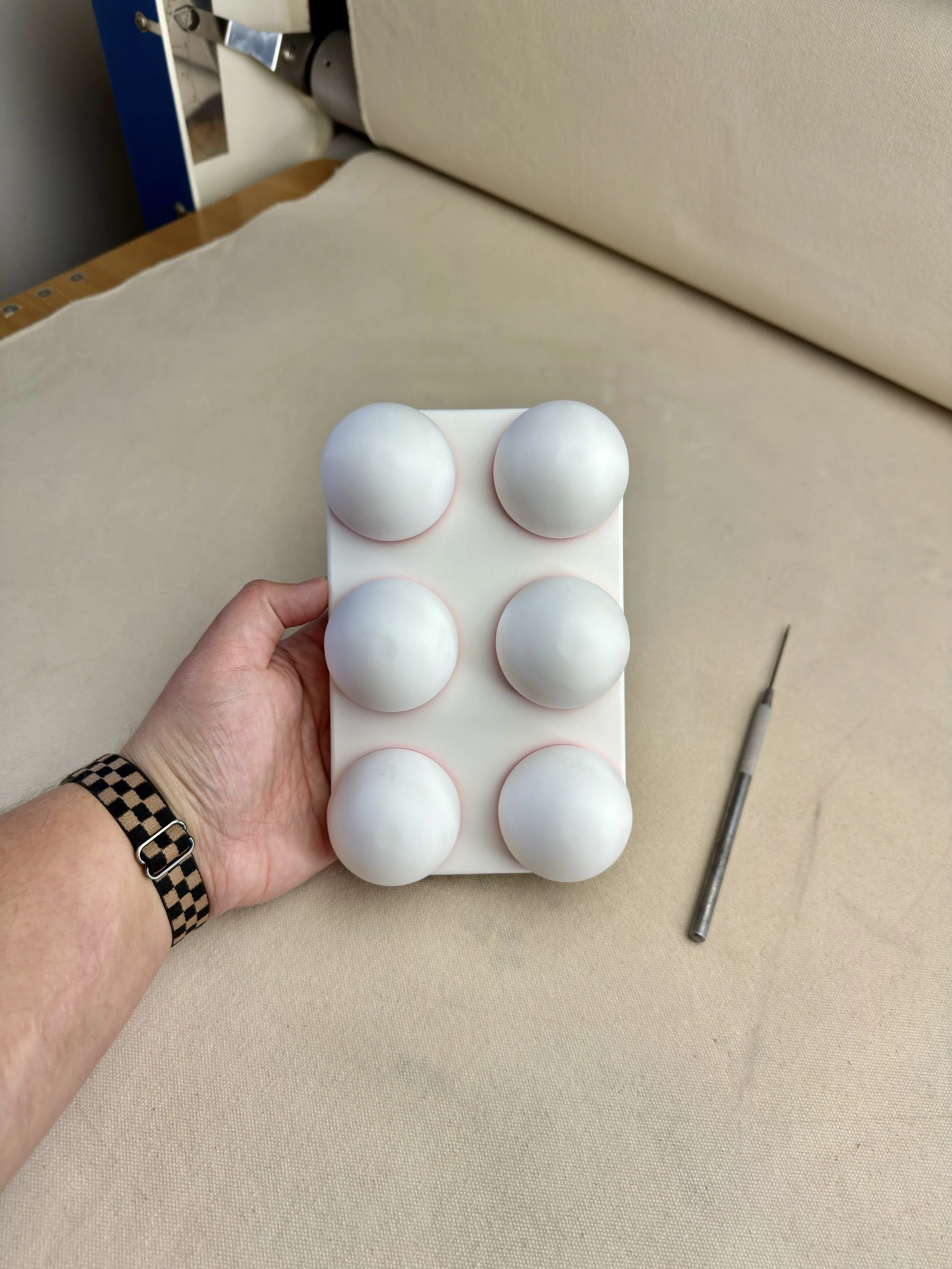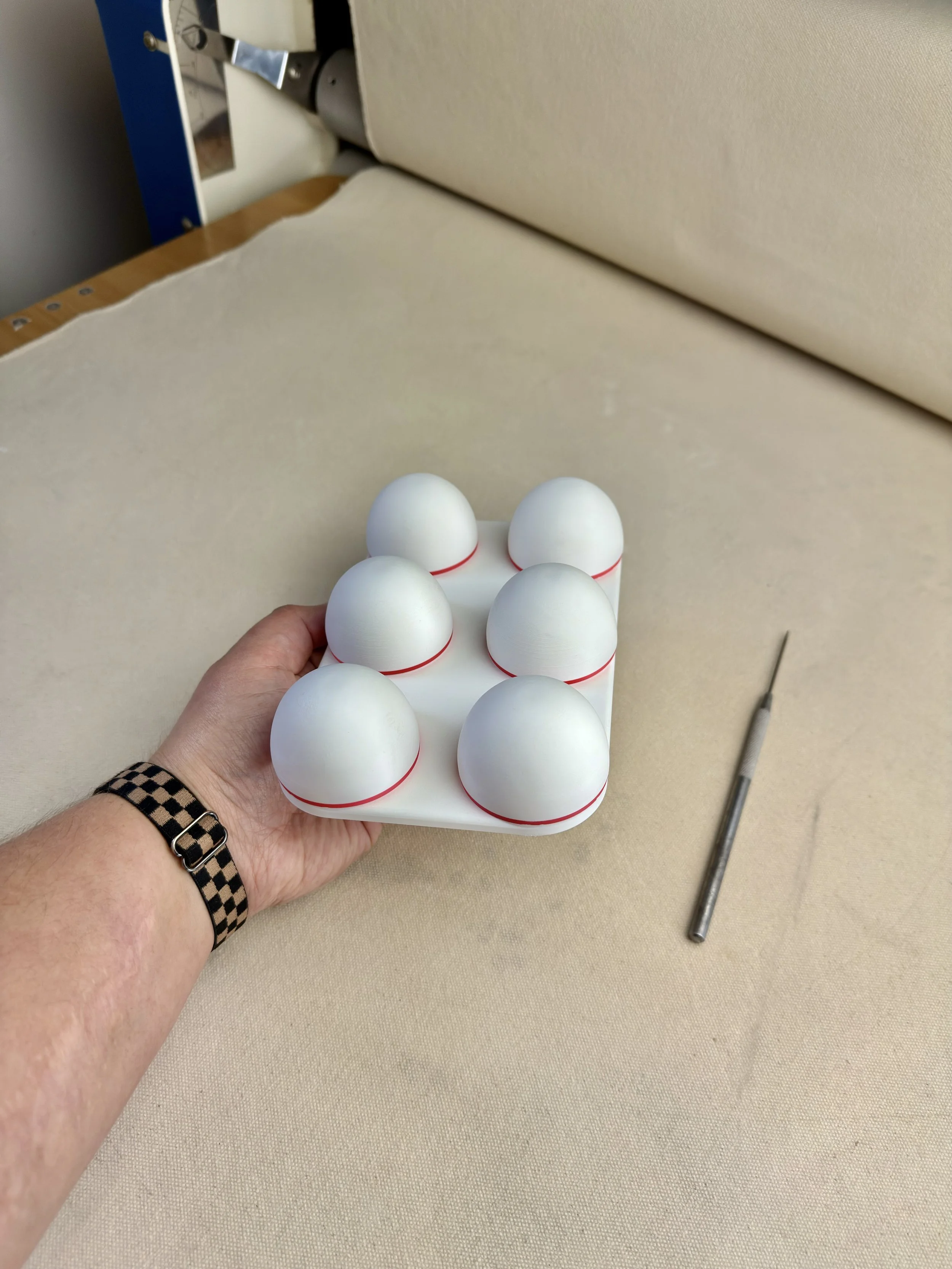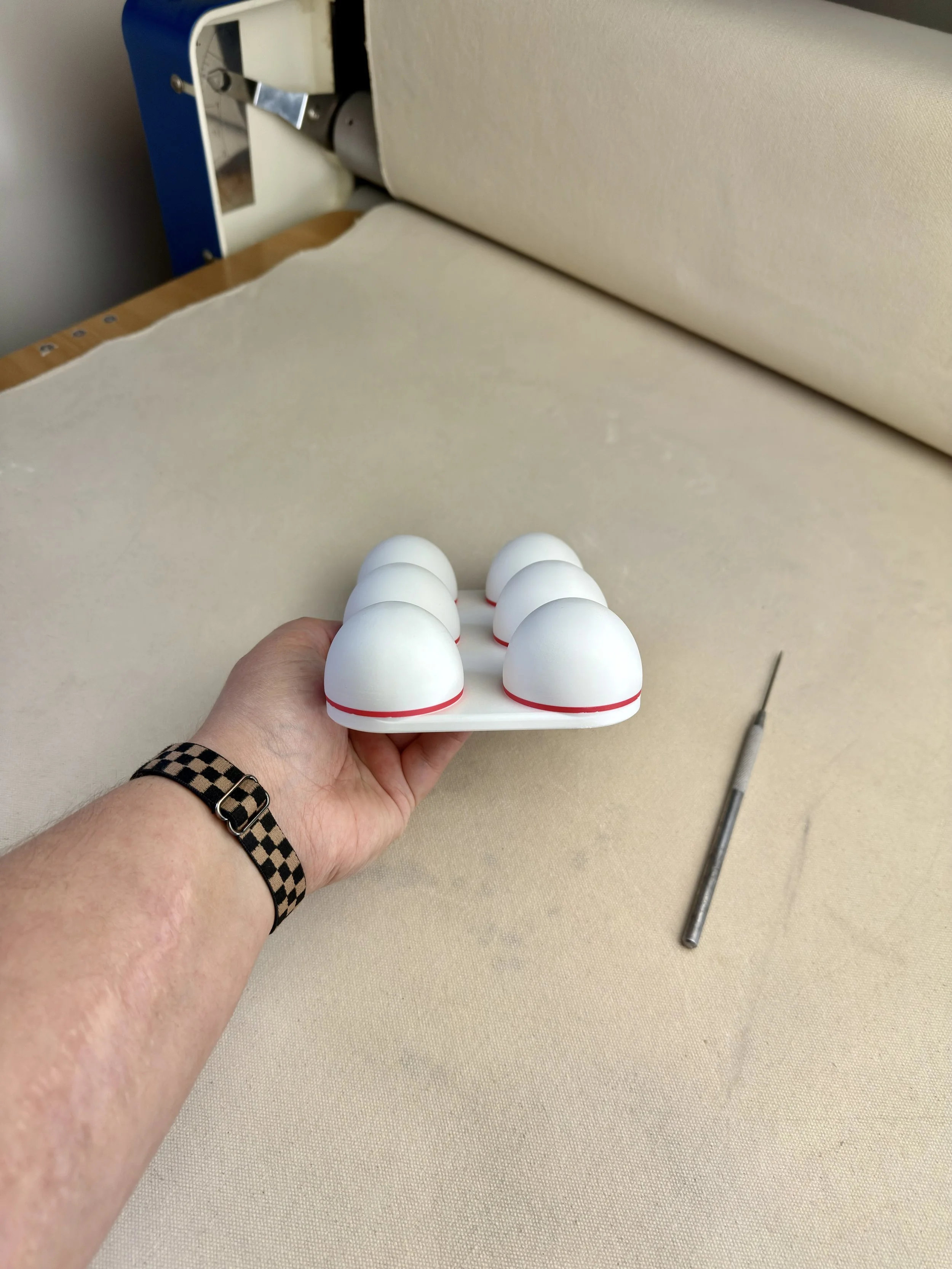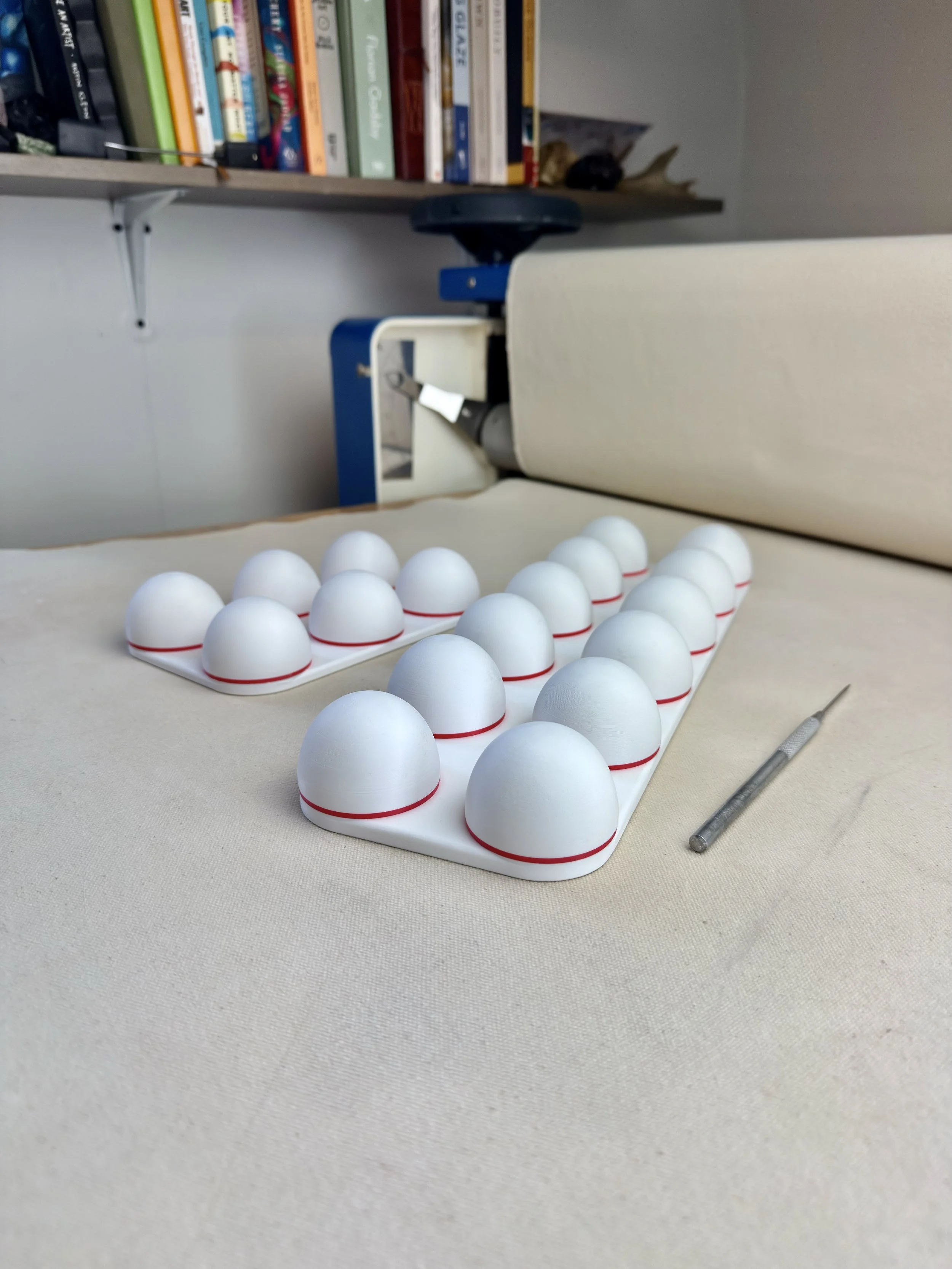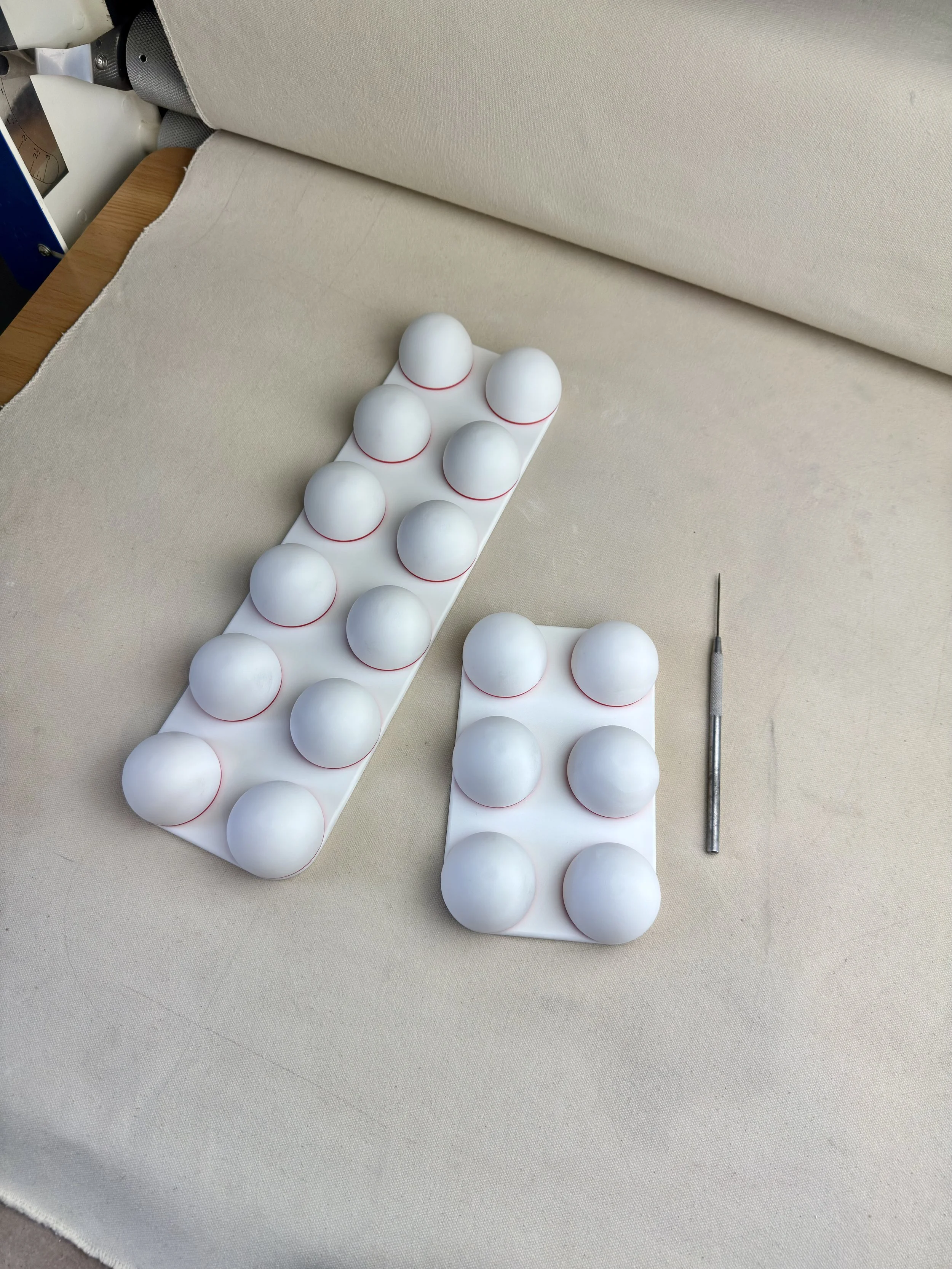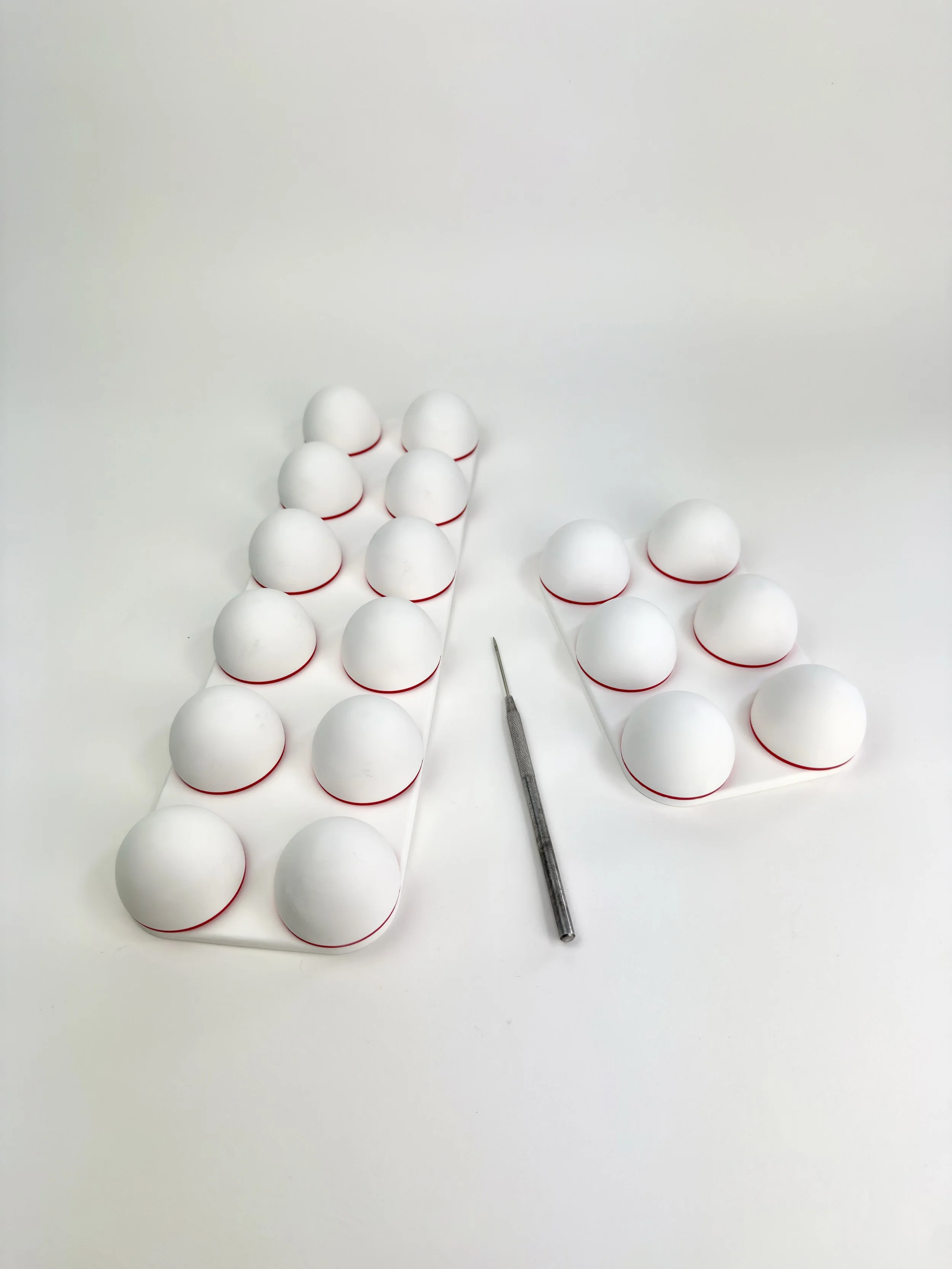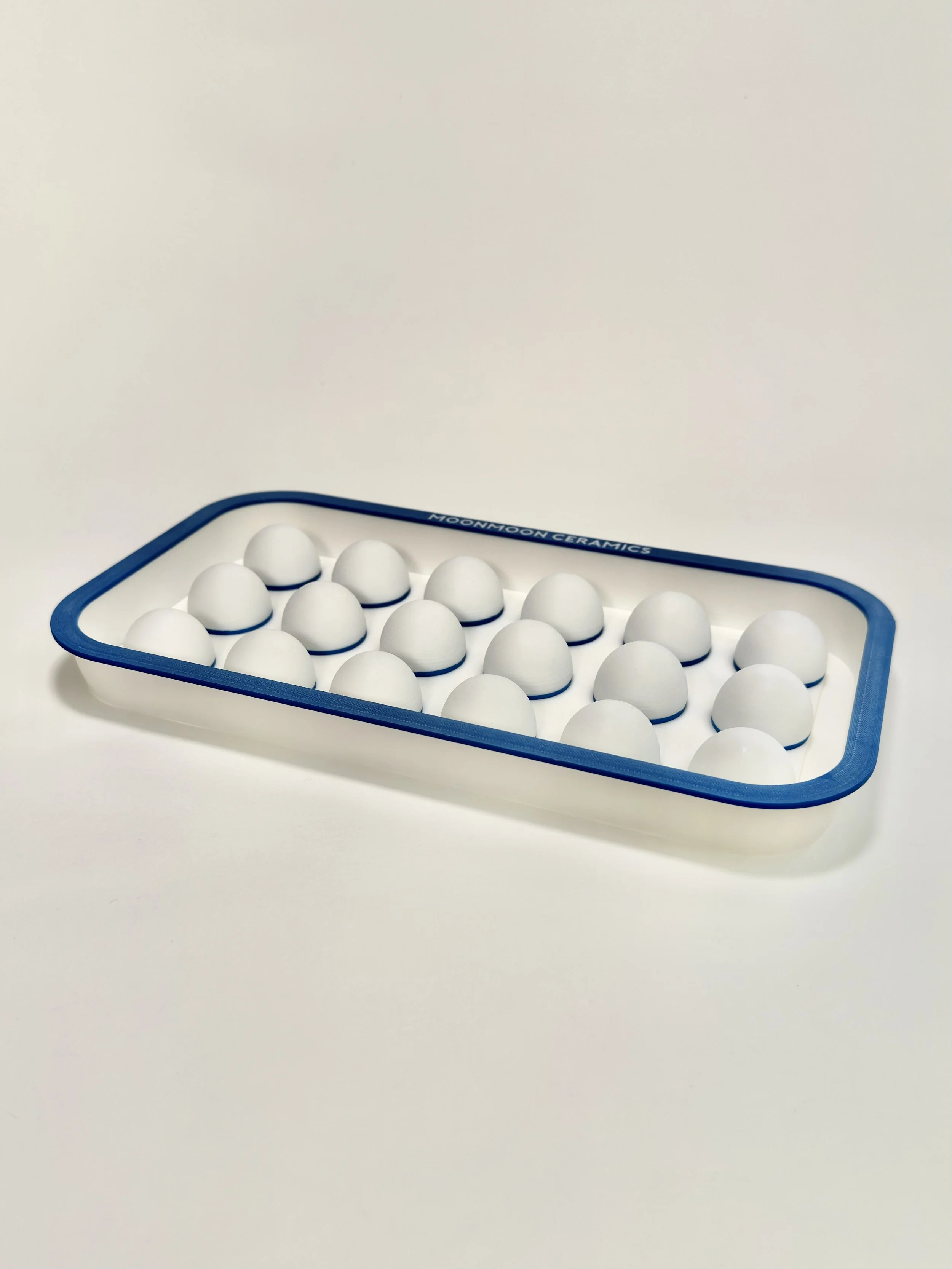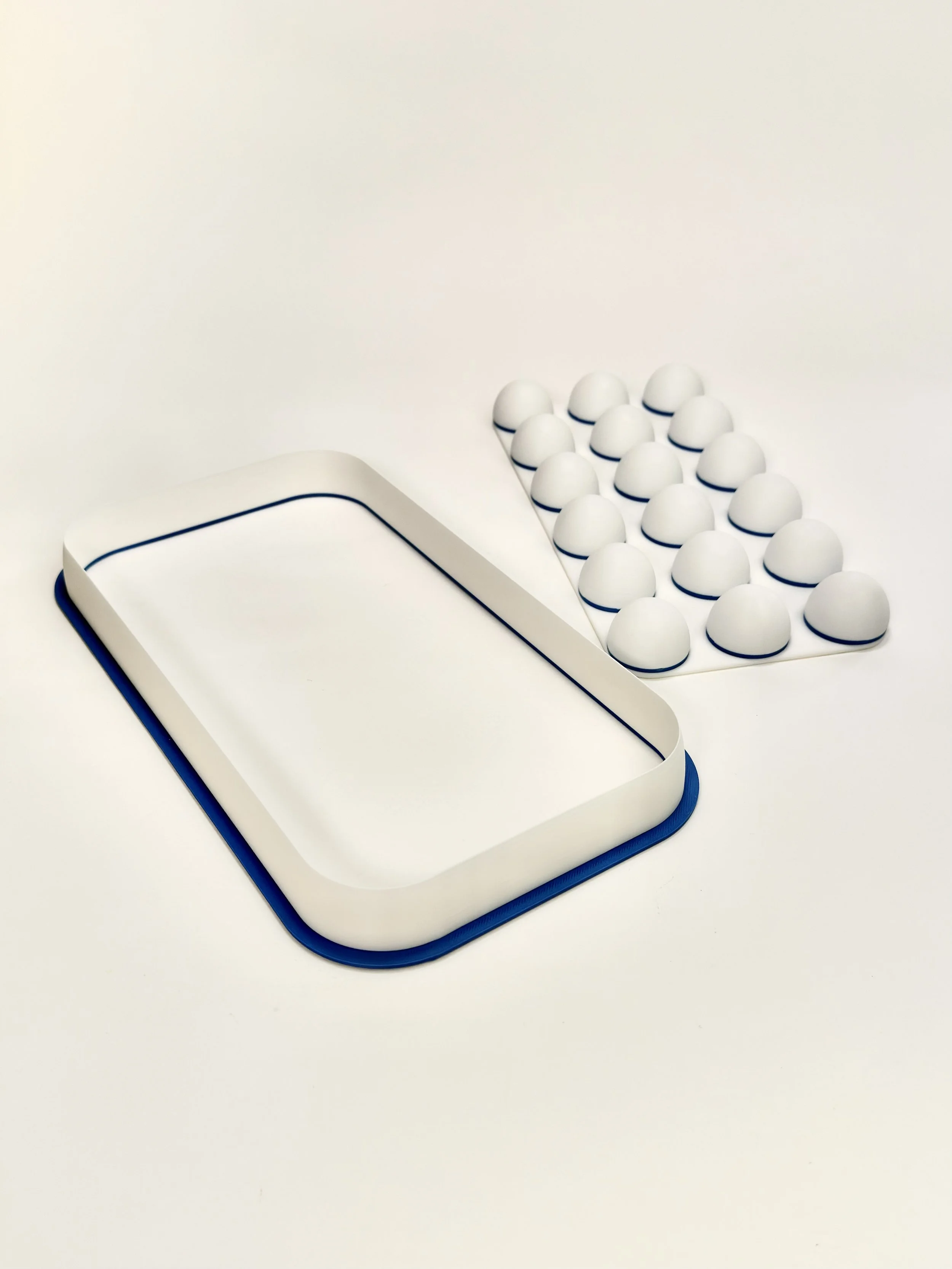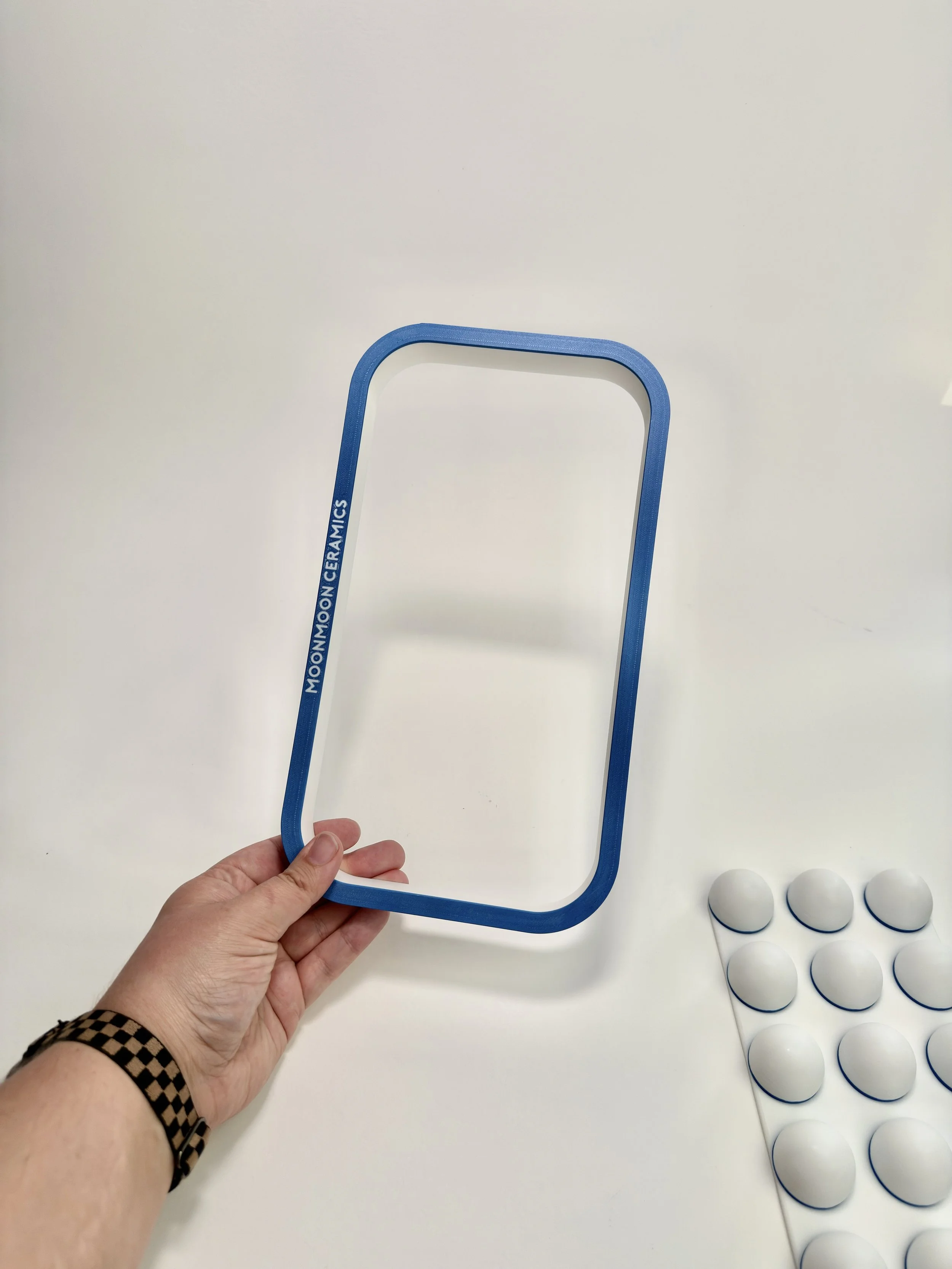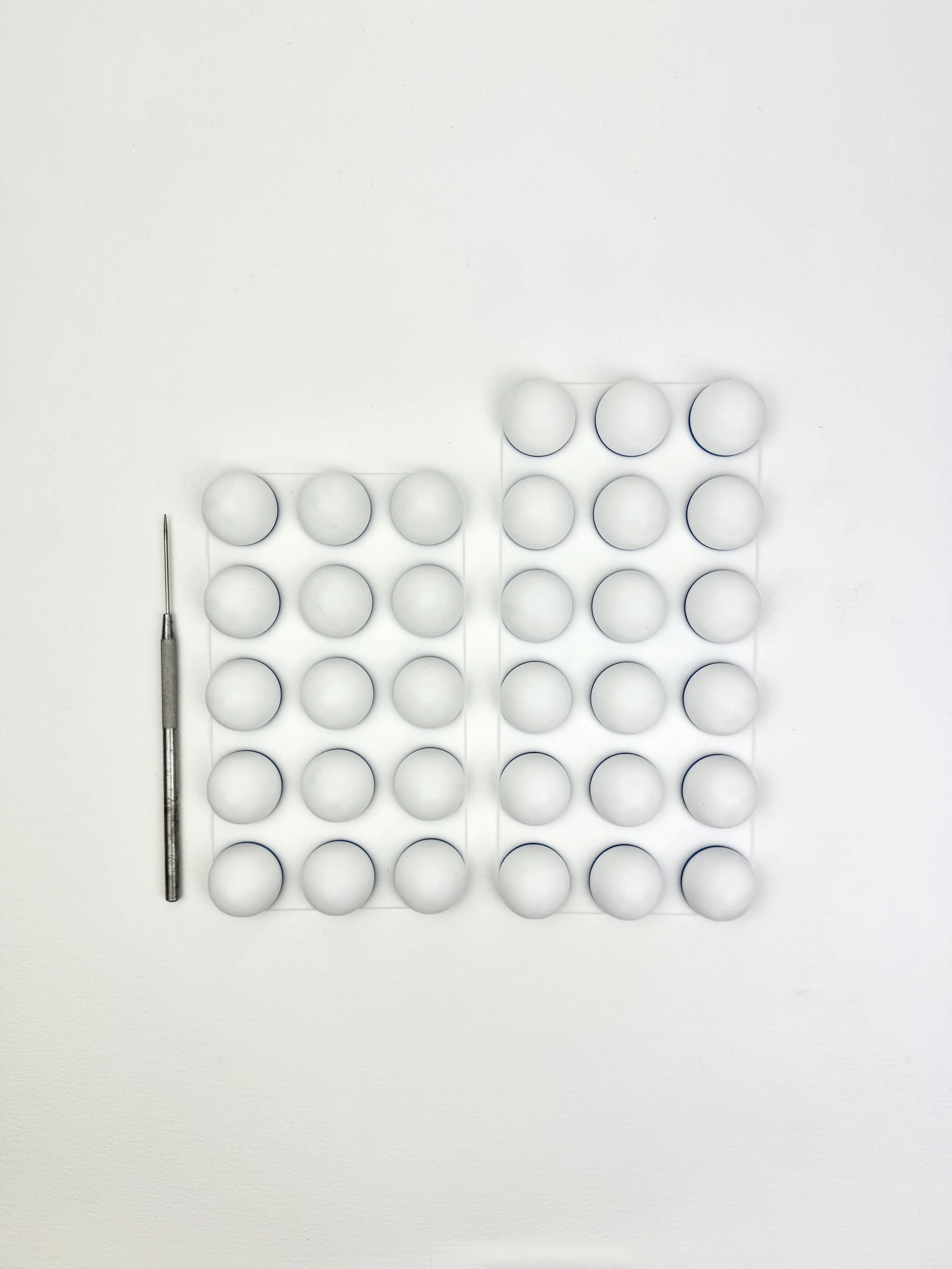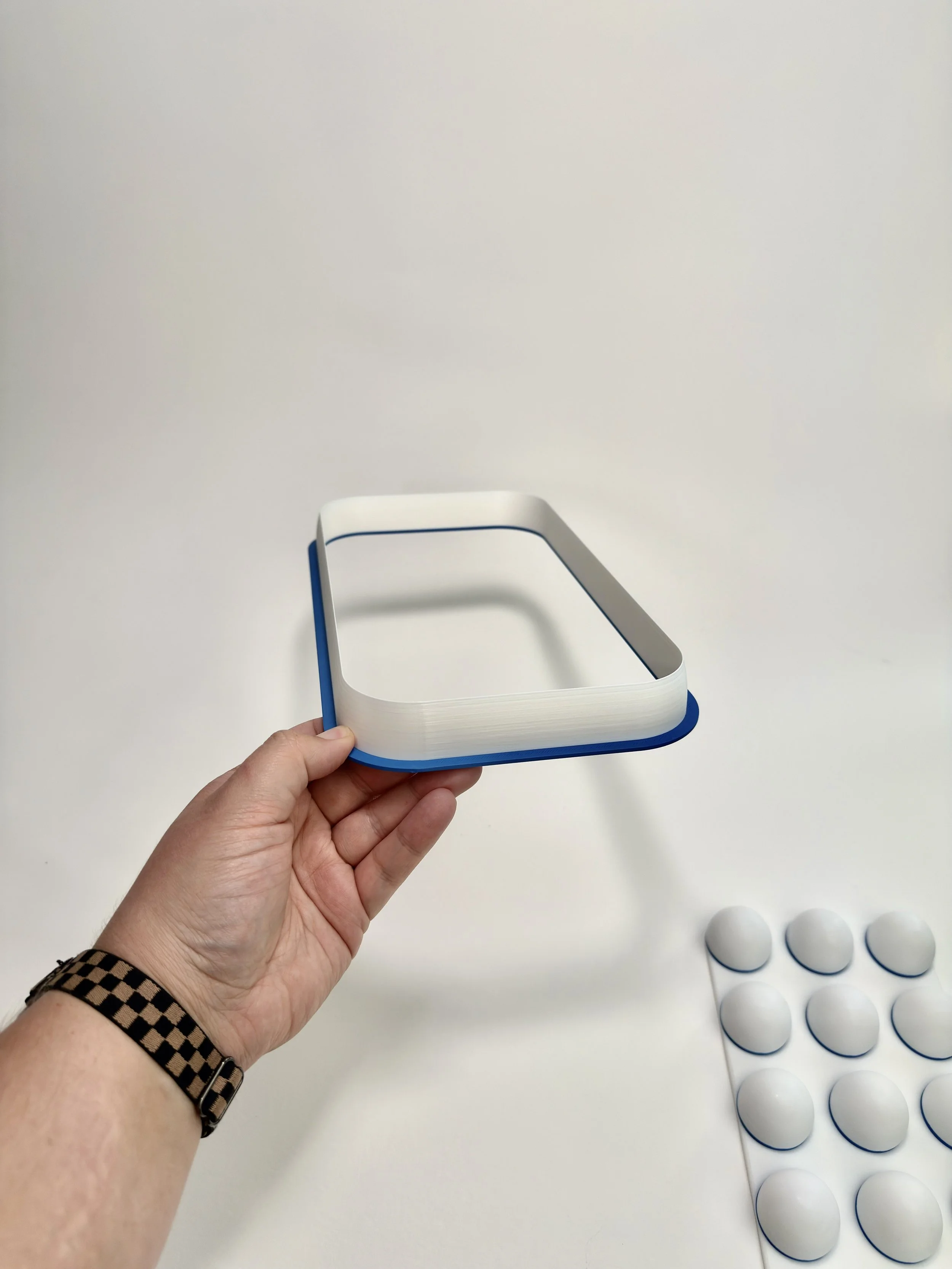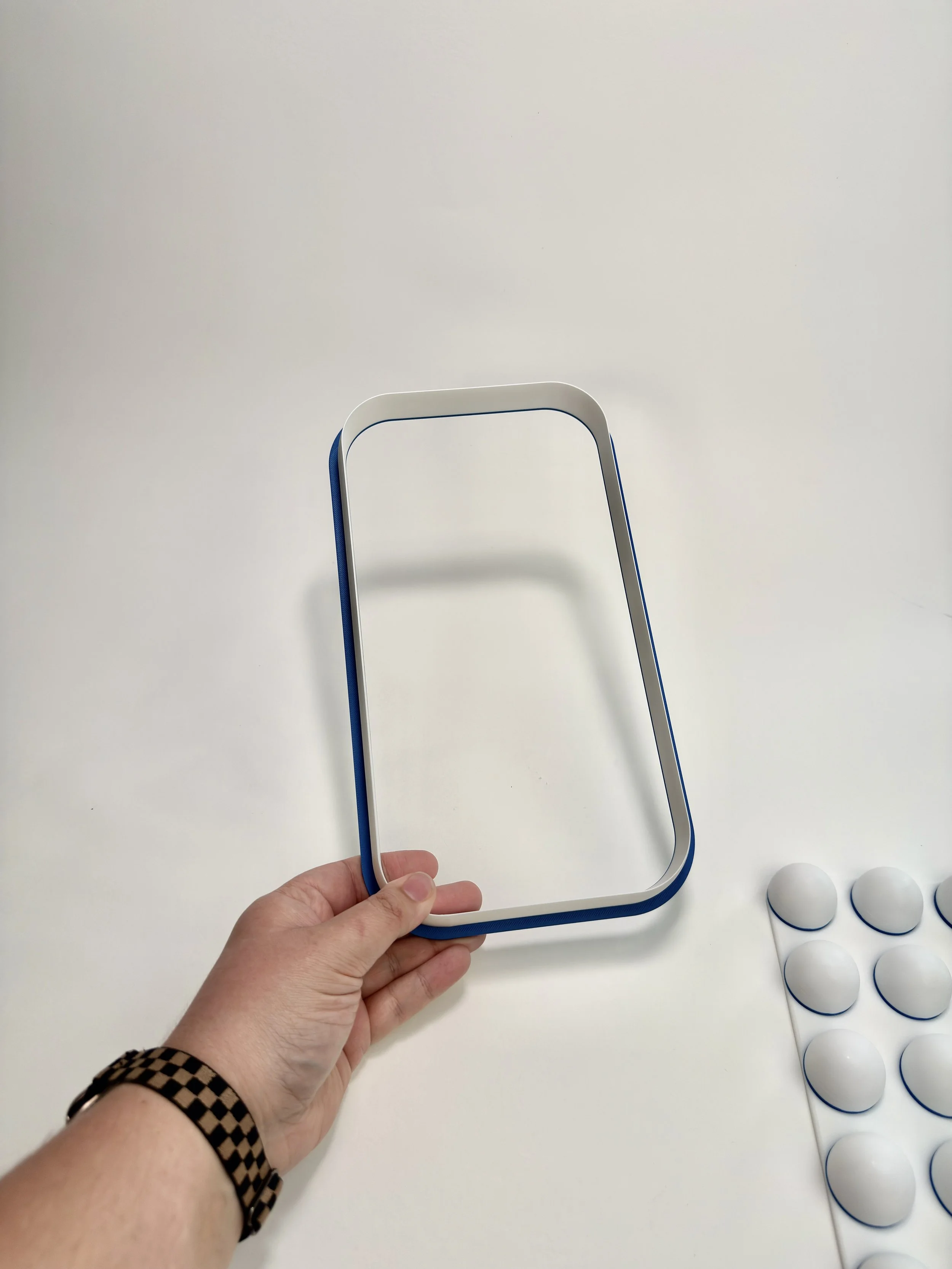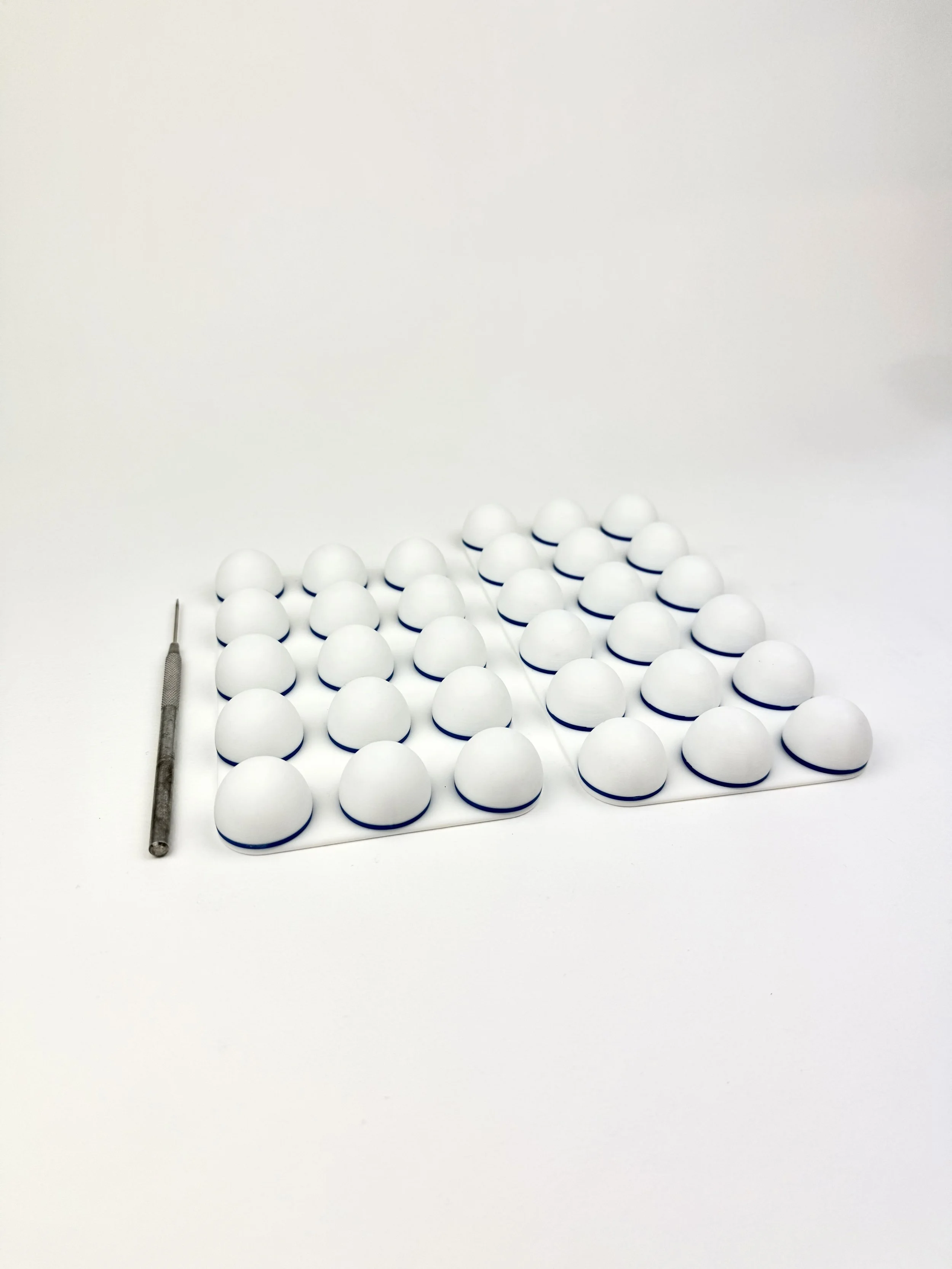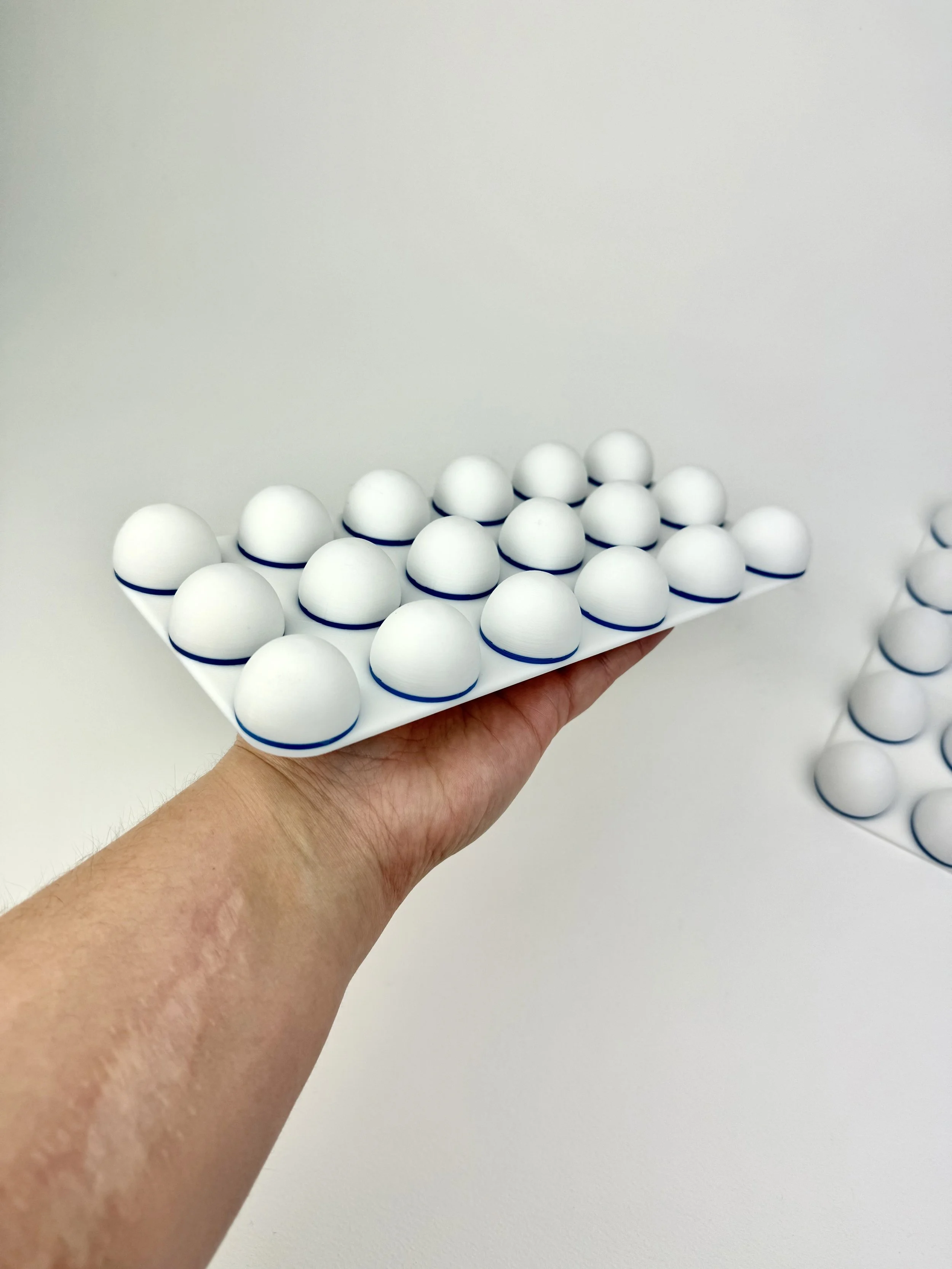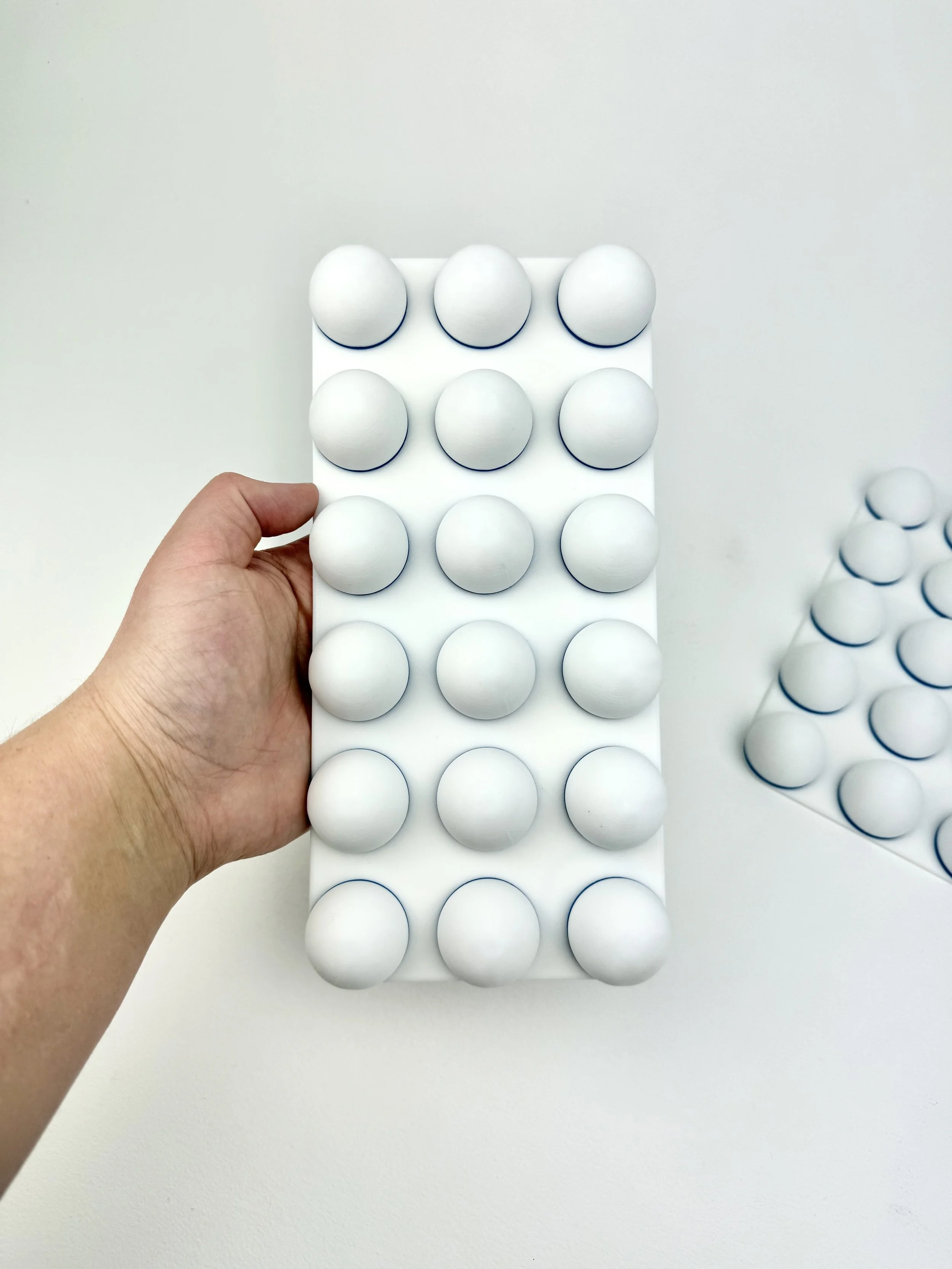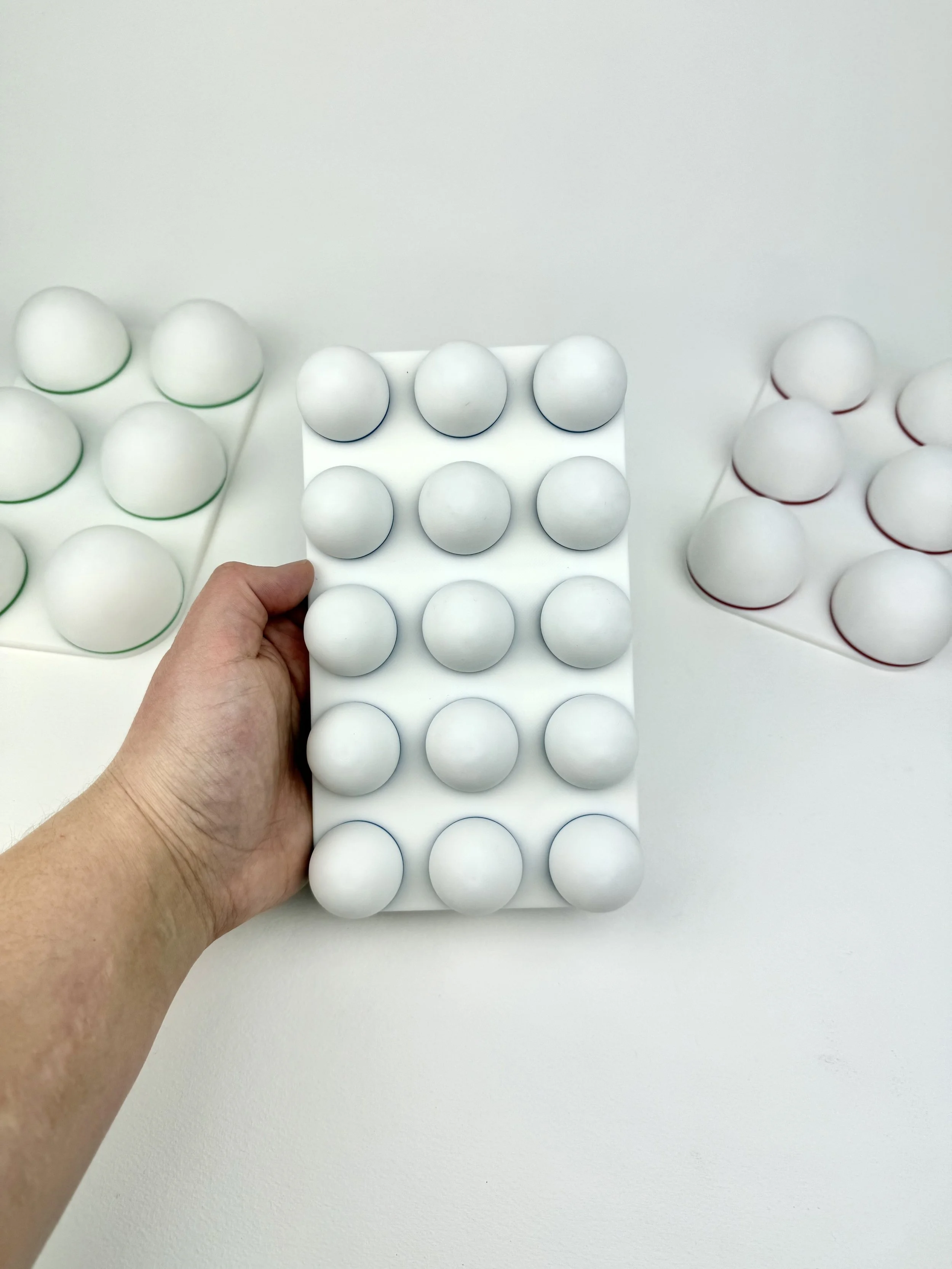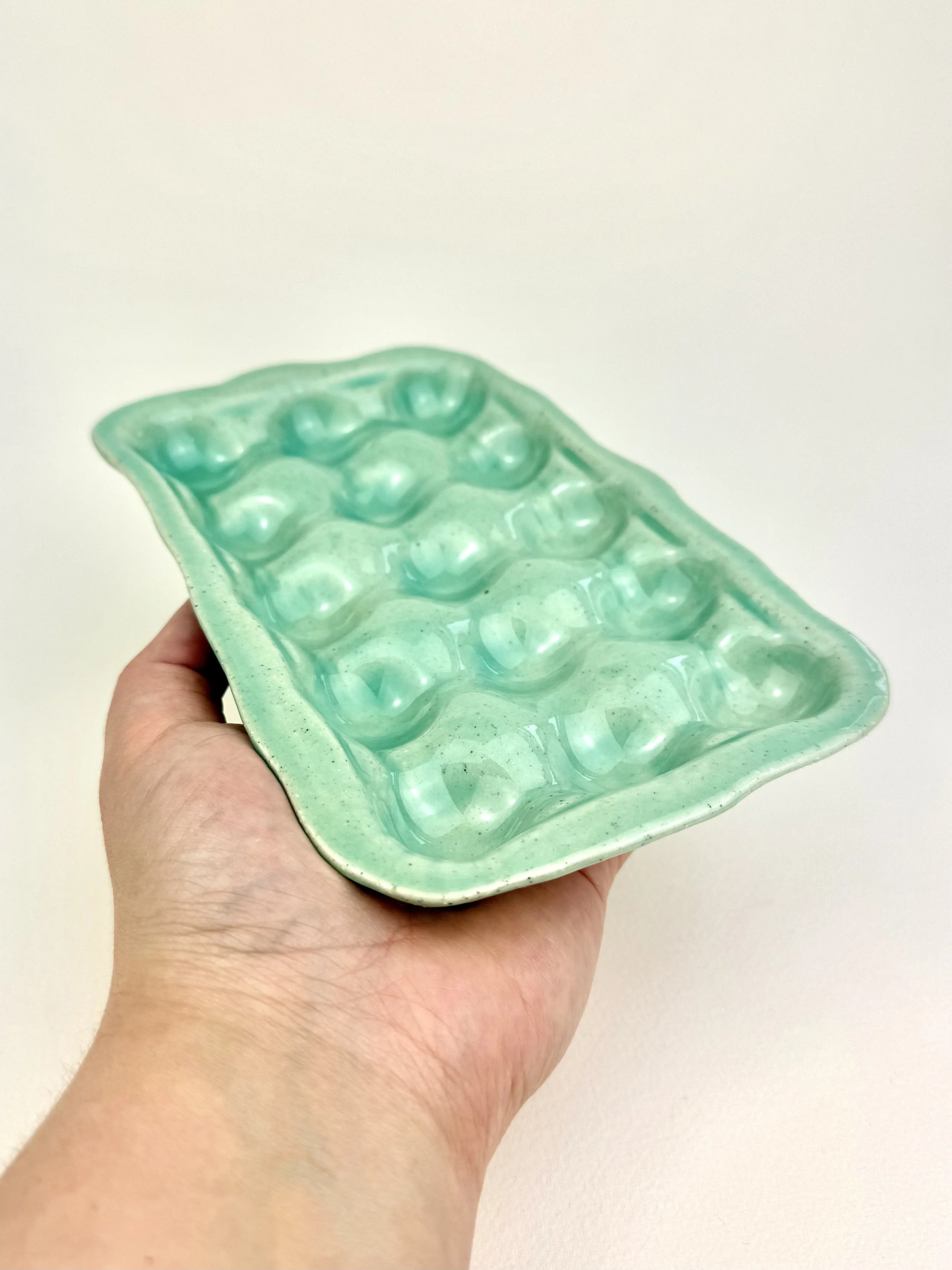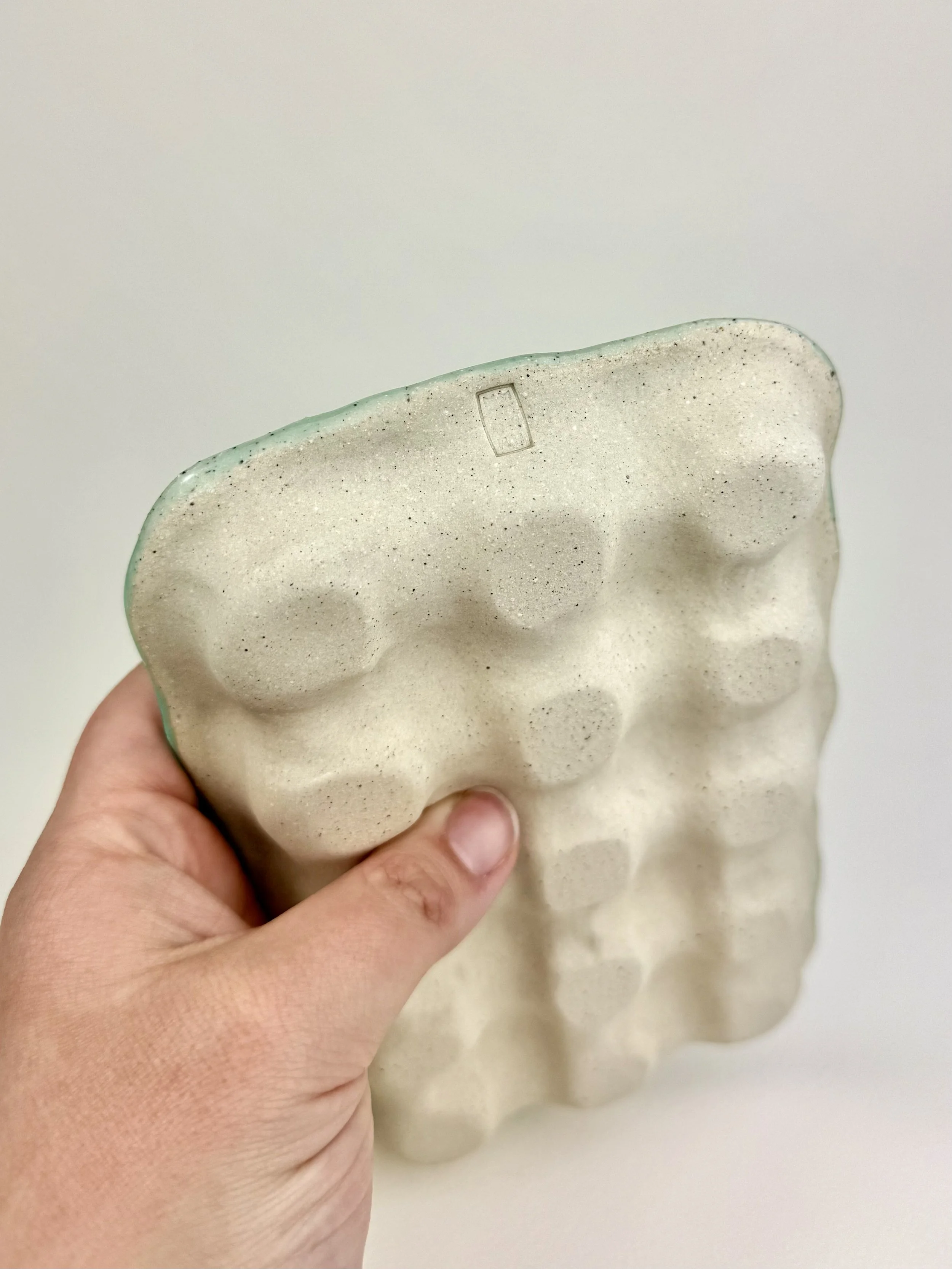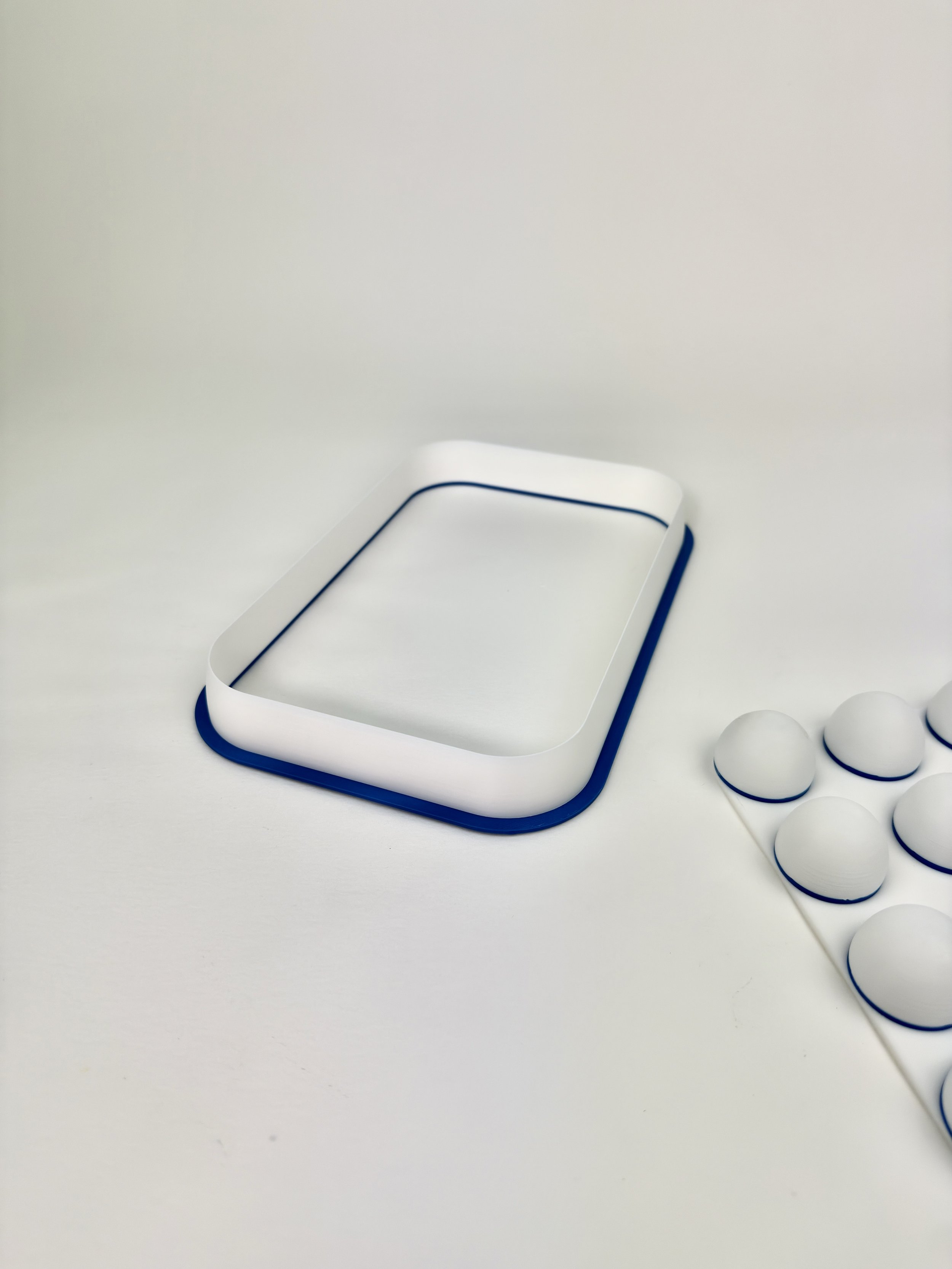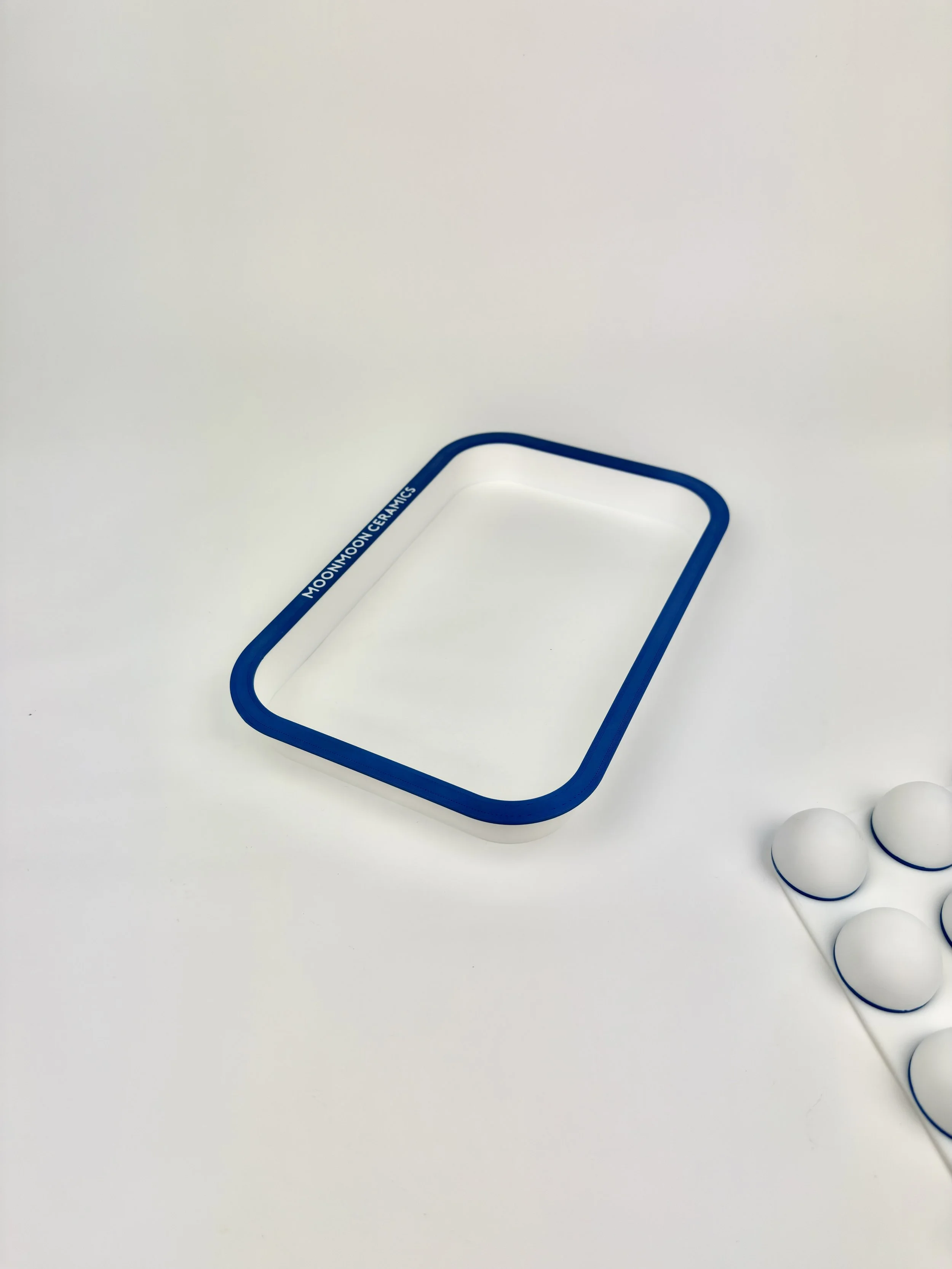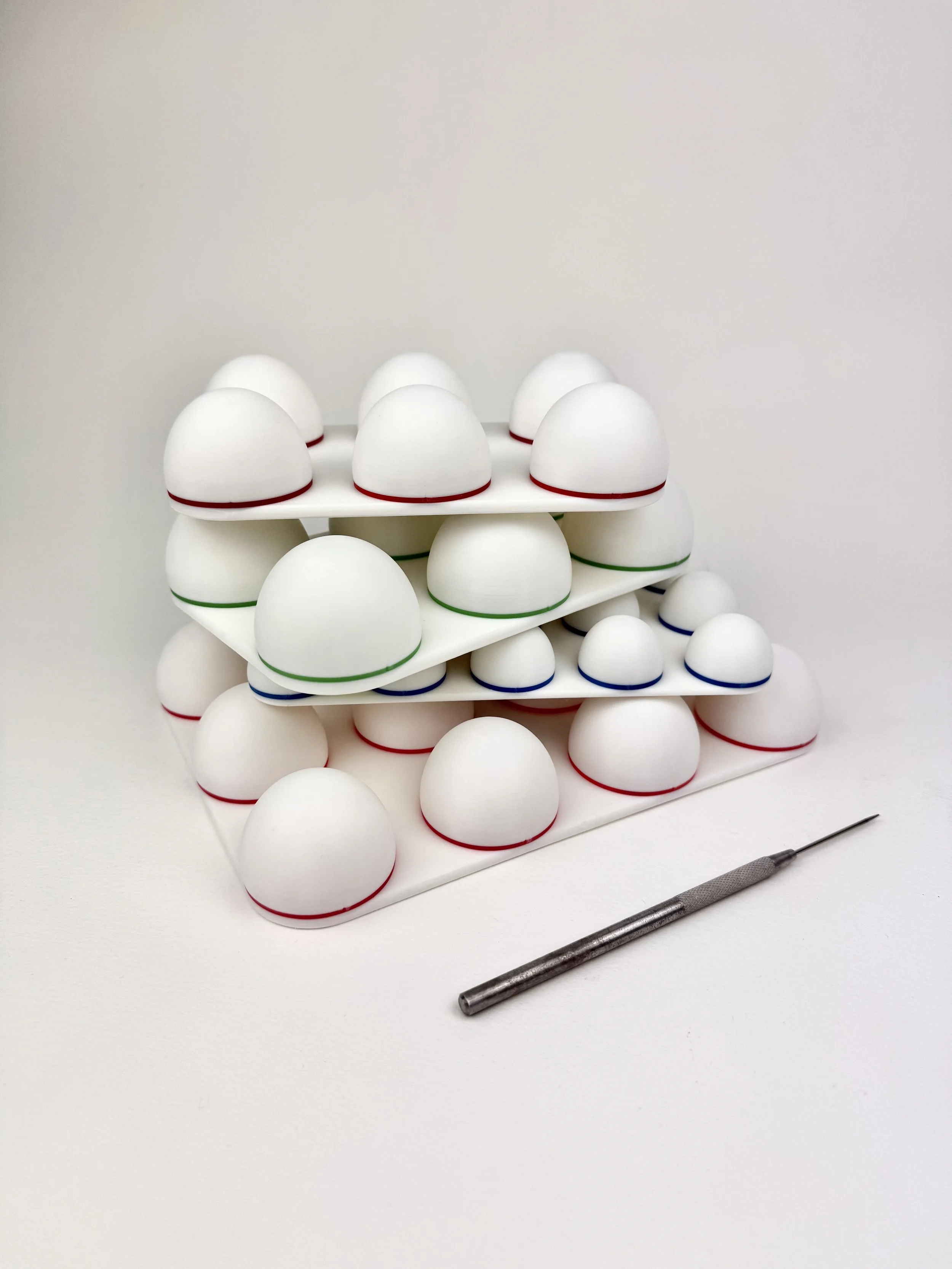
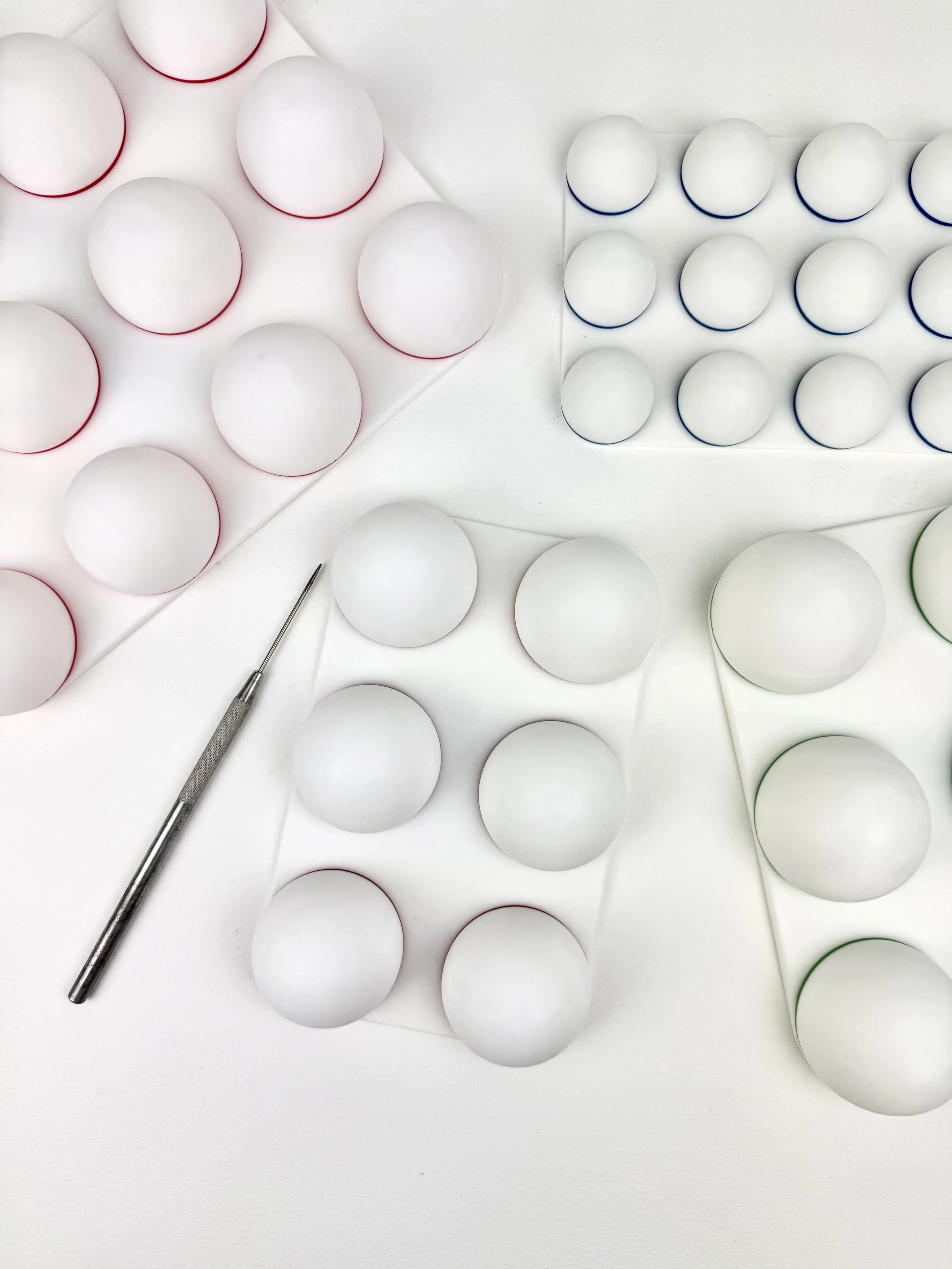
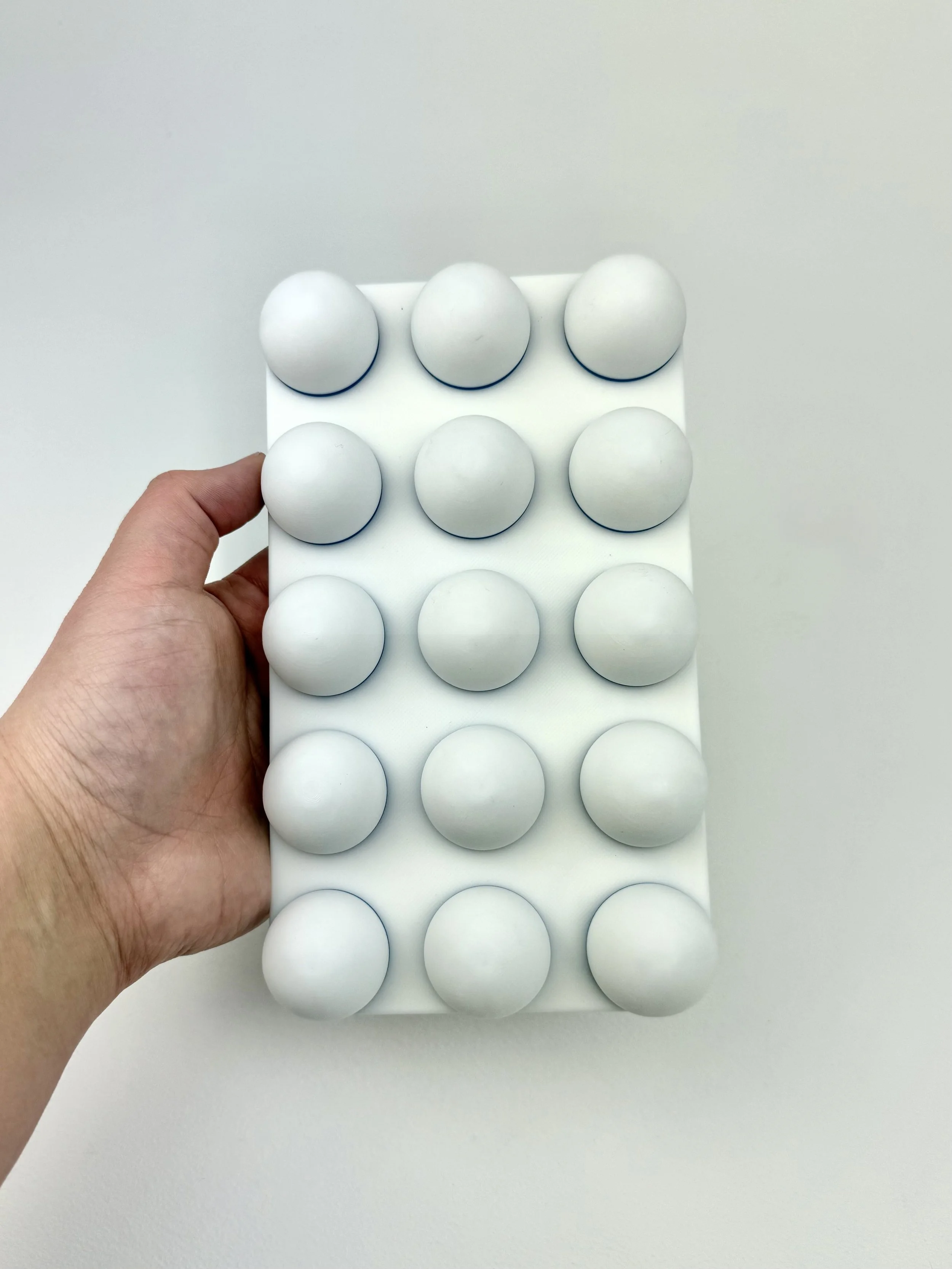
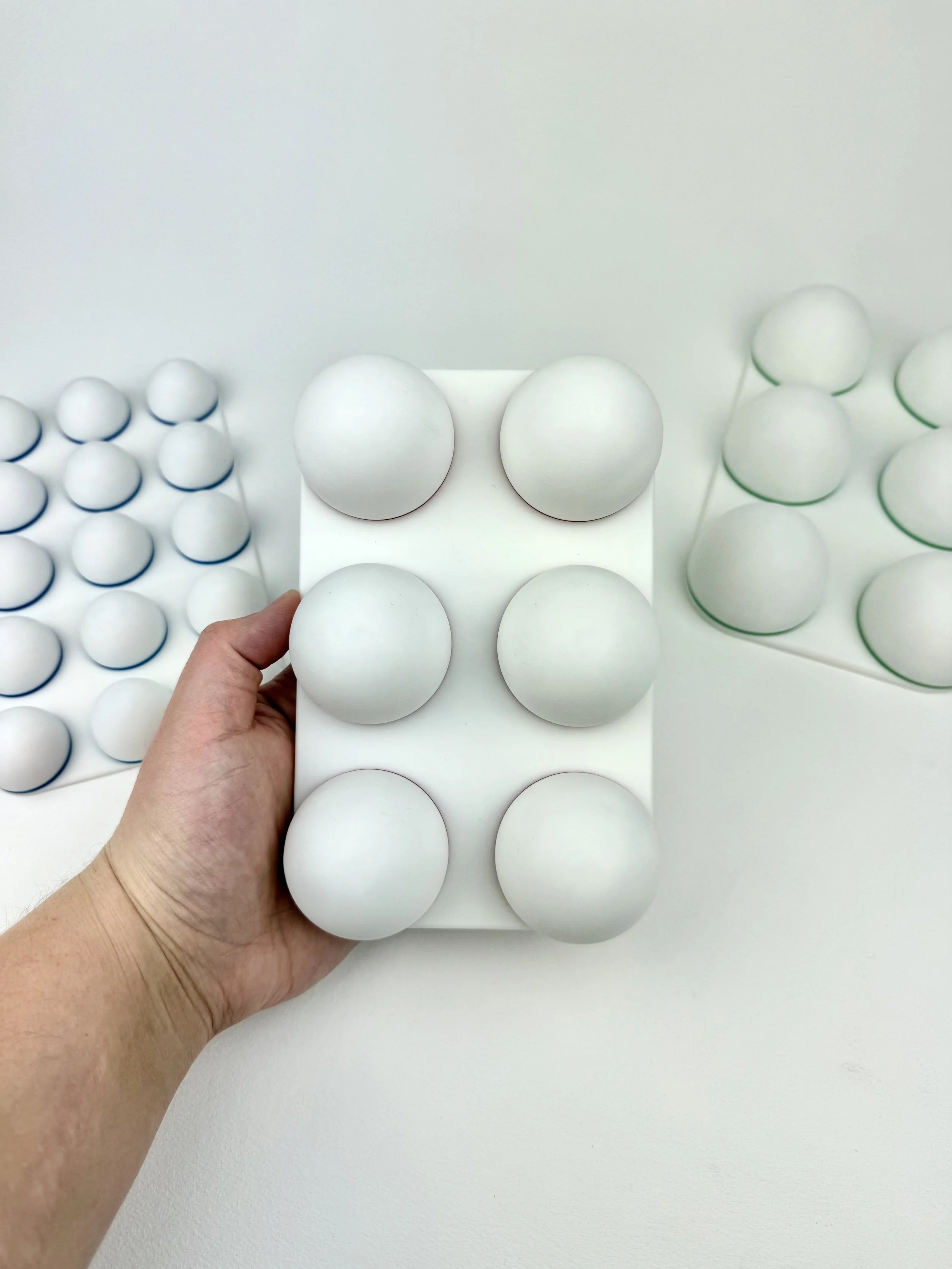
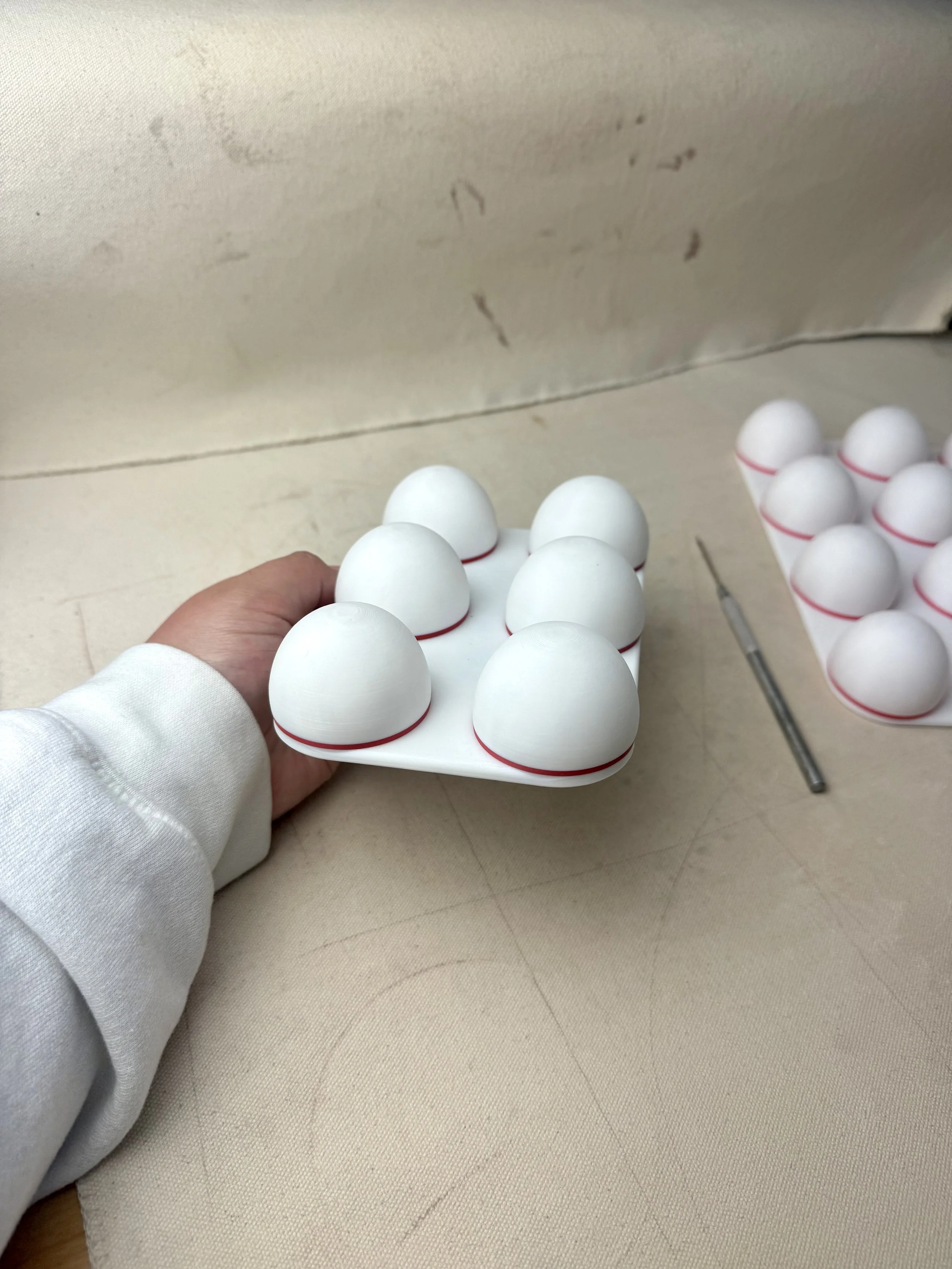

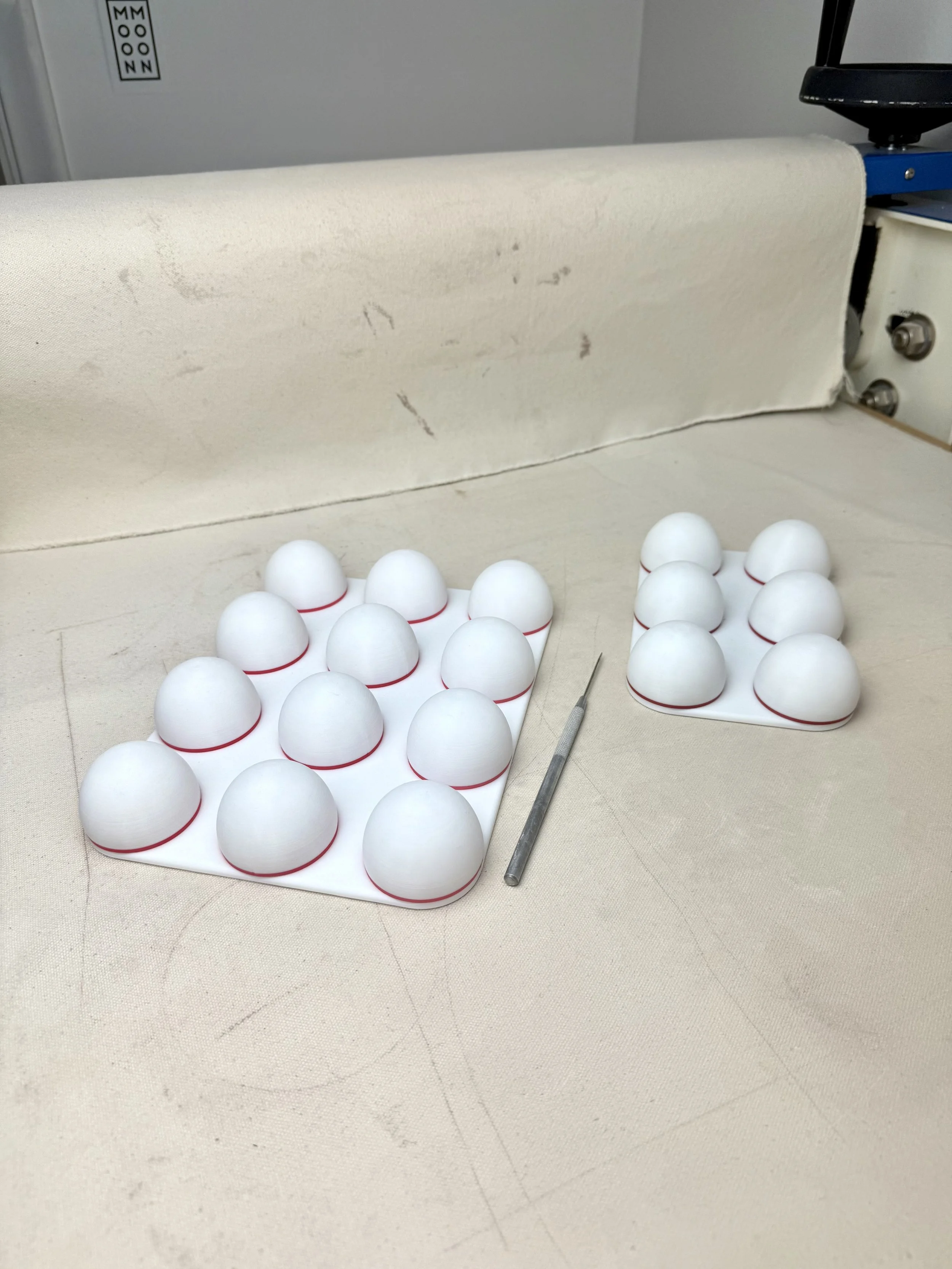

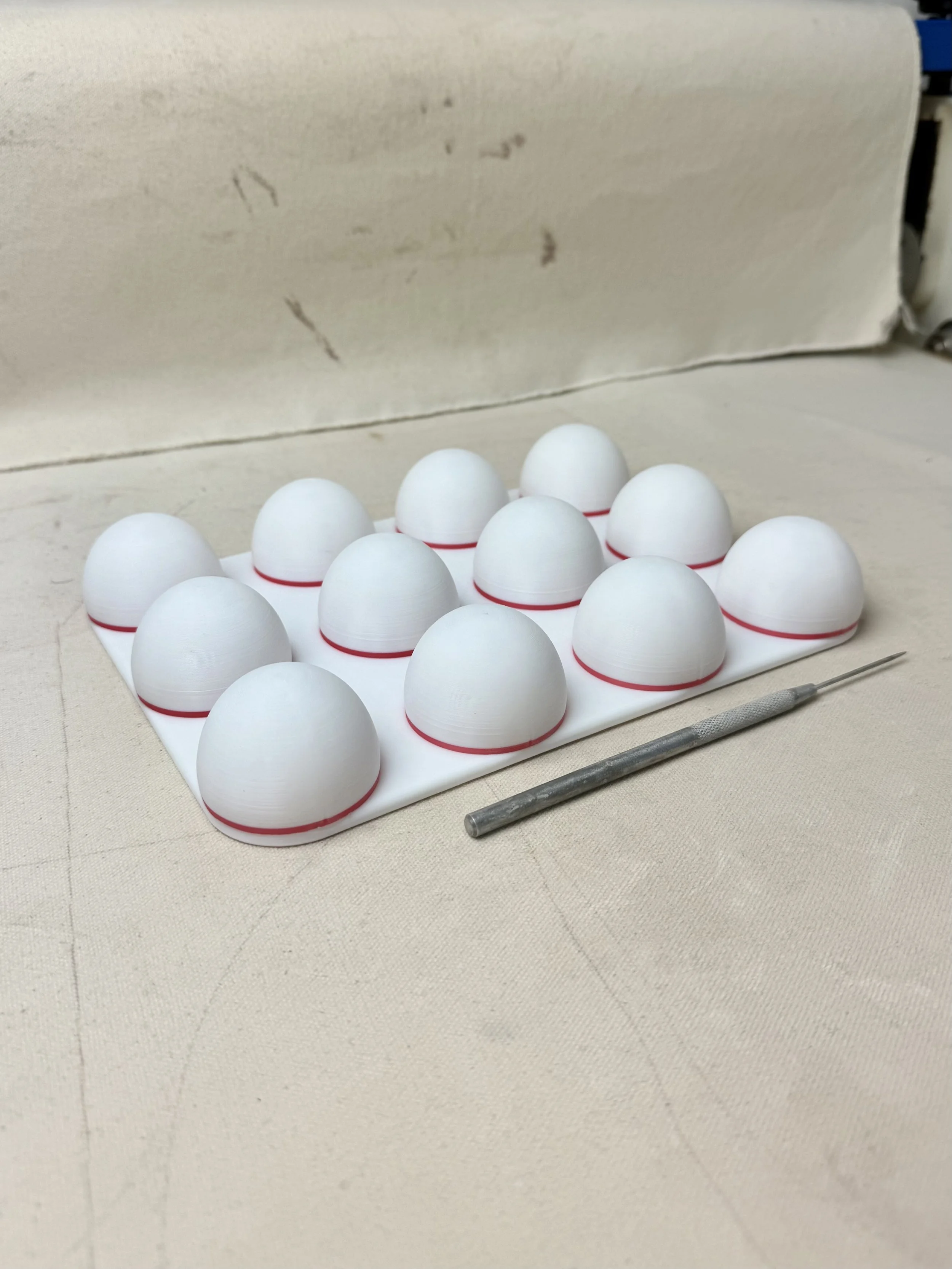
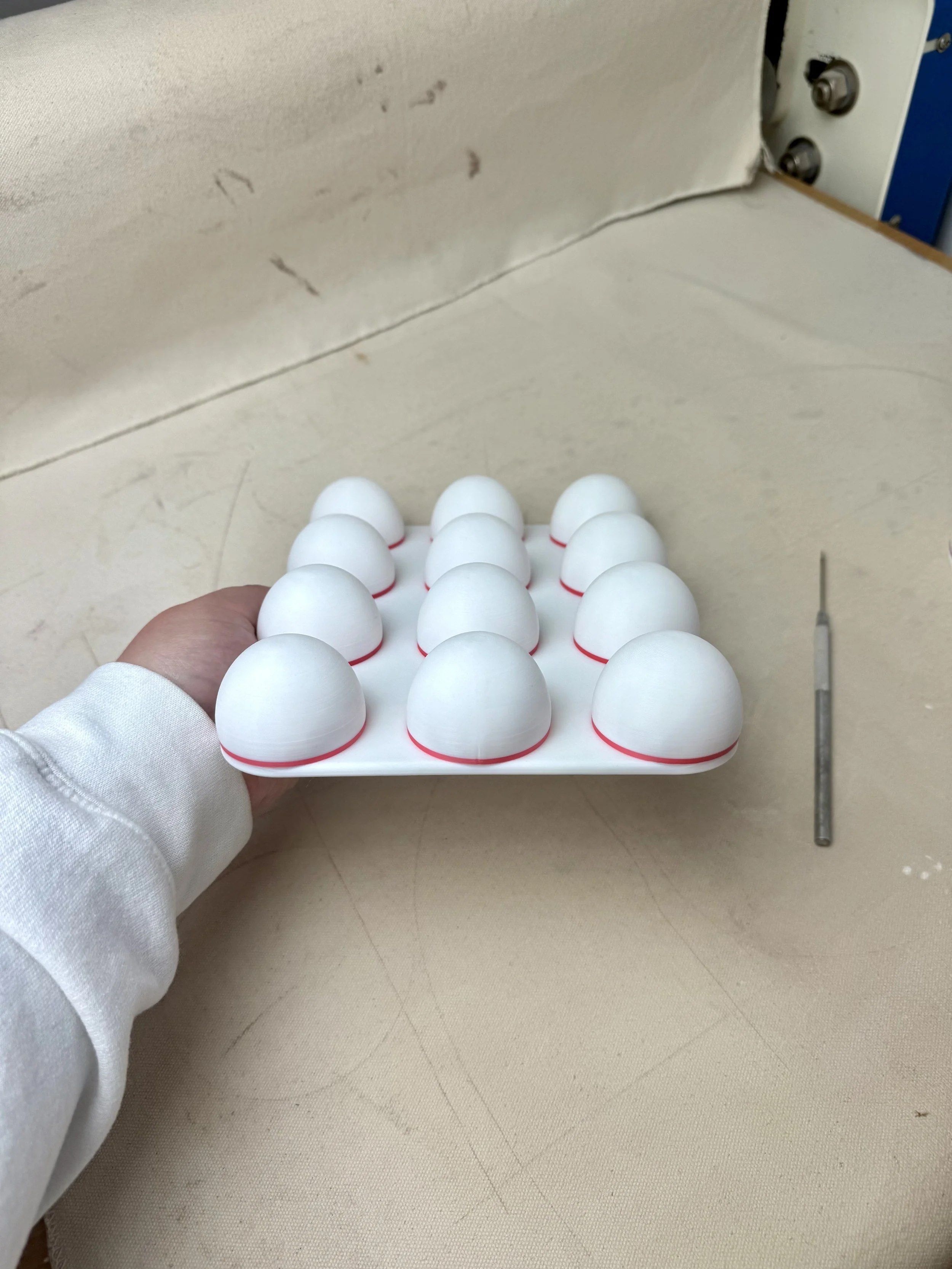
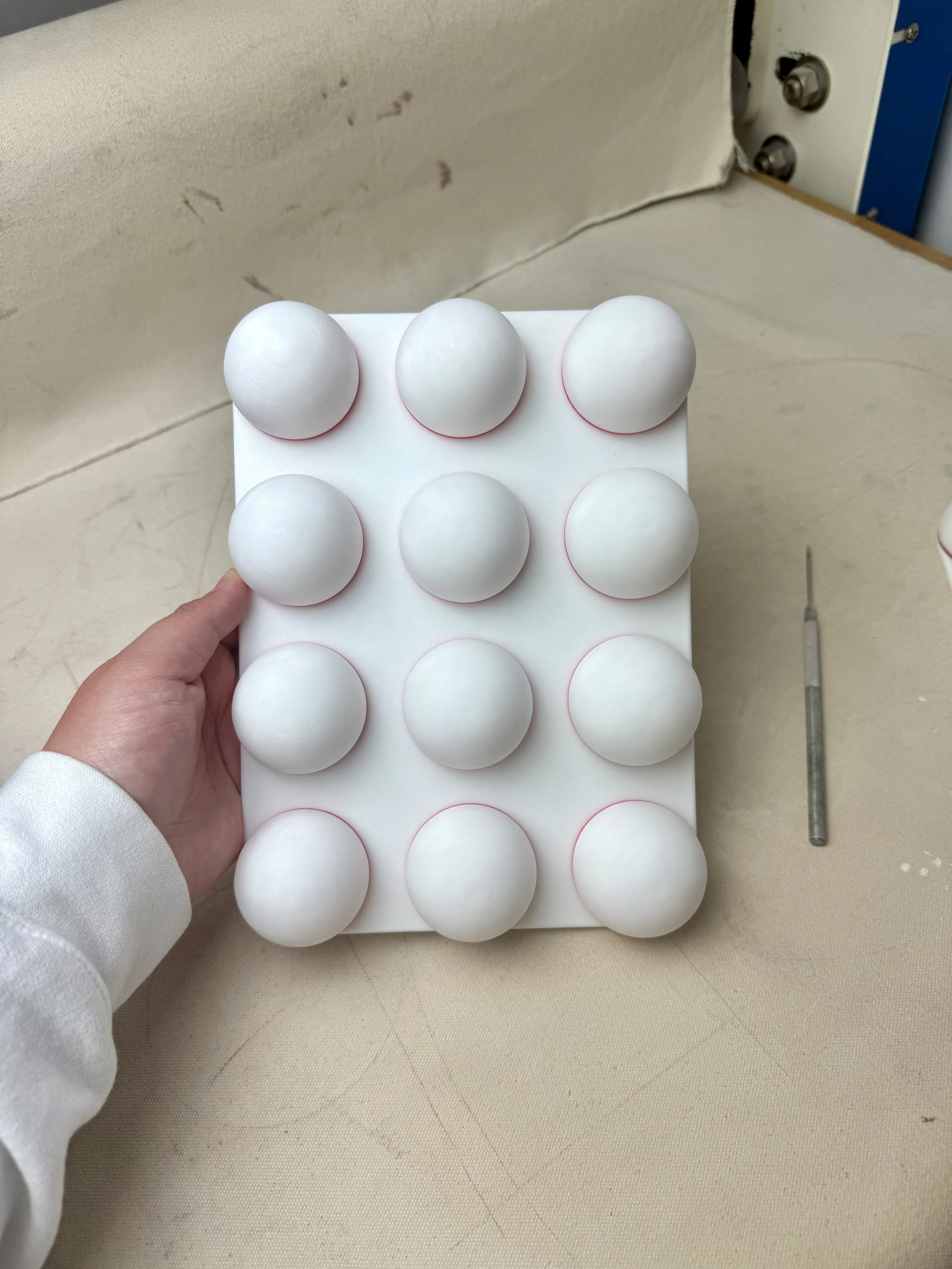
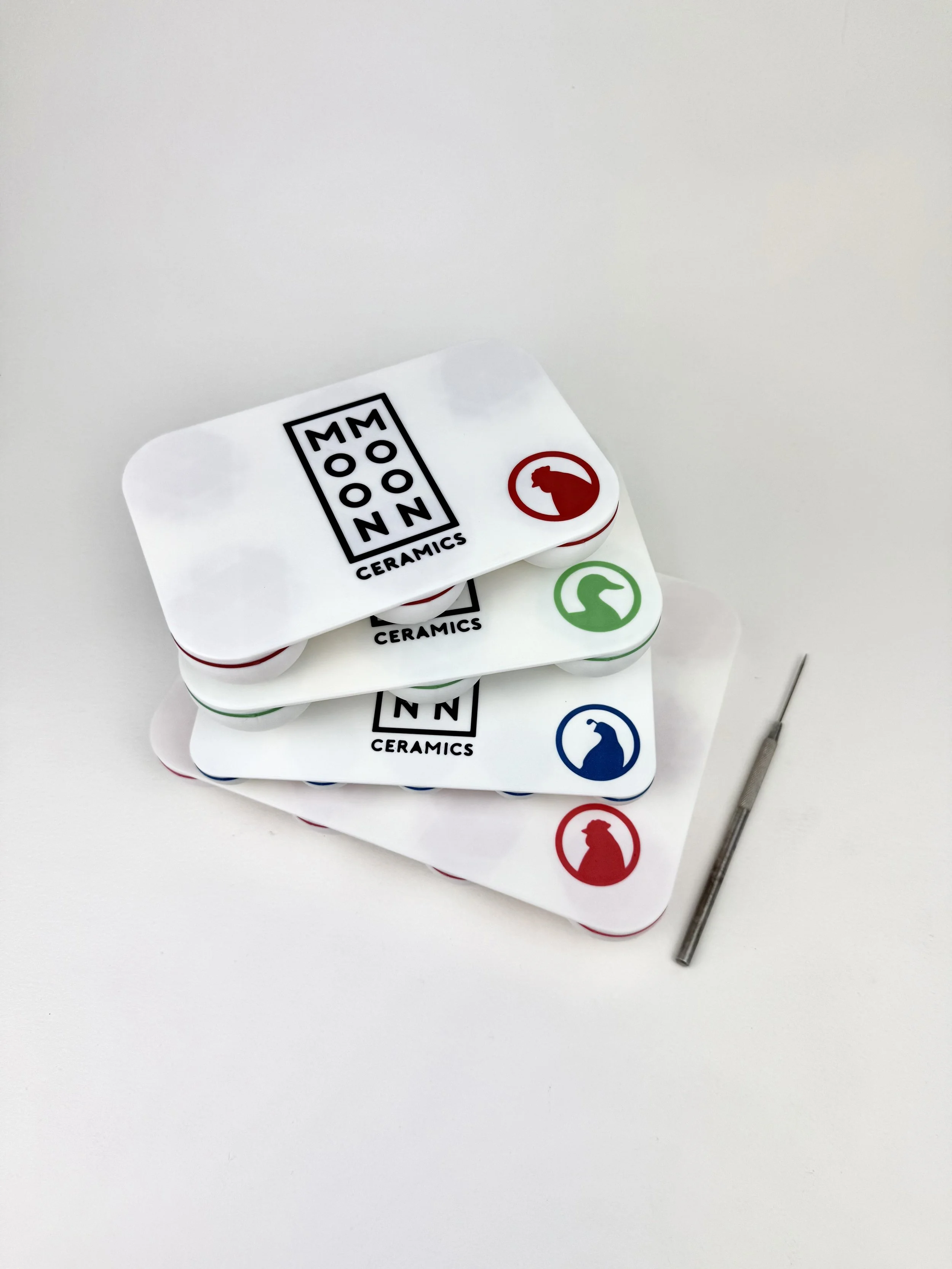
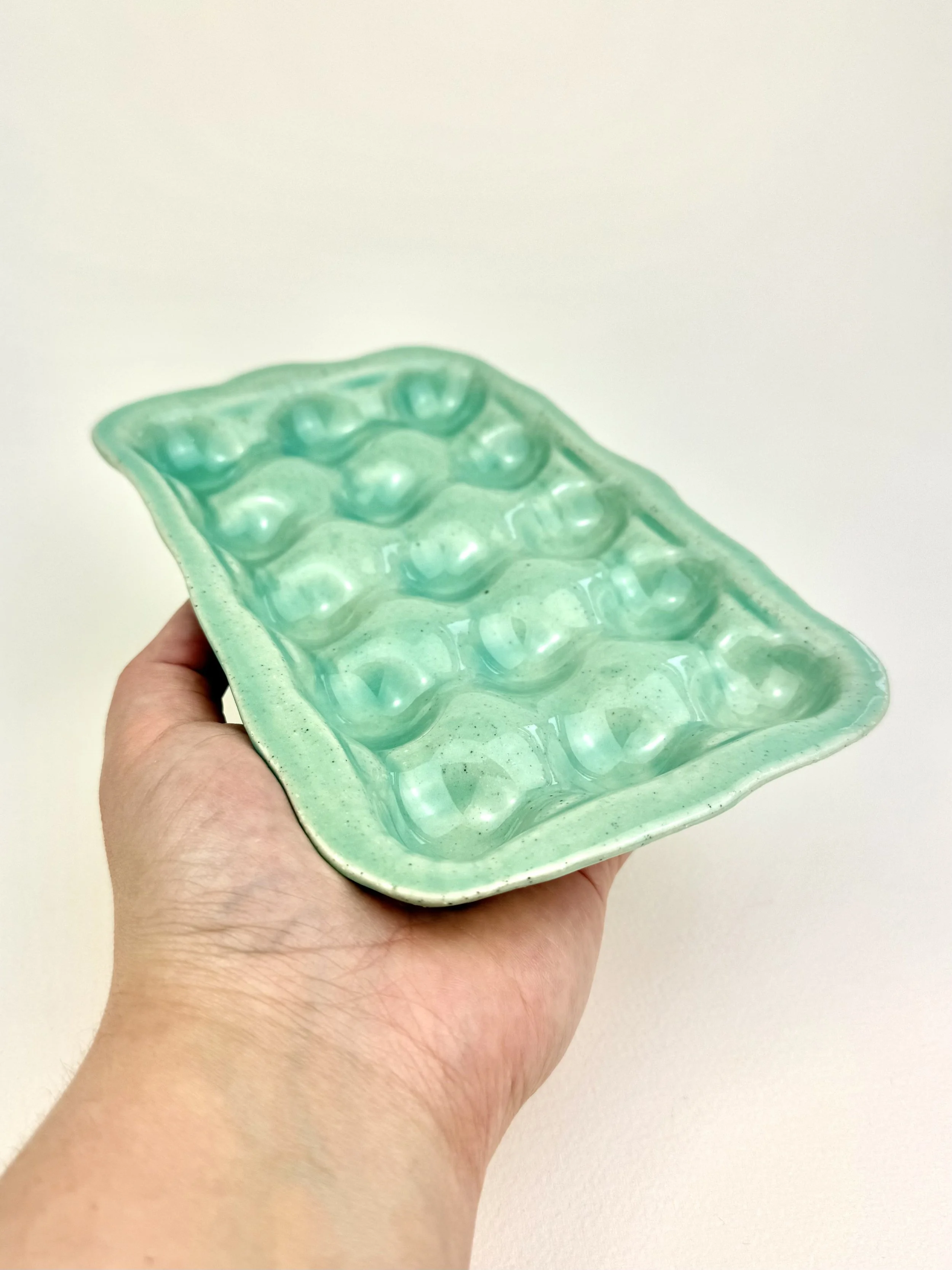
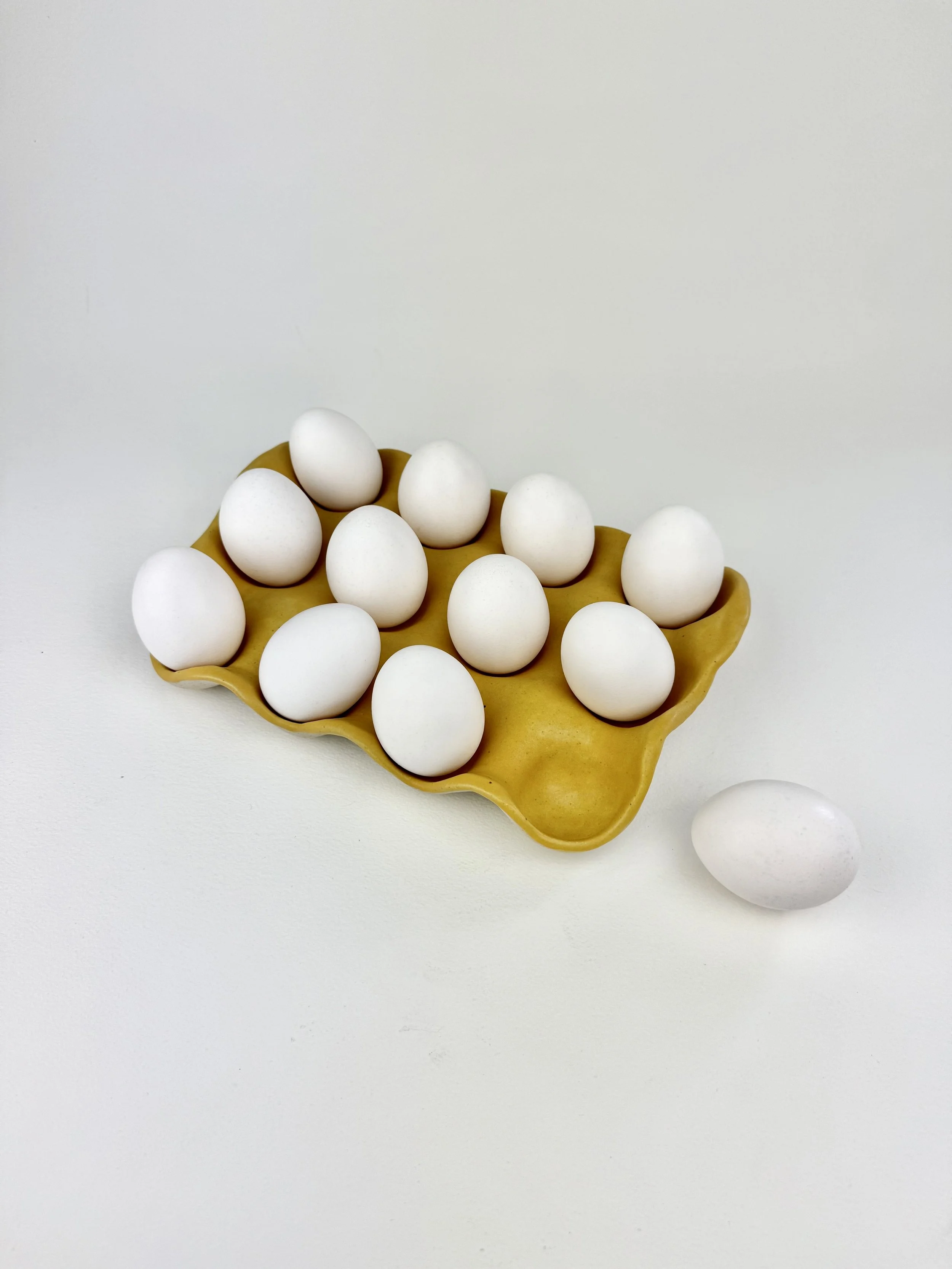
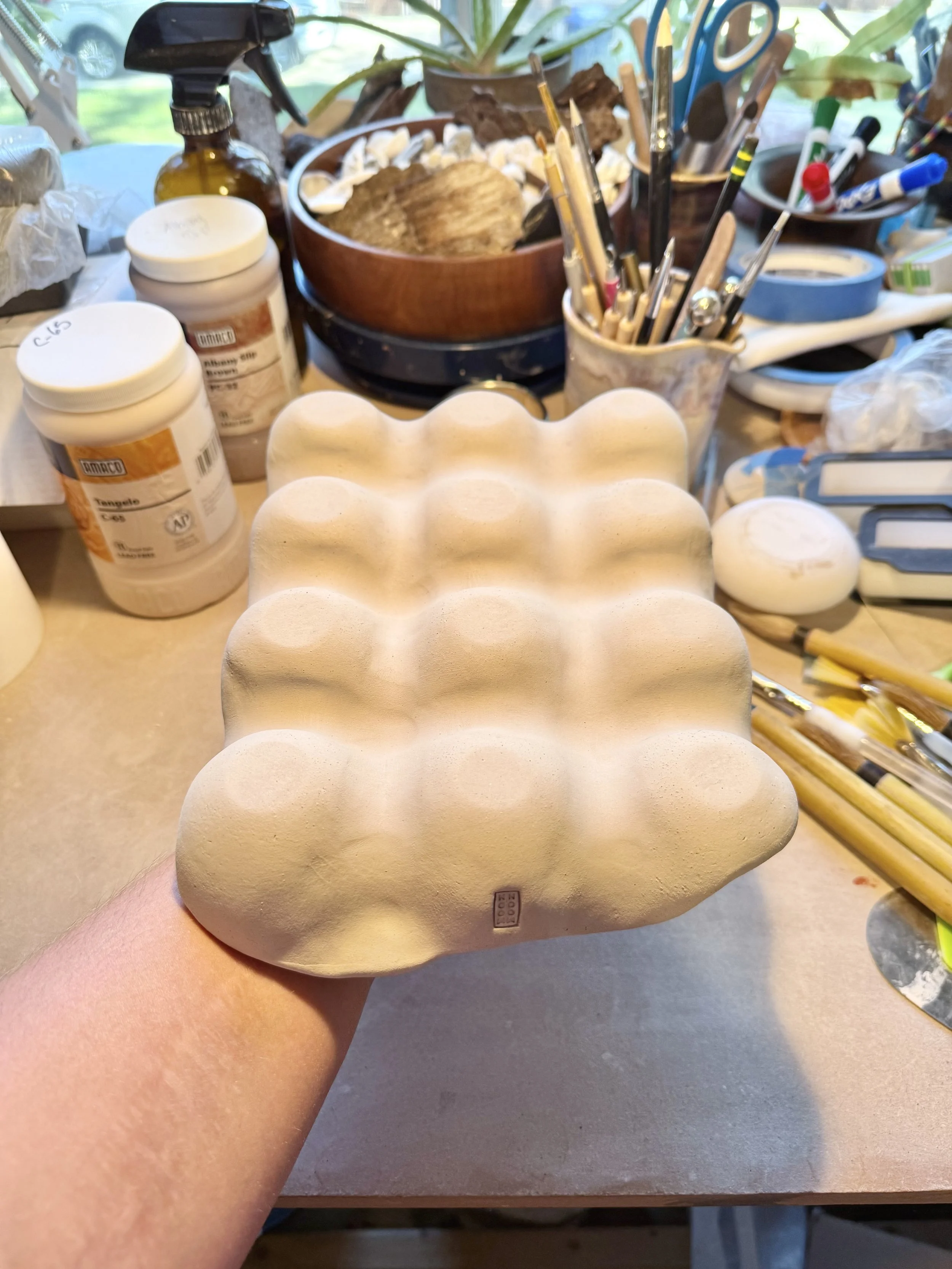
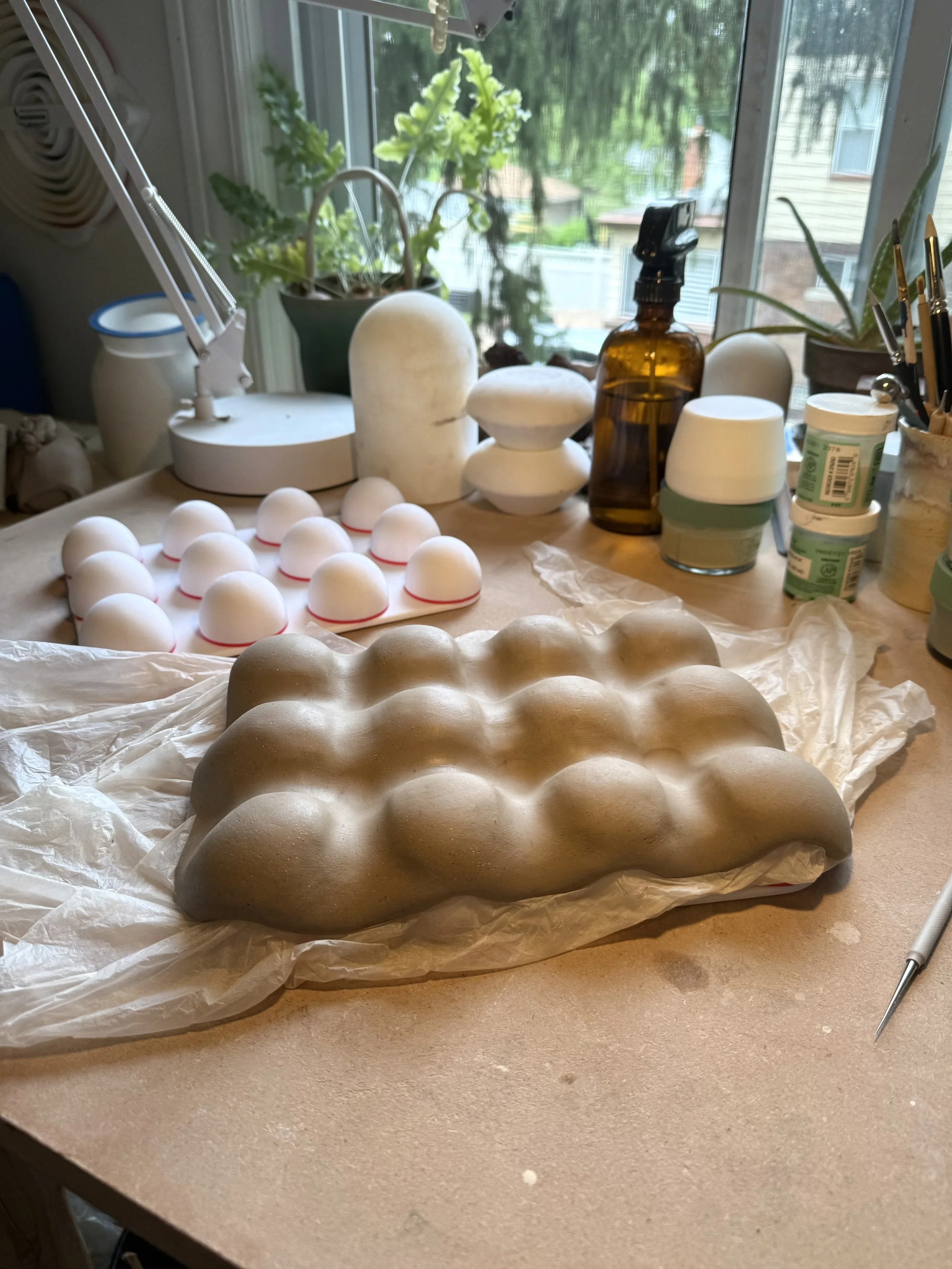
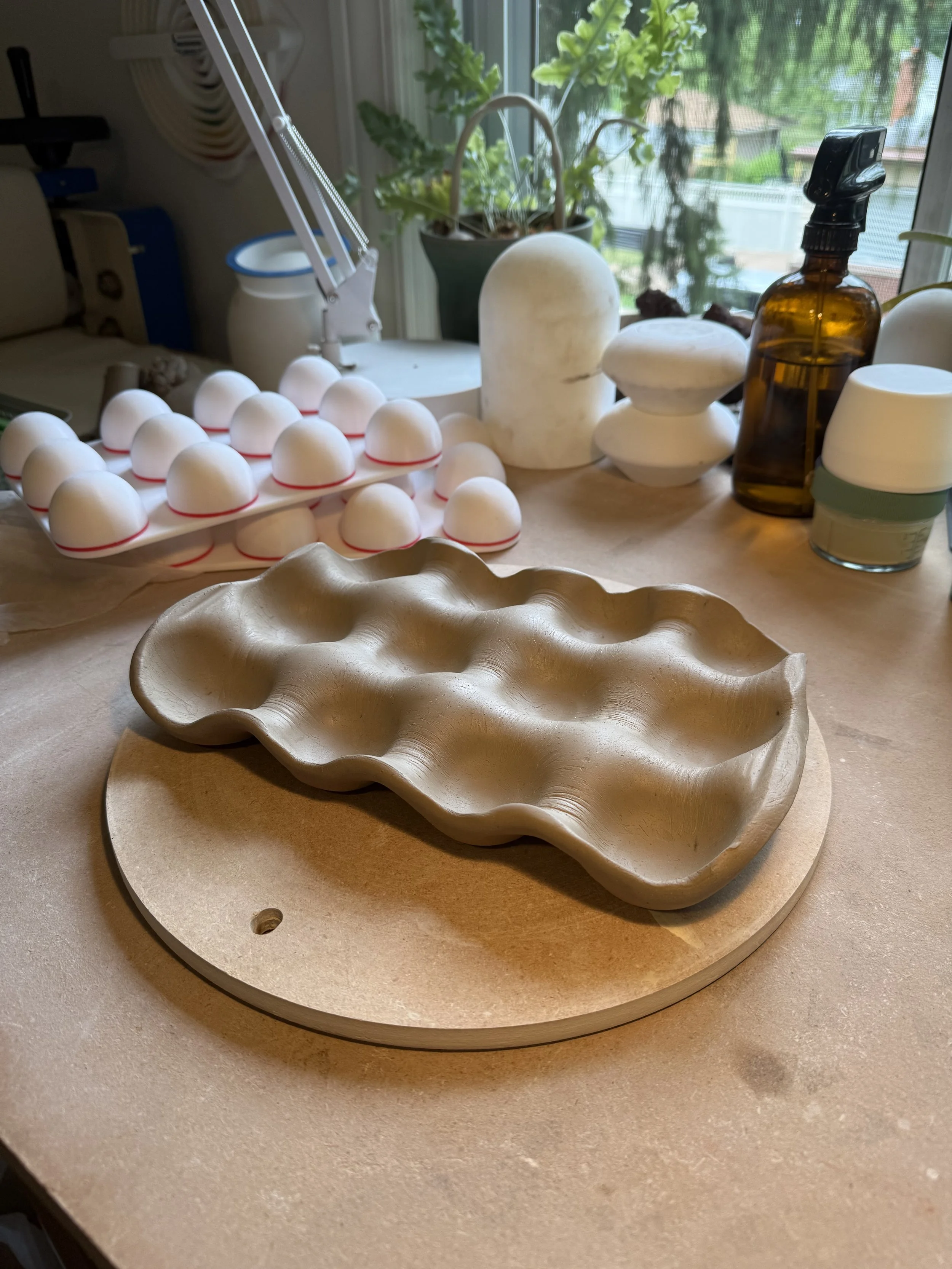
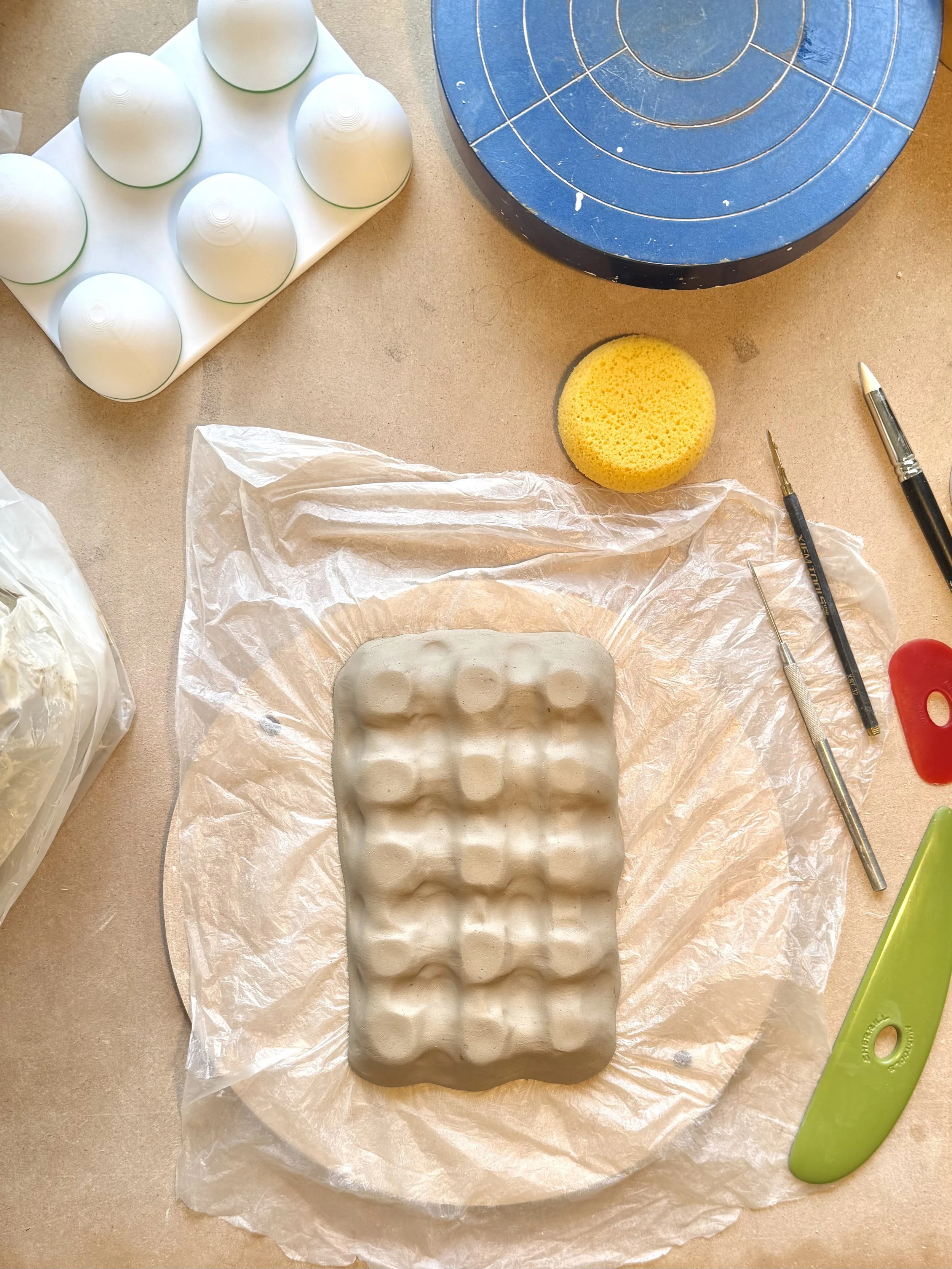
This is a set of 3D printed pottery drape form for making a ceramic egg tray. Set includes these forms - small chicken 6, duck 6, 15 quail and chicken 12 egg forms. All eggs are enlarged to accommodate average 12% clay shrinkage. After your egg tray has been fired it will fit a standard egg.
Each egg drape form has a smooth matte surface and is made from strong pla+ plastic. It is durable, easy to clean and light weight.
Sizes
Chicken 6 Count - 7" x 4.5"
Duck 6 Count - 7" x 4.5"
Quail 15 Count - 7.5" x 4.25"
Chicken 12 Count 9" x 7"
Material- 3D printed in PLA+ plastic. The surface is hand sanded smooth.
Clay Tips - For quick release of your clay from your form use a barrier in-between your clay and pottery from. Such as doubled up cling film, plastic bags, thin cotton fabric, or corn starch. If using corn starch as a release agent make sure to wash your bisque ware before glazing.
Pro Tip- I like to put painters tape tabs on my forms creating little pull tables so I can easily remove the form from my clay.
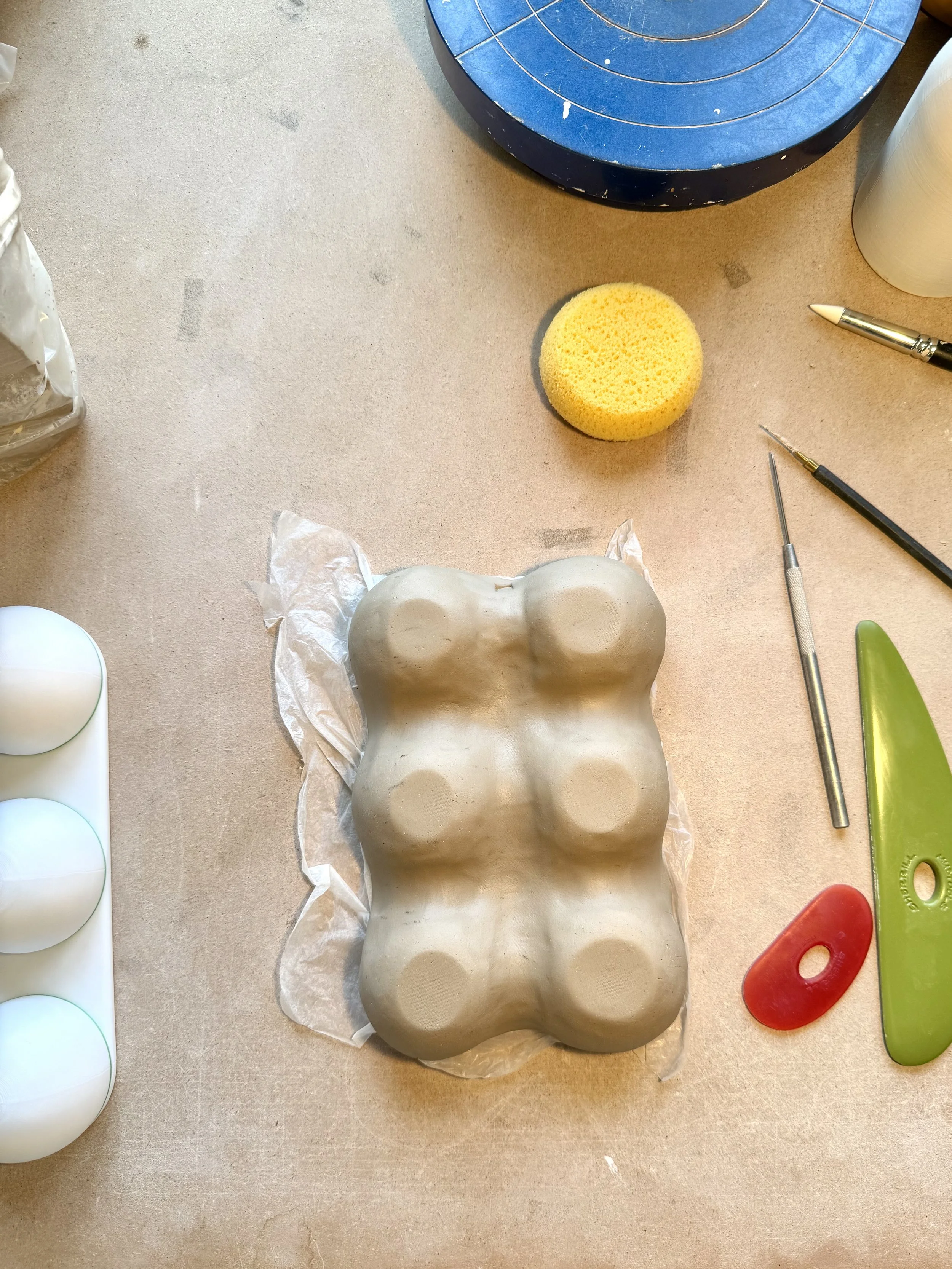
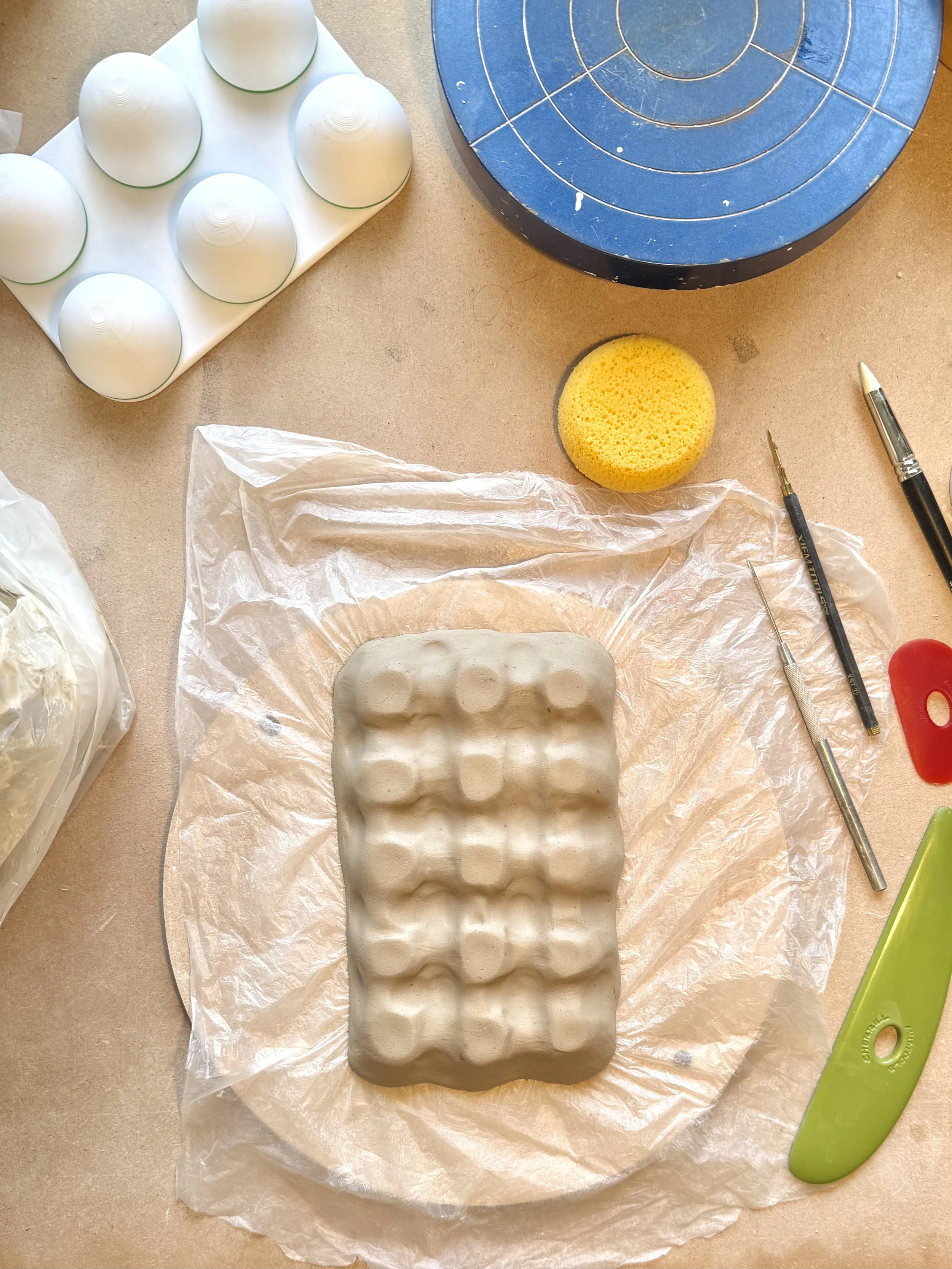
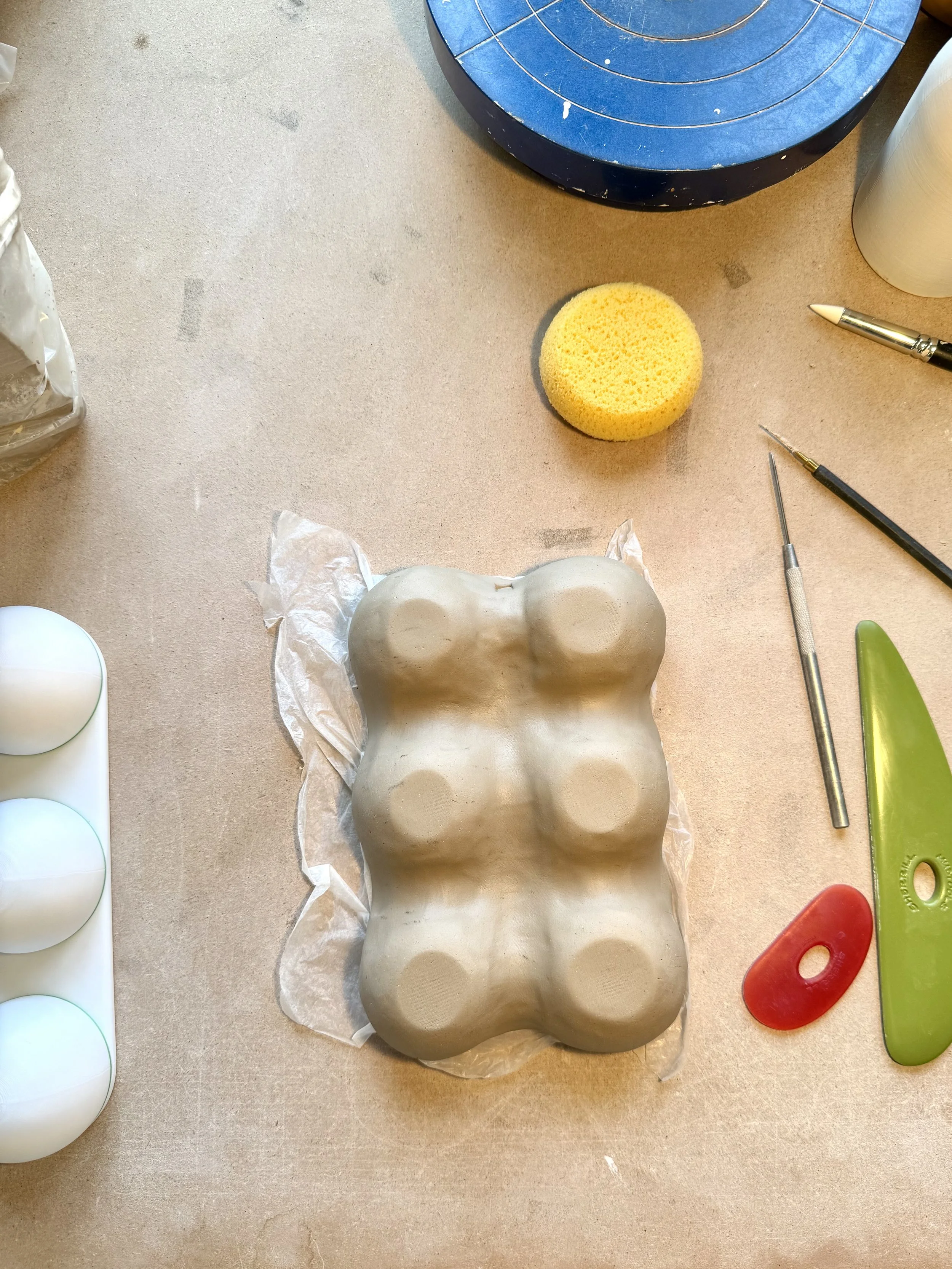
Egg Tray Directions - Roll out a slab of clay, smooth slab and cut out to the size desired, then drape barrier/thin plastic on clay. Then I drape my cut slab with the plastic on it (plastic side down) onto my egg form starting from the center then working the clay into the form using a damp sponge. Place ware board on bottom of clay egg try to flatten feet. Allow clay to stiffen up before flipping then remove drape form from clay. The peel off plastic, smooth with sponge or red rib if desired then dry slowly under plastic. Do not let your clay dry completely on the form, it will shrink and crack your piece.
Care Instructions- clean with wet sponge or wash directly in the sink, do not submerge in water. Dry before using to avoid your clay sticking.
Damage Instructions- If your form is damaged with a scuffed or scratched from normal usage you can lightly wet sand the surface back to smooth starting with 60, 80, 120 grit sand paper working your way to finer 400-600 girt for a super smooth finish.
Warning - SENSITIVE TO HIGH HEAT. **Do not leave in a hot car or hot pottery shed. Will melt under high temperatures. Not recommended to use with a heat gun.
Shipping is 1-2 weeks. All pottery tools are made to order to ensure we are providing premium quality tools. 3D Printing in small batches helps reduce waste, limits overstocking and frees up space in our small home studio.
This is a set of 3D printed pottery drape form for making a ceramic egg tray. Set includes these forms - small chicken 6, duck 6, 15 quail and chicken 12 egg forms. All eggs are enlarged to accommodate average 12% clay shrinkage. After your egg tray has been fired it will fit a standard egg.
Each egg drape form has a smooth matte surface and is made from strong pla+ plastic. It is durable, easy to clean and light weight.
Sizes
Chicken 6 Count - 7" x 4.5"
Duck 6 Count - 7" x 4.5"
Quail 15 Count - 7.5" x 4.25"
Chicken 12 Count 9" x 7"
Material- 3D printed in PLA+ plastic. The surface is hand sanded smooth.
Clay Tips - For quick release of your clay from your form use a barrier in-between your clay and pottery from. Such as doubled up cling film, plastic bags, thin cotton fabric, or corn starch. If using corn starch as a release agent make sure to wash your bisque ware before glazing.
Pro Tip- I like to put painters tape tabs on my forms creating little pull tables so I can easily remove the form from my clay.
Egg Tray Directions - Roll out a slab of clay, smooth slab and cut out to the size desired, then drape barrier/thin plastic on clay. Then I drape my cut slab with the plastic on it (plastic side down) onto my egg form starting from the center then working the clay into the form using a damp sponge. Place ware board on bottom of clay egg try to flatten feet. Allow clay to stiffen up before flipping then remove drape form from clay. The peel off plastic, smooth with sponge or red rib if desired then dry slowly under plastic. Do not let your clay dry completely on the form, it will shrink and crack your piece.
Care Instructions- clean with wet sponge or wash directly in the sink, do not submerge in water. Dry before using to avoid your clay sticking.
Damage Instructions- If your form is damaged with a scuffed or scratched from normal usage you can lightly wet sand the surface back to smooth starting with 60, 80, 120 grit sand paper working your way to finer 400-600 girt for a super smooth finish.
Warning - SENSITIVE TO HIGH HEAT. **Do not leave in a hot car or hot pottery shed. Will melt under high temperatures. Not recommended to use with a heat gun.
Shipping is 1-2 weeks. All pottery tools are made to order to ensure we are providing premium quality tools. 3D Printing in small batches helps reduce waste, limits overstocking and frees up space in our small home studio.